Introduction
The “hallmarks of aging” framework proposes that age-associated decline may arise from interconnected biological processes that progressively impair cellular resilience. Originally synthesized in 2013 and refined in subsequent years, this model now encompasses multiple domains—such as genomic stability, telomere maintenance, proteostasis, mitochondrial function, nutrient sensing, cellular senescence, stem cell capacity, intercellular communication, inflammation, microbiome balance, and autophagy—each of which appears to contribute to reduced tissue homeostasis over time. While the relative weight of these hallmarks may vary by tissue and context, the framework offers a shared language for mapping mechanisms onto measurable phenotypes in experimental systems.
Peptides are of interest in this research landscape because they can interface with receptors, signaling hubs, and the extracellular matrix in ways that may modulate several hallmarks simultaneously. Early and ongoing studies suggest that specific peptide families could influence senescent-cell burden, mitochondrial stress responses, protein quality control, angiogenesis, and matrix remodeling. The sections below summarize how selected peptides—described in preclinical and laboratory-focused literature—may intersect with hallmark processes, using cautious, mechanism-first language and emphasizing the need for further corroboration.
Framing the Hallmarks: An Integrative Systems View
Across experimental models, aging phenotypes appear to emerge from cumulative perturbations that include genomic instability, telomere attrition, epigenetic alterations, impaired proteostasis, shifts in nutrient-sensing pathways, and mitochondrial dysfunction. Parallel processes—cellular senescence, stem cell exhaustion, altered intercellular communication, chronic inflammation, dysbiosis, and reduced macro-autophagy—may further exacerbate tissue vulnerability. Although individual studies often focus on a single mechanism, mounting evidence suggests substantial crosstalk among these domains (for example, mitochondrial stress may amplify inflammatory signaling, which in turn may disrupt proteostasis and stem-cell function). This integrative perspective supports the use of mechanism-guided probes—such as peptides—to interrogate how multiple hallmarks co-vary within the same system.
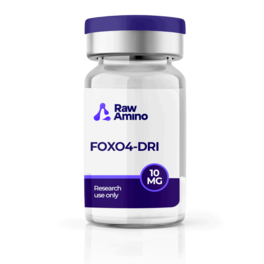
Senescent-Cell Burden and Apoptotic Clearance: FOXO4-DRI
FOXO4-DRI has been described as a senolytic candidate that may interfere with the interaction between FOXO4 and p53, thereby enabling apoptotic programs in senescent cells while sparing non-senescent counterparts in controlled models. By reducing the load of cells that adopt a pro-inflammatory secretory phenotype, FOXO4-DRI may secondarily influence intercellular communication, chronic inflammation, and tissue repair dynamics. Findings to date suggest selective activity in aged or chemotoxicity-challenged settings; however, the breadth, durability, and context-dependence of these effects remain under active investigation, and additional studies are needed to clarify dose–response relationships, off-target risks, and reproducibility across tissues and species.
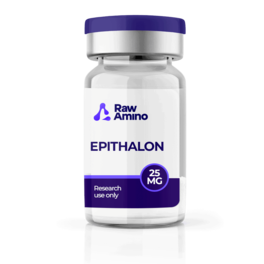
Telomere Biology and Epigenetic Programs: Epitalon
Epitalon (AEDG) has been reported to influence telomere maintenance through pathways that may involve cAMP–PKA–CREB signaling and transcriptional control of TERT, potentially supporting telomere dynamics in experimental systems. Beyond telomere biology, exploratory work proposes that Epitalon could engage epigenetic regulatory circuits and antioxidant responses, which might connect telomere attrition to broader hallmark domains (e.g., proteostasis and mitochondrial stress). As these mechanisms are complex and context-sensitive, current results should be interpreted as preliminary, with further studies warranted to assess long-term stability of effects and interaction with chromatin state, nutrient sensing, and cell-cycle checkpoints.
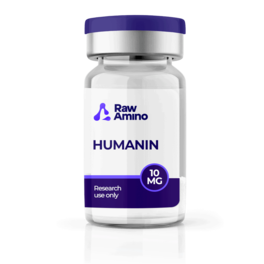
Mitochondrial Stress, Oxidative Balance, and Inflammatory Tone: Humanin
Humanin is a mitochondria-associated peptide that has been investigated for protective signaling in models of oxidative and proteotoxic stress. Proposed mechanisms include mitigation of amyloid-beta–associated toxicity, modulation of superoxide dismutase activity, attenuation of NF-κB–linked inflammatory cues, and regulation of apoptosis through interactions with BAX/BCL-2 family proteins. Through these pathways, Humanin may touch multiple hallmarks at once—mitochondrial dysfunction, loss of proteostasis, and chronic inflammation—potentially stabilizing cellular homeostasis under stress. The magnitude and persistence of these effects appear to depend on cell type, stressor, and exposure conditions, underscoring the importance of standardized experimental designs.
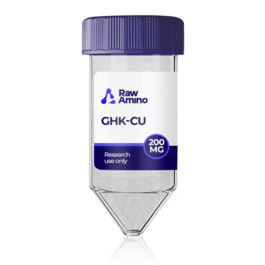
Matrix Remodeling, Proteostasis Interfaces, and Cutaneous Biology: GHK-Cu
GHK-Cu has been studied for actions that include upregulation of collagen and glycosaminoglycan synthesis, support of wound-healing cascades, and regulation of inflammatory mediators. These activities may intersect with proteostasis (via matrix turnover and protein quality control), intercellular communication (through cytokine modulation), and mitochondrial/oxidative balance (via antioxidant properties reported in vitro and in vivo models). Signals through MAPK/ERK and PI3K/Akt have been described, suggesting crosstalk with nutrient-sensing pathways. The breadth of these observations positions GHK-Cu as a useful probe for studying how extracellular matrix cues integrate with intracellular stress responses relevant to aging phenotypes.
Angiogenesis, Tissue Integrity, and Stress Adaptation: BPC-157
BPC-157 has been explored in preclinical contexts for potential pro-angiogenic effects, modulation of inflammatory signaling, and protection against oxidative stress. Reports of enhanced microvascular stability and support of extracellular matrix organization indicate possible relevance to several hallmarks, including stem cell function (through niche support), altered intercellular communication (via cytokine tone), and loss of proteostasis (through effects on tissue repair programs). While these findings are of interest for musculoskeletal and gastrointestinal models, additional work is needed to map upstream receptors with precision and to delineate which pathways are primary versus compensatory.
Conclusion
Collectively, the peptides summarized here—FOXO4-DRI, Epitalon, Humanin, GHK-Cu, and BPC-157—appear to intersect with multiple hallmarks of aging across cellular, mitochondrial, and matrix-level processes. The evidence base suggests potential for senescent-cell clearance, telomere and epigenetic modulation, mitigation of mitochondrial and inflammatory stress, and support for tissue remodeling. At the same time, most findings remain preclinical, and effect sizes, durability, and safety profiles require cautious interpretation. Continued, well-controlled studies—ideally using standardized models and multi-omics readouts—may help clarify when and how peptide signaling can be leveraged to interrogate aging mechanisms with higher resolution.
References
- Carlos López-Otín, Maria A. Blasco, Linda Partridge, Manuel Serrano, Guido Kroemer, Hallmarks of aging: An expanding universe, Cell, Volume 186, Issue 2, 2023, Pages 243-278, ISSN 0092-8674, https://doi.org/10.1016/j.cell.2022.11.001.
- Vukojevic J, Milavić M, Perović D, et al. Pentadecapeptide BPC 157 and the central nervous system. Neural Regen Res. 2022;17(3):482-487. doi:10.4103/1673-5374.320969
- Yen K, Mehta HH, Kim SJ, et al. The mitochondrial derived peptide humanin is a regulator of lifespan and healthspan. Aging (Albany NY). 2020;12(12):11185-11199. doi:10.18632/aging.103534
- Baar MP, Brandt RMC, Putavet DA, et al. Targeted Apoptosis of Senescent Cells Restores Tissue Homeostasis in Response to Chemotoxicity and Aging. Cell. 2017;169(1):132-147.e16. doi:10.1016/j.cell.2017.02.031
- Pickart L, Margolina A. Regenerative and Protective Actions of the GHK-Cu Peptide in the Light of the New Gene Data. Int J Mol Sci. 2018;19(7):1987. Published 2018 Jul 7. doi:10.3390/ijms19071987
- Khavinson V, Diomede F, Mironova E, et al. AEDG Peptide (Epitalon) Stimulates Gene Expression and Protein Synthesis during Neurogenesis: Possible Epigenetic Mechanism. Molecules. 2020;25(3):609. Published 2020 Jan 30. doi:10.3390/molecules25030609
Disclaimer: The information provided is intended solely for educational and scientific discussion. The compounds described are strictly intended for laboratory research and in-vitro studies only. They are not approved for human or animal consumption, medical use, or diagnostic purposes. Handling is prohibited unless performed by licensed researchers and qualified professionals in controlled laboratory environments.”