What Is Pal-GHK?
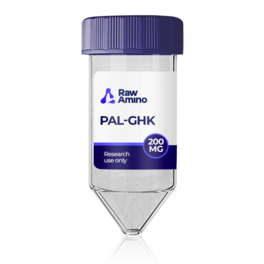
Pal-GHK peptide, formally known as Palmitoyl Tripeptide-1, is one of the more extensively studied compounds in collagen synthesis peptide and skin peptide research circles. It is a synthetic compound amalgamating the tripeptide sequence glycine-histidine-lysine (GHK), a naturally occurring element first identified in human plasma in 1973 by Pickart et al., with a palmitic acid component. The fusion of these two elements is speculated to introduce improved skin permeability, particularly within the stratum corneum in laboratory models.
The GHK sequence is proposed to serve as a natural signaling molecule to fibroblasts in laboratory settings, the primary cellular agents responsible for synthesizing collagen and other critical components of the extracellular matrix. Pal-GHK peptide’s research profile spans collagen synthesis, antioxidant potential, and skin surface interactions across multiple laboratory research contexts, making it one of the more broadly studied palmitoyl skin peptides in contemporary dermal biology research.
Pal-GHK Peptide and Collagen Synthesis Research
At the foundation of this collagen synthesis peptide’s research profile is its proposed ability to stimulate collagen production in laboratory models. The GHK sequence within Pal-GHK is proposed to emerge as a byproduct during the hydrolysis of collagen in laboratory settings, indicative of collagen degradation. Such fragments generated during tissue damage may serve as signaling molecules to activate fibroblasts, thereby potentially initiating the synthesis of new collagen in these experimental settings.
Research by Maquart et al. suggested that the presence of the GHK triplet in the alpha 2(I) chain of type I collagen implies potential liberation by proteases at wound sites in laboratory models, with researchers proposing in situ signaling interactions. Pal-GHK, with its analogous Gly-His-Lys sequence, appeared to present a plausible capacity to stimulate the production of collagen, elastin, and glycosaminoglycans in laboratory settings, considered pivotal constituents of the skin’s extracellular matrix.
A placebo-controlled study involving laboratory research subjects used skin thickness as a metric, with results indicating a modest yet statistically notable increase of approximately 4% compared to the placebo in these laboratory settings, supporting researchers’ hypotheses about this skin peptide’s potential interactions in dermal cell regeneration contexts.
Pal-GHK Peptide and Antioxidant Research
One of the most distinctive areas of Pal-GHK peptide research involves its proposed antioxidant interactions in laboratory models, setting it apart from many other collagen synthesis peptides in the broader skin peptide research landscape. Laboratory research by Sakuma et al. suggested that the amino acid sequence within Pal-GHK may possess notable antioxidative potential in laboratory settings, appearing to surpass the interactions of other widely recognized antioxidative peptides including carnosine and reduced glutathione in these experimental models.
Researchers employed an ESR spin-trapping technique to explore Pal-GHK’s potential to moderate signals associated with hydroxyl and peroxyl radicals generated in distinct chemical reaction systems in laboratory settings. Research by Cebrián et al. further suggested that the amino acid sequence embedded in Pal-GHK may harbor the capacity to moderate protein glycation and manifest anti-reactive carbonyl species interactions against various radicals including acrolein, malondialdehyde, and 4-hydroxynonenal in laboratory models.
Research by Park et al. reported a notable reduction in iron release from damaged tissue following exposure to Pal-GHK in laboratory settings, with researchers proposing the peptide may exhibit potential for moderating oxidation within affected tissues. Additionally, Pal-GHK appeared to moderate the production of reactive oxygen species and inflammatory cytokines in laboratory models, while potentially enhancing antioxidant enzyme activity in these settings. Research using animal laboratory models suggested that Pal-GHK may suppress the activation of NF-κB and p38 MAPK signaling pathways in laboratory conditions, with researchers observing reduced infiltration of inflammatory cells and lower levels of TNF-1 and IL-6 production in these experimental settings.
Research by Zhang et al. further proposed that Pal-GHK may moderate oxidative stress in alveolar epithelial cells in laboratory models by potentially elevating the expression of Nrf2, a regulatory protein implicated in governing the expression of antioxidant proteins in these laboratory settings.
Pal-GHK Peptide and Wrinkle Research
Rounding out this skin peptide’s broad laboratory research profile, Pal-GHK has also been studied for its potential interactions with skin surface parameters and wrinkle-related observations in laboratory models. A clinical trial exploring a cream formulation incorporating Pal-GHK reported a noticeable reduction in wrinkle length, depth, and skin roughness in the laboratory models studied, indicating the peptide’s potential interactions in skin structure research contexts.
A further laboratory investigation explored the combined interactions of Pal-GHK and Pal-GQPR, a palmitoylated tetrapeptide derived from immunoglobulin G, conducted as a blind, randomized study. Researchers observed notable interactions across wrinkle depth, volume, density, skin roughness, and the surface area occupied by deep wrinkles in these laboratory settings. Researchers proposed this comprehensive set of observations may underscore the synergistic interactions of combined palmitoyl peptides in laboratory models studying skin texture and aging-related parameters, though all findings are presented as preliminary laboratory observations requiring further controlled investigation.
References
- Pickart L, Thaler MM. Tripeptide in human serum which prolongs survival of normal liver cells. Nature New Biol. 1973;243(124):85–87.
- Lintner K, Peschard O. Biologically active peptides: from a laboratory bench curiosity to a functional skin care product. Int J Cosmet Sci. 2000;22(3):207–218.
- Sakuma S, et al. The peptide glycyl-L-histidyl-L-lysine is an endogenous antioxidant in living organisms. Int J Physiol Pathophysiol Pharmacol. 2018;10(3):132–138.
- Cebrián J, et al. New anti-RNS and -RCS products for cosmetic treatment. Int J Cosmet Sci. 2005;27(5):271–278.
- Park JR, et al. The tri-peptide GHK-Cu complex ameliorates lipopolysaccharide-induced acute lung injury in mice. Oncotarget. 2016;7(36):58405–58417.
- Sakuma S, et al. The peptide glycyl-L-histidyl-L-lysine is an endogenous antioxidant in living organisms. Int J Physiol Pathophysiol Pharmacol. 2018;10(3):132–138.
- Zhang Q, et al. Glycyl-L-histidyl-L-lysine-Cu2+ attenuates cigarette smoke-induced pulmonary emphysema and inflammation by reducing oxidative stress pathway. Front Mol Biosci. 2022;9:925700.
Disclaimer: The information provided is intended solely for educational and scientific discussion. The compounds described are strictly intended for laboratory research and in-vitro studies only. They are not approved for human or animal consumption, medical use, or diagnostic purposes. Handling is prohibited unless performed by licensed researchers and qualified professionals in controlled laboratory environments.