Introduction
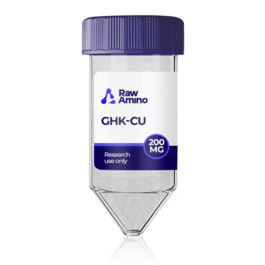
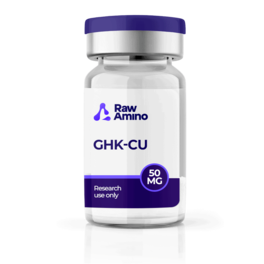
The tripeptide–metal complex GHK-Cu (Glycyl-L-histidyl-L-lysine–copper) has become a molecule of sustained scientific interest within molecular biology and biochemistry for its multifaceted regulatory functions in oxidative balance, cellular signaling, and tissue dynamics. Initially identified as a natural component of mammalian plasma and extracellular fluids, GHK-Cu has since been studied extensively for its influence on cellular repair mechanisms, metal homeostasis, and gene regulatory networks under experimental conditions. Its coordination with copper ions provides a catalytic interface through which redox-sensitive enzymes and transcriptional pathways can be modulated, revealing a complex interplay between trace metals and peptide-mediated signaling cascades.
Research into GHK-Cu has increasingly focused on its potential to attenuate inflammatory signaling and oxidative damage within controlled preclinical systems. Inflammation remains a fundamental process in biological defense and repair, but chronic or unresolved inflammation contributes to a spectrum of degenerative outcomes in laboratory models. Because GHK-Cu simultaneously interacts with cytokine expression, antioxidant enzyme systems, and matrix remodeling pathways, it serves as an instructive model for exploring how small peptide–metal complexes influence homeostatic restoration at the cellular and tissue levels. The continued study of GHK-Cu thus offers a mechanistic framework for understanding how molecular coordination chemistry intersects with biological regulation.
Structural Chemistry and Metal Coordination Dynamics
GHK-Cu represents a high-affinity coordination complex between a tripeptide ligand (GHK) and a divalent copper ion. The peptide sequence provides three potential donor sites—an amino terminus, an imidazole nitrogen from histidine, and a carboxylate terminus—that enable stable chelation of Cu(II). This complex exhibits high redox flexibility, allowing reversible oxidation-reduction transitions that participate in catalytic biochemical reactions. In cell-free systems, GHK-Cu readily exchanges copper with other metalloproteins, influencing enzymatic activity within oxidoreductase networks.
This metal-binding versatility supports its involvement in multiple processes: stabilization of superoxide dismutase (SOD) cofactors, facilitation of lysyl oxidase cross-linking in extracellular matrices, and modulation of metalloprotease activity during matrix turnover. These functions position GHK-Cu as a biochemical relay that integrates trace metal availability with enzymatic activity and structural protein maintenance, highlighting a fundamental link between metallopeptide chemistry and cellular redox state.
Regulation of Cytokine Networks and Inflammatory Signaling
In experimental inflammation models, GHK-Cu has been observed to modulate cytokine transcription and translation in ways that rebalance immune signaling. Laboratory investigations indicate that the complex can suppress pro-inflammatory mediators such as tumor necrosis factor-α (TNF-α) and interleukin-6 (IL-6), while upregulating counter-regulatory molecules including transforming growth factor-β (TGF-β). This dual modulation suggests that GHK-Cu acts at nodal points within NF-κB and STAT-mediated pathways that determine the magnitude and duration of inflammatory responses.
By tempering cytokine release, GHK-Cu appears to reduce leukocyte infiltration and limit bystander cell stress in preclinical models of tissue irritation and oxidative challenge. In addition, its copper component may act as a cofactor for enzymes involved in antioxidant defense, indirectly suppressing reactive oxygen species that drive inflammatory amplification loops. These findings support the hypothesis that GHK-Cu functions as a biochemical switch that recalibrates inflammatory homeostasis through intertwined redox and transcriptional control.
Oxidative Stress Mitigation and Redox Homeostasis
Oxidative imbalance represents a key driver of cellular injury, and GHK-Cu’s role as an antioxidant mediator has been documented in multiple laboratory assays. The peptide–metal complex enhances the activity of endogenous antioxidant enzymes such as Cu/Zn-superoxide dismutase and catalase, leading to decreased superoxide and hydrogen peroxide accumulation. Furthermore, GHK-Cu has been shown to inhibit lipid peroxidation in membrane systems by sequestering free iron ions that catalyze Fenton-type reactions.
Beyond direct antioxidant effects, GHK-Cu influences redox-sensitive gene networks by modulating transcription factors including Nrf2, which governs the expression of detoxification and phase-II response enzymes. These multifaceted actions create a redox environment conducive to recovery from oxidative stress, making GHK-Cu an effective molecular probe for studying how trace metal coordination can regulate cellular defenses in vitro.
Extracellular Matrix Remodeling and Fibrotic Regulation
One of the defining features of GHK-Cu in experimental biology is its influence on extracellular matrix (ECM) turnover. The complex enhances fibroblast activity, stimulating the synthesis of structural proteins such as collagen, elastin, decorin, and proteoglycans while concurrently activating matrix metalloproteinases (MMPs) responsible for degrading damaged ECM components. This balanced activity supports matrix renewal and architectural integrity.
In fibrotic models, GHK-Cu reduces the deposition of fibrillar collagen and suppresses overexpression of fibrinogen, both of which contribute to excessive scarring. These anti-fibrotic effects appear to involve downregulation of TGF-β–dependent signaling and altered expression of tissue inhibitor proteins (TIMPs) that modulate MMP activity. The ability of GHK-Cu to coordinate matrix degradation and synthesis provides valuable insight into the biochemical checkpoints that separate adaptive remodeling from pathological fibrosis.
Cellular Regeneration and Metal-Dependent Repair Pathways
Preclinical studies show that GHK-Cu promotes cellular proliferation and differentiation in a variety of tissue models. In controlled in-vitro assays, the complex acts as a chemoattractant for fibroblasts and keratinocytes, initiating cascades associated with tissue repair. It enhances the expression of mRNA transcripts involved in structural protein formation, while the bound copper provides essential cofactors for lysyl oxidase and other enzymes necessary for ECM cross-linking.
In neuronal and vascular culture systems, GHK-Cu contributes to axonal extension and angiogenic processes by supporting copper-dependent signaling in developing cellular networks. The combination of biochemical energy support, enzymatic activation, and structural regulation positions GHK-Cu as a molecular integrator of metabolic and architectural recovery mechanisms—an observation that continues to drive basic research into metallopeptide-guided regeneration.
Inflammatory and Oxidative Interactions in Respiratory and Neural Models
Within controlled pulmonary models, GHK-Cu has demonstrated the capacity to downregulate inflammatory gene expression and restore matrix organization following oxidative insult. Experimental data reveal decreased infiltration of immune cells and reduced cytokine concentrations in bronchoalveolar lavage fluids following peptide exposure, suggesting a systemic dampening of inflammatory cascades. Parallel studies indicate that GHK-Cu enhances antioxidant enzyme expression within lung epithelial systems, mitigating oxidative damage to alveolar structures.
In neural tissue preparations, GHK-Cu appears to modulate microglial activation and protect neurons from reactive oxygen species–mediated injury. The peptide’s capacity to stabilize intracellular copper distribution may further contribute to its neuroprotective characteristics, as imbalanced metal homeostasis is a known precipitant of oxidative stress in neural environments. These findings highlight the multifactorial role of GHK-Cu in preserving cellular viability under oxidative and inflammatory challenge in experimental models.
Integration with Vascular and Metabolic Systems
GHK-Cu’s biochemical influence extends to the vascular endothelium, where it modulates nitric-oxide–related signaling pathways and assists in maintaining microvascular integrity. In laboratory assays, the complex reduces endothelial adhesion molecule expression, potentially limiting monocyte binding and subsequent inflammatory cascades. Moreover, by lowering oxidative stress within vascular smooth muscle cells, GHK-Cu contributes to the preservation of arterial elasticity in preclinical conditions.
On a metabolic level, GHK-Cu’s regulation of copper availability intersects with enzymatic reactions that control lipid oxidation and mitochondrial respiration. This interplay may partially explain observed improvements in cellular energy efficiency and metabolic balance during oxidative stress experiments. Collectively, these attributes position GHK-Cu as a mechanistic link between metal metabolism, redox equilibrium, and vascular health under controlled laboratory conditions.
Conclusion
GHK-Cu functions as a multifaceted biochemical modulator with extensive implications for understanding how peptide–metal complexes influence inflammatory, oxidative, and regenerative processes in preclinical research. Its actions encompass cytokine modulation, redox regulation, ECM remodeling, and neurovascular protection—each contributing to the restoration of equilibrium in experimental models of chronic cellular stress. By bridging peptide chemistry with systems biology, GHK-Cu offers a valuable framework for studying the molecular choreography that governs tissue maintenance and repair.
While the existing data reveal broad mechanistic insights, further controlled studies are required to delineate dosage thresholds, isoform-specific signaling routes, and kinetic parameters that define its bioactivity. Continued exploration of GHK-Cu under laboratory conditions will help clarify how small bioactive peptides coordinate redox-metal interactions across cellular systems, advancing our understanding of integrated biochemical resilience.
References
- Dubal, D. B., et al. Life Extension Factor Klotho Enhances Cognition. Cell Reports, 7(4), 1065–1076 (2014).
- Hu, M. C., et al. Klotho Deficiency Causes Vascular Calcification in Chronic Kidney Disease. Journal of the American Society of Nephrology, 24(1), 77–85 (2013).
- Kuro-o, M., et al. Mutation of the Mouse Klotho Gene Leads to a Syndrome Resembling Ageing. Nature, 390(6655), 45–51 (1997).
- Kurosu, H., et al. Regulation of Fibroblast Growth Factor-23 Signaling by Klotho. Journal of Biological Chemistry, 281(10), 6120–6123 (2006).
Disclaimer: The information provided is intended solely for educational and scientific discussion. The compounds described are strictly intended for laboratory research and in-vitro studies only. They are not approved for human or animal consumption, medical use, or diagnostic purposes. Handling is prohibited unless performed by licensed researchers and qualified professionals in controlled laboratory environments.