What Is DSIP?
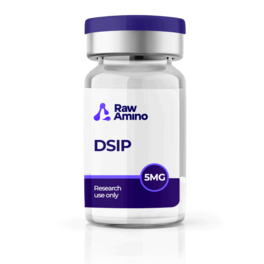
DSIP — short for Delta Sleep-Inducing Peptide, also known by its clinical name Emideltide — is one of the more intriguing compounds currently being explored in neuropeptide research circles. This naturally occurring nine amino acid peptide was initially isolated from the central nervous system of research models undergoing electrically induced sleep in laboratory settings — a discovery that immediately positioned it as a compelling subject for sleep and neuroscience research.
While the precise biological functions of this delta sleep peptide remain incompletely understood, researchers have proposed that it may interact with several key neurotransmitter systems within the central nervous system — potentially influencing sleep architecture, stress responses, and a range of neural signaling pathways in laboratory models. The specific receptor systems believed to be involved include NMDA receptors, GABA receptors, opioid receptors, and alpha-1 adrenergic receptors — each of which plays a distinct role in the broader landscape of CNS signaling.
NMDA and GABA Receptors: Balancing Excitation and Inhibition
At the heart of DSIP’s neuropeptide research profile is its proposed ability to modulate two of the central nervous system’s most fundamental signaling systems — the excitatory glutamate system and the inhibitory GABA system — in opposite but complementary directions in laboratory models.
Research by Grigor’ev et al. suggests that DSIP may interact with both NMDA receptors and GABA receptors in experimental neuronal preparations. NMDA receptors are associated with glutamate — one of the brain’s primary excitatory neurotransmitters — while GABA receptors are linked to inhibitory neurotransmission, which is thought to play a key role in reducing neural activity and supporting relaxed or sleep-conducive states in laboratory models.
In laboratory settings, DSIP appeared to potentiate — or amplify — the responses mediated by GABA receptors across various brain regions. Simultaneously, it appeared to exert an inhibitory influence on NMDA receptor-mediated activity, reducing excitatory responses in cortical and hippocampal neurons. Data from calcium uptake experiments further suggested that DSIP may interfere with NMDA receptor function at presynaptic sites — pointing to a nuanced, multi-site modulatory role in excitatory neurotransmission.
Further research by Sudakov et al. proposed that DSIP’s effects on neuronal activity across several brain regions — including the sensorimotor cortex, dorsal hippocampus, ventral anterior thalamic nucleus, and lateral hypothalamus — may be mediated specifically through NMDA receptor interactions. Notably, when NMDA receptor activity was attenuated using a non-competitive antagonist in laboratory models, DSIP’s effects on neuronal activation were considerably reduced — providing additional support for the theory that NMDA receptors play a central role in this sleep inducing peptide’s mechanism of action.
DSIP and Stress Response Signaling in Laboratory Models
Beyond its interactions with NMDA and GABA receptors, DSIP has also been studied for its potential interactions with neuropeptides involved in stress responses in laboratory models. Additional research by Sudakov et al. observed that DSIP exposure appeared to influence several stress-related signaling molecules simultaneously in research models.
Specifically, DSIP appeared to contribute to increased levels of Substance P in both the hypothalamus and plasma, while initially decreasing beta-endorphin levels before subsequently increasing them. Perhaps most notably, DSIP appeared to reduce corticosterone levels — a marker commonly elevated in stressed research models — suggesting a possible attenuating effect on stress response signaling across multiple pathways in laboratory settings. Researchers have proposed that these combined observations position this delta sleep peptide as a potentially useful tool for investigating the interplay between sleep, stress, and neuroendocrine signaling in controlled laboratory environments.
Adrenergic Receptor Interactions in the Pineal Gland
Another dimension of DSIP’s neuropeptide research profile involves its potential interactions with the adrenergic system — specifically within the pineal gland. Research by Graf et al. suggested that DSIP may modulate alpha-1 adrenergic receptors in the pineal gland, influencing how the gland responds to hormones such as norepinephrine in laboratory models.
Specifically, DSIP exposure appeared to amplify the activation of an enzyme called N-acetyltransferase — a key enzyme in pineal gland function — beyond the levels typically observed with norepinephrine alone. Researchers identified the alpha-1 adrenergic receptor as the primary site of this interaction, and proposed that this modulation of receptor responsiveness may represent a broader mechanism through which DSIP influences downstream processes — potentially including its sleep-related and stress-tolerance properties observed in laboratory settings.
DSIP and the Opioid System: An Indirect Relationship
One of the more nuanced aspects of this sleep inducing peptide’s research profile involves its potential interactions with the opioid system in laboratory models — interactions that appear to be indirect rather than direct in nature. Research by Nakamura et al. explored this relationship using radiolabeled binding assays, finding that DSIP did not appear to displace endogenous ligands from opioid receptors or act as a direct agonist at these receptor sites.
Instead, experiments using brainstem tissue slices suggested that DSIP may stimulate the release of endogenous opioid peptides — particularly Met-enkephalin — in a concentration-dependent manner. Researchers proposed that by supporting the availability of naturally occurring opioid peptides rather than directly binding to opioid receptors, DSIP may modulate the endogenous opioid system through an indirect pathway — an observation that has contributed to interest in this delta sleep peptide as a research tool for studying the relationship between sleep architecture and endogenous opioid signaling in laboratory settings.
Research by Dick et al. further suggested that via these opioid system interactions, DSIP may offer research value in laboratory models exploring the neurobiology of withdrawal-related sleep disruption — an area that researchers have proposed warrants further controlled investigation.
DSIP and Sleep Architecture: Slow-Wave Sleep Research
Perhaps the most directly relevant area of DSIP’s research profile for those interested in sleep inducing peptide science involves its potential interactions with sleep architecture — and specifically with the slow-wave sleep (SWS) phase, also known as the S3 phase.
Research by Schneider-Helmert et al. observed that DSIP exposure in laboratory models appeared to reduce the time it takes to transition into deep slow-wave sleep, while also increasing the overall duration of SWS — primarily by prolonging individual SWS episodes rather than increasing their frequency. These changes appeared to be associated with a significant reduction in wakefulness during the recording period, while REM sleep remained largely unaffected — suggesting a selective modulatory effect on deep sleep stages specifically.
Researchers noted that these observed shifts toward deeper, more consolidated slow-wave sleep share certain similarities with changes associated with increased serotonergic activity in the brain. Given that elevated serotonin signaling is correlated with increased SWS in laboratory models, researchers have proposed that DSIP may interact with or otherwise influence serotonergic pathways — potentially contributing to its sleep-facilitating properties as a delta sleep peptide.
More recent research by Kovalzon et al. further suggested that DSIP may lead to an immediate increase in sleep pressure in laboratory models, with sleep occurrence increasing by approximately 59% within two hours of initiating exposure. Researchers also proposed that the peptide may support sleep efficiency by theoretically shortening sleep onset — findings that continue to make DSIP one of the more actively studied compounds in neuropeptide research involving sleep biology.
References
- Grigor’ev VV, et al. Effects of delta sleep-inducing peptide on pre- and postsynaptic glutamate and postsynaptic GABA receptors. Bull Exp Biol Med. 2006;142(2):186–8.
- Sudakov KV, et al. Delta-sleep inducing peptide and neuronal activity after glutamate microiontophoresis. Pathophysiology. 2004;11(2):81–86.
- Sudakov KV, et al. Delta-sleep-inducing peptide sequels in the mechanisms of resistance to emotional stress. Ann N Y Acad Sci. 1995;771:240–51.
- Graf MV, Schoenenberger GA. Delta sleep-inducing peptide modulates the stimulation of rat pineal N-acetyltransferase activity. J Neurochem. 1987;48(4):1252–7.
- Nakamura A, et al. Delta-sleep-inducing peptide stimulates the release of immunoreactive Met-enkephalin from rat lower brainstem slices. Brain Res. 1989;481(1):165–8.
- Dick P, et al. Successful treatment of withdrawal symptoms with delta sleep-inducing peptide. Neuropsychobiology. 1983;10(4):205–8.
- Susić V, et al. The effects of delta-sleep-inducing peptide on wakefulness and sleep patterns in the cat. Brain Res. 1987;414(2):262–70.
- Schneider-Helmert D, et al. Acute and delayed effects of DSIP on human sleep behavior. Int J Clin Pharmacol Ther Toxicol. 1981;19(8):341–5.
Disclaimer: The information provided is intended solely for educational and scientific discussion. The compounds described are strictly intended for laboratory research and in-vitro studies only. They are not approved for human or animal consumption, medical use, or diagnostic purposes. Handling is prohibited unless performed by licensed researchers and qualified professionals in controlled laboratory environments.