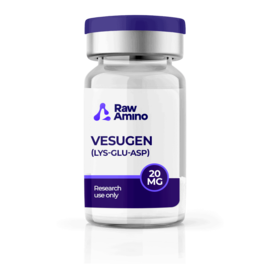
What Is Vesugen?
Vesugen peptide, also known as KED, is a tripeptide bioregulator first identified by Russian scientist Vladimir Khavinson. Derived from a specific sequence of amino acids, lysine, glutamic acid, and aspartic acid, it is associated with vascular wall proteins and has drawn considerable interest in vascular peptide research for its proposed influence on vascular endothelial cells, which line the interior surface of blood vessels.
As a research compound, Vesugen is of interest across several laboratory research areas including anti-aging vascular peptide science, neuroprotection, and metabolic regulation. Researchers have proposed that this compound may interact with cellular processes involved in cell survival and tissue structure repair in laboratory models, with its proposed mechanism thought to involve direct interactions with DNA through hydrogen bonding in the minor groove, offering a plausible explanation for its wide-ranging potential interactions that appear independent of conventional receptor-mediated mechanisms in laboratory settings.
Vesugen Peptide and Vasoprotective Properties
At the core of Vesugen peptide research is its proposed vasoprotective potential, particularly in relation to vascular endothelial cell function in laboratory models. Researchers have proposed that Vesugen’s mechanism may involve the modulation of cellular proliferation through regulation of Ki-67, a protein closely associated with cell division. The natural aging process is typically associated with a decline in Ki-67 expression, potentially reducing endothelial renewal capacity in laboratory models.
Vesugen is hypothesized to interact with the promoter regions of the Ki-67 gene, potentially influencing its expression and stimulating endothelial cell proliferation in laboratory settings. Researchers proposed this may be relevant to studying degenerative vascular conditions including diminished proliferative capacity and increased presence of polyploid cells, both thought to be linked to vascular lesions in laboratory models.
In vitro studies suggested that Vesugen may modulate the expression of endothelin-1, a molecule typically elevated in atherosclerotic and restenotic laboratory models. By potentially normalizing endothelin-1 levels, Vesugen may contribute to moderating these vascular pathology models in laboratory settings. The peptide also appeared to potentially enhance cellular communication through connexin expression, with connexin proteins considered essential for maintaining endothelial integrity in laboratory models. Vesugen’s proposed anti-aging vascular peptide properties may also be linked to an increase in sirtuin1 expression, a protein involved in DNA repair thought to be critical for preserving cardiovascular function in laboratory settings.
Vesugen Peptide and Neuroprotection Research
Beyond its vascular peptide research profile, Vesugen has also been studied for its potential interactions with central nervous system cell biology in laboratory models. Experimental data suggested that Vesugen exposure in CNS disorder laboratory models may have the potential to support cognitive functioning, with researchers proposing the peptide may contribute to the restoration of synaptic plasticity in these settings.
Research by Khavinson et al. suggested that Vesugen may regulate the expression of genes associated with apoptosis and neuronal differentiation in laboratory models, including genes involved in neuronal survival and growth, as well as genes implicated in the pathogenesis of neurodegenerative conditions in laboratory research contexts. Additionally, research suggested that Vesugen, alongside other peptides including Epitalon, Pinealon, and Violon, may moderate the effects of hypoxia in CNS laboratory models by enhancing the activity of antioxidative enzymes, potentially counteracting the neurotoxic effects of reactive oxygen species generated under low oxygen conditions in these settings.
Vesugen Peptide and Cellular Aging in Vascular Cells
One of the more nuanced areas of Vesugen’s anti-aging vascular peptide research profile involves its proposed interactions with cellular aging processes in fibroblast laboratory models. Research by Khavinson et al. suggested that Vesugen may modulate the behavior of prostatic fibroblasts, particularly in relation to the expression of specific differentiation markers in laboratory settings. This appeared more pronounced in cells exhibiting signs of senescence, as evidenced by an observed reduction in differentiation markers in late-passage cultures in laboratory models.
Specifically, Vesugen appeared to potentially enhance the expression of CXCL12 and WEGC1 within these fibroblasts in laboratory settings. CXCL12, also referred to as stromal cell-derived factor 1, is a chemokine associated with immune regulation, hematopoiesis, and angiogenesis in research contexts. Researchers noted that Vesugen’s influence appeared more significant in aged cell cultures in laboratory settings, suggesting a possible geroprotective role in supporting the preservation or restoration of cellular functions that typically decline over time in these models.
Research in clinical laboratory settings further indicated that Vesugen may exhibit an anabolic influence on central nervous system cells, potentially linked to increased cellular activity within the brain and other vital organs. Researchers also noted the observation of prooxidant activity through chemiluminescence in laboratory settings, suggesting Vesugen might induce oxidative processes, alongside a noted decrease in CD34+ hematopoietic stem cells, potentially implying a reduction in active hemopoiesis during Vesugen exposure in these models.
Vesugen Peptide and Metabolic Regulation Research
Rounding out this vascular peptide research subject’s broad laboratory profile, Vesugen has also been studied for its potential interactions with metabolic regulation pathways in laboratory models. Research suggested that Vesugen peptide may be associated with the activation of sirtuin 1 (SIRT1), a protein associated with insulin sensitivity in laboratory settings. Experimental studies in murine models indicated that SIRT1 activation by compounds such as Vesugen may potentially support insulin sensitivity in these experimental conditions, with researchers noting that the finding that SIRT1 improves insulin sensitivity has implications for understanding insulin resistance in laboratory models.
Beyond its proposed interactions with insulin sensitivity, SIRT1 is also suggested to be involved in regulating PGC1-alpha and the ERR-alpha complex, both considered critical regulators within the metabolic pathway in laboratory research contexts. The possible modulation of these pathways by SIRT1 activation through Vesugen may contribute to improved metabolic function in laboratory models, making metabolic regulation an active and growing area of this anti-aging vascular peptide’s broader research profile.
References
- National Center for Biotechnology Information. PubChem Compound Summary for CID 87571363, Lys-Glu-Asp. 2024.
- Khavinson V, et al. Neuroprotective Effects of Tripeptides-Epigenetic Regulators in Mouse Model of Alzheimer’s Disease. Pharmaceuticals. 2021;14(6):515.
- Kozlov KL, et al. Molecular aspects of vasoprotective peptide KED activity during atherosclerosis and restenosis. Adv Gerontol. 2016;29(4):646–650.
- Khavinson VK, et al. Peptide KED: Molecular-Genetic Aspects of Neurogenesis Regulation in Alzheimer’s Disease. Bull Exp Biol Med. 2021;171(2):190–193.
- Kozina LS. Investigation of antihypoxic properties of short peptides. Adv Gerontol. 2008;21(1):61–7.
- Khavinson VKh, et al. Peptides tissue-specifically stimulate cell differentiation during their aging. Bull Exp Biol Med. 2012;153(1):148–151.
- Meshchaninov VN, et al. Effect of synthetic peptides on aging of patients with chronic polymorbidity. Adv Gerontol. 2015;28(1):62–7.
- Sun C, et al. SIRT1 improves insulin sensitivity under insulin-resistant conditions by repressing PTP1B. Cell Metab. 2007;6(4):307–319.
- Nemoto S, Fergusson MM, Finkel T. SIRT1 functionally interacts with the metabolic regulator PGC-1alpha. J Biol Chem. 2005;280(16):16456–16460.
Disclaimer: The information provided is intended solely for educational and scientific discussion. The compounds described are strictly intended for laboratory research and in-vitro studies only. They are not approved for human or animal consumption, medical use, or diagnostic purposes. Handling is prohibited unless performed by licensed researchers and qualified professionals in controlled laboratory environments.