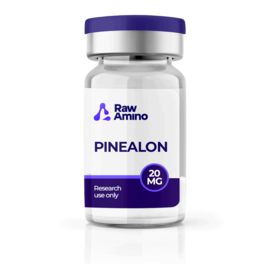
What Is Pinealon?
Pinealon peptide is one of the more intriguing compounds currently being explored across neuroprotective peptide and anti-aging brain peptide research circles. Pinealon is a tripeptide composed of three amino acids, L-glutamic acid, L-aspartic acid, and L-arginine (Glu-Asp-Arg), and is categorized as a synthetic peptide bioregulator due to its potential to interact with DNA and modulate gene expression in laboratory settings.
What makes this neuroprotective peptide particularly distinctive from a research standpoint is its proposed mechanism. Unlike most peptides, Pinealon does not appear to interact with cell surface or cytoplasmic receptors in laboratory models. Instead, researchers have hypothesized that due to its small molecular size, Pinealon may be capable of crossing lipid bilayers including cell and nuclear membranes, enabling direct interaction with DNA. Experimental data from HeLa cell studies supported the notion that Pinealon may penetrate both cellular and nuclear membranes in laboratory settings, suggesting it may function as a direct regulator of gene expression independent of conventional receptor-mediated mechanisms.
Pinealon Peptide and Neuron Protection
At the core of Pinealon peptide research is its proposed neuroprotective potential in laboratory models. Research conducted on prenatal rat models suggested that Pinealon may mitigate oxidative stress, potentially helping to preserve cognitive function and motor coordination in these laboratory settings. The study observed significant reductions in both reactive oxygen species (ROS) accumulation and the number of necrotic cells in brain tissue, suggesting that Pinealon might protect neurons from cell death in laboratory conditions.
Subsequent research by Khavinson et al. corroborated and expanded these findings, proposing that Pinealon may interact directly with the cell genome in laboratory models. Researchers noted that restriction of ROS accumulation and cell mortality appeared saturated at lower concentrations of the peptide, while cell cycle modulation continued at higher concentrations, suggesting multiple layers of cellular interaction in these experimental settings. Importantly, Pinealon appeared to modulate the cell cycle by activating proliferation pathways in laboratory models, with this effect appearing to offset some detrimental impacts of ROS under oxidative stress conditions rather than simply increasing cell numbers.
Further research on adult murine models subjected to hypoxic conditions observed that Pinealon may support neuronal resistance to hypoxic stress in laboratory settings. This protective interaction is thought to involve the stimulation of innate antioxidant enzyme systems and the limitation of excitotoxicity caused by NMDA, an amino acid derivative implicated in neuronal death during traumatic brain injury and ischemic conditions in laboratory models.
Pinealon Peptide and Serotonin-Related Neuroprotection
Building on its neuron protection profile, Pinealon has also been studied for its potential interactions with serotonin synthesis pathways in laboratory cell models. Research involving brain cortex cell cultures suggested that Pinealon peptide may support the expression of 5-tryptophan hydroxylase through epigenetic modifications in laboratory settings. 5-tryptophan hydroxylase is considered essential for the synthesis and release of serotonin, a neurotransmitter associated with neuroprotective and geroprotective properties in research contexts. This proposed interaction with serotonin-related pathways has added a further dimension to this anti-aging brain peptide’s neuroprotective research profile.
Pinealon Peptide and Sleep Regulation Research
Beyond its neuroprotective profile, Pinealon has also been studied for its potential interactions with sleep regulation and circadian rhythm processes in laboratory models. Preliminary research suggested that Pinealon may assist in moderating dysfunctions arising from disruptions to normal sleep patterns, such as those associated with shift work or long-distance travel in experimental settings. The peptide appeared to potentially reset the pineal gland to its baseline state in conditions of circadian rhythm disruption in laboratory models, potentially leading to more regulated sleep patterns, behavioral responses, and related physiological parameters.
Researchers proposed that the regulation of sleep has significant correlations with cellular aging processes, with disrupted sleep thought to negatively affect cognition, cardiovascular function, tissue recovery, and other biological parameters in laboratory settings. This positions Pinealon as a particularly interesting subject for researchers studying sleep disorders or organic conditions that affect the sleep-wake cycle in controlled laboratory environments.
Pinealon Peptide and Caspase-3 Modulation
One of the more mechanistically focused areas of Pinealon peptide research involves its proposed influence on caspase-3 activity across multiple cell types in laboratory models. Caspase-3 is considered to play a crucial role in initiating apoptosis, a genetically programmed process of cell death. Research suggested that Pinealon may impact cytokine signaling pathways that typically lead to elevated caspase-3 levels, potentially moderating this apoptotic pathway and reducing cellular damage caused by oxygen deprivation in laboratory ischemia models.
Research in myocardial infarction laboratory models suggested that Pinealon exposure may contribute to the reduction of caspase-3 levels following simulated cardiac ischemia in laboratory settings, with researchers proposing this might be relevant to the study of long-term cardiac remodeling in post-infarction laboratory models. The peptide also appeared to suppress caspase-3 expression in epidermal cell laboratory models, with researchers observing that decreased apoptosis in these cells appeared to support cell proliferation and regenerative processes in laboratory settings. These findings across multiple cell types have established caspase-3 modulation as a central theme in Pinealon peptide research.
Pinealon Peptide and Anti-Aging Brain Research
Rounding out this neuroprotective peptide’s broad research profile is its proposed potential to moderate cellular aging processes in the central nervous system and beyond in laboratory models. Research indicated that both Pinealon and a related peptide, Vesugen, may exhibit anabolic interactions in the brain in laboratory settings, potentially moderating the cellular aging process as measured by indicators of cellular age in these models.
A particularly notable area of Pinealon’s anti-aging brain peptide research profile involves its proposed interactions with irisin, a peptide that has been implicated in neural differentiation, proliferation, and energy expenditure within the brain in laboratory settings. Pinealon is thought to support irisin levels by modulating the expression of the gene responsible for irisin synthesis in laboratory models, potentially extending the activity of the enzyme that produces it. Researchers proposed that plasma irisin levels are closely associated with telomere length in laboratory models, with irisin expression also linked to calorie restriction, one of the few interventions reliably observed to support extended lifespans in laboratory settings. The potential interactions between Pinealon, irisin, and telomere-related processes have made this an increasingly active area of anti-aging brain peptide research in controlled laboratory environments.
References
- National Center for Biotechnology Information. PubChem Compound Summary for CID 10273502, Pinealon. 2024.
- Fedoreyeva LI, et al. Penetration of short fluorescence-labeled peptides into the nucleus in HeLa cells. Biochemistry. 2011;76(11):1210–1219.
- Arutjunyan A, et al. Pinealon protects the rat offspring from prenatal hyperhomocysteinemia. Int J Clin Exp Med. 2012;5(2):179–185.
- Khavinson V, et al. Pinealon increases cell viability by suppression of free radical levels and activating proliferative processes. Rejuvenation Res. 2011;14(5):535–541.
- Kozina LS. Investigation of anti-hypoxic properties of short peptides. Adv Gerontol. 2008;21(1):61–7.
- Zhang J, Zhang W. Can irisin be a linker between physical activity and brain function? Biomol Concepts. 2016;7(4):253–258.
- Khavinson VK, et al. Short Peptides Stimulate Serotonin Expression in Cells of Brain Cortex. Bull Exp Biol Med. 2014;157:77–80.
- Bashkireva AS, Artamonova VG. The peptide correction of neurotic disorders among professional truck drivers. Adv Gerontol. 2012;25(4):718–728.
- Serum Caspase-3 p17 Fragment Is Elevated in Patients With ST-Segment Elevation Myocardial Infarction. JACC. 2011;57(2):220.
- Voicekhovskaya MA, et al. Effect of bioregulatory tripeptides on the culture of skin cells from young and old rats. Bull Exp Biol Med. 2012;152(3):357–359.
- Meshchaninov VN, et al. Effect of synthetic peptides on aging of patients with chronic polymorbidity. Adv Gerontol. 2015;28(1):62–7.
- Khavinson VKh, et al. Short Peptides and Telomere Length Regulator Hormone Irisin. Bull Exp Biol Med. 2016;160(3):347–349.
Disclaimer: The information provided is intended solely for educational and scientific discussion. The compounds described are strictly intended for laboratory research and in-vitro studies only. They are not approved for human or animal consumption, medical use, or diagnostic purposes. Handling is prohibited unless performed by licensed researchers and qualified professionals in controlled laboratory environments.