Introduction
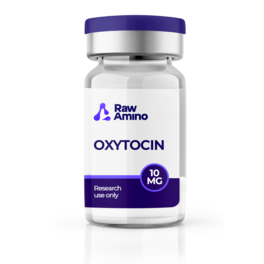
Oxytocin is a nine–amino-acid neuropeptide synthesized primarily in the hypothalamus and released both centrally and peripherally. Beyond its well-known roles in parturition and lactation in mammals, oxytocin has emerged in laboratory studies as a context-dependent modulator of neural circuits governing social signaling, motivated behavior, autonomic output, and energy balance. Interest in oxytocin has expanded as researchers map its receptor distribution across mesolimbic, cortical, hypothalamic, and spinal networks, and as they characterize how volume transmission and synaptic release shape neuronal excitability and network dynamics.
Despite widespread attention, key constraints remain. Oxytocin actions are highly state-, dose-, and circuit-dependent, and results can vary with species, sex, developmental stage, and behavioral context. Experimental designs also differ in delivery route, dosing kinetics, and task paradigms, complicating cross-study comparisons. Consequently, current work emphasizes mechanistic dissection—identifying where and how oxytocin signaling adjusts gain on specific pathways—rather than extrapolating to generalized outcomes. The sections below synthesize preclinical and experimental findings with a focus on molecular mechanisms, receptor localization, and systems-level effects relevant to motivation, sensory decoding, and feeding circuitry.
Mesencephalic Reward Interfaces and Feeding Drive
Preclinical investigations indicate that oxytocin receptors within the ventral tegmental area (VTA) and interconnected limbic nodes provide a substrate for modulating dopaminergic tone. In experimental settings, transient oxytocin signaling can attenuate neural responses to high-calorie food cues within mesolimbic reward pathways while biasing activity toward frontal control regions. This pattern—reduced responsivity in hedonic valuation hubs alongside increased activation in executive networks—suggests a potential circuit mechanism by which oxytocin shifts the balance from cue-driven approach behavior toward top-down regulation. Such effects appear sensitive to stimulus category, internal energy state, and task demands, underscoring a role for oxytocin as a context-dependent gain controller rather than a unidirectional “appetite” signal.
Spinal Volume Transmission and Reproductive Motor Programs
Oxytocinergic projections from hypothalamic nuclei extend to lumbosacral spinal circuits that coordinate reproductive reflexes in rodent models. Electron microscopic analyses reveal dense-core vesicles within axonal varicosities that release oxytocin extrasynaptically, enabling local diffusion (“volume transmission”) to reach oxytocin-responsive neurons embedded in pattern generators. Blocking oxytocin receptors intrathecally dampens characteristic motor patterns in these preparations, whereas endogenous or exogenous activation facilitates them, indicating that spinal oxytocin can tune the excitability and timing of dedicated motor modules. These findings highlight a non-synaptic signaling mode with implications for how neuromodulators sculpt distributed, multineuron behaviors.
Sensory Chemosignal Decoding and Social Attribution
Across controlled laboratory paradigms, oxytocin has been observed to modify neural decoding of specific chemosensory cues associated with social information. Dose-response relationships can be non-monotonic, and effects may depend on individual differences in social proficiency and task structure. Competitive antagonism at oxytocin/vasopressin receptors blunts these decoding effects, consistent with receptor-level mediation. Together, these data point to a role for oxytocin in calibrating the salience and categorical interpretation of socially relevant sensory inputs, likely via coordinated actions in olfactory, limbic, and frontal networks.
Cortico-Limbic Reallocation of Control Signals
Functional imaging in experimental cohorts suggests that acute oxytocin exposure can reallocate activity from subcortical valuation circuits (e.g., amygdala, striatum, hippocampus) toward anterior cingulate and frontopolar regions implicated in conflict resolution and executive control. Concurrent modulation within hypothalamic nodes indicates potential cross-talk between homeostatic and hedonic systems. Mechanistically, receptor-coupled G-protein signaling, interactions with dopaminergic terminals, and changes in local inhibitory interneuron tone may converge to shift network gain. These effects are transient and task-linked, emphasizing oxytocin’s role as a neuromodulator that conditions information flow rather than driving a fixed behavioral program.
Energetics, Intake Regulation, and Hedonic–Homeostatic Coupling
Oxytocin appears to interface with both homeostatic and hedonic arms of feeding control. In preclinical models, signaling within VTA–striatal loops can dampen cue-evoked approach to energy-dense stimuli, while hypothalamic engagement may adjust satiety and interoceptive signals. The net effect on intake reflects the composite of these influences plus experimental variables such as energy state, macronutrient composition, and learned associations. Importantly, oxytocin’s impact on energy balance is best framed as modulation of circuit responsiveness—altering “wanting,” “liking,” and control processes—rather than as a primary orexigenic or anorexigenic driver.
Historical and Systems Perspective on Arousal and Bonding
Over a century of experimental work charts oxytocin’s participation in coordinated physiological states that couple autonomic, endocrine, and behavioral outputs. Peaks in endogenous oxytocin accompany specific life-history events in mammals and can synchronize peripheral tissues with central state transitions. Contemporary views recast oxytocin as a polyvalent neuromodulator: it can promote affiliative behaviors under certain conditions, but it can also intensify defensive responses when contexts demand vigilance. This bidirectionality likely arises from receptor placement across antagonistic circuits and from state-dependent gating at the network level.
Methodological Considerations and Open Questions
Routes of administration (e.g., intranasal vs. central microinfusion), peptide kinetics, receptor occupancy, and blood-brain barrier dynamics are active topics of investigation. Individual differences—including sex, genotype, prior social experience, and baseline network connectivity—shape outcomes. Future work prioritizes (i) receptor-specific pharmacology and analog design, (ii) cell-type–resolved circuit mapping with opto/chemogenetic tools, and (iii) cross-species paradigms that align ethologically relevant behaviors with precise readouts of neuromodulatory state.
Conclusion
Oxytocin functions as a state-contingent neuromodulator that calibrates information flow across mesolimbic, hypothalamic, cortical, and spinal circuits in experimental systems. By adjusting the gain on reward valuation, executive control, sensory attribution, and patterned motor outputs, oxytocin can reconfigure behaviorally relevant networks without imposing a single stereotyped outcome. Continued preclinical work that integrates receptor pharmacology with cell-type–specific circuit analyses will clarify how oxytocin dynamically coordinates social signaling, arousal, and energy balance—and under what conditions these mechanisms are engaged.
References
- Magon N, Kalra S. The orgasmic history of oxytocin: Love, lust, and labor. Indian J Endocrinol Metab. 2011;15(Suppl3):S156-61. doi:10.4103/2230-8210.84851.
- Takumi Oti, Keita Satoh, Daisuke Uta, et al. Oxytocin Influences Male Sexual Activity via Non-synaptic Axonal Release in the Spinal Cord. Current Biology. 2021;31(1):103-114.e5. doi:10.1016/j.cub.2020.09.089.
- Plessow F, Marengi DA, Perry SK, et al. Effects of Intranasal Oxytocin on the BOLD Signal in Food Motivation and Cognitive Control Pathways in Overweight and Obese Men. Neuropsychopharmacology. 2018;43(3):638-645. doi:10.1038/npp.2017.226.
- Kepu Chen, Yuting Ye, Nikolaus F. Troje, Wen Zhou. Oxytocin modulates human chemosensory decoding of sex in a dose-dependent manner. eLife. 2021;10:e59376. doi:10.7554/eLife.59376.
Disclaimer: The information provided is intended solely for educational and scientific discussion. The compounds described are strictly intended for laboratory research and in-vitro studies only. They are not approved for human or animal consumption, medical use, or diagnostic purposes. Handling is prohibited unless performed by licensed researchers and qualified professionals in controlled laboratory environments.