Introduction
Inflammation-driven cell stress and tissue damage remain central topics across experimental biology. In diverse laboratory systems, oxidative stress, apoptotic signaling, and maladaptive immune activation converge to exacerbate injury phenotypes in kidney, skin, and cardiac tissues. A growing body of preclinical work has focused on receptor-coupled pathways that sense damage and coordinate resolution programs. Within this context, short peptide ligands derived from larger endogenous proteins are being investigated for their capacity to modulate these pathways with greater specificity.
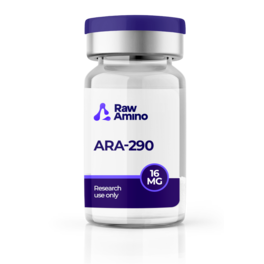
ARA 290 is an 11–amino acid, non-erythropoietic peptide designed from the helix-B surface of erythropoietin. Rather than engaging classical erythropoietic receptors, ARA 290 selectively interacts with the heteromeric “innate repair receptor” (IRR; EPO receptor/β-common receptor). Across in vitro systems and animal models, IRR engagement has been reported to initiate anti-inflammatory, anti-oxidative, and pro-survival signaling programs. The following sections synthesize mechanistic findings from recent preclinical investigations, emphasizing cellular pathways, tissue-level readouts, and hypotheses under active study.
IRR-Coupled Signal Modulation: A Working Model
IRR activation by ARA 290 appears to initiate a multi-node cascade that dampens pro-inflammatory transcriptional programs while enhancing cytoprotective networks. Reports in experimental settings suggest reductions in NF-κB target gene expression, modulation of death-receptor and BCL-2 family balance, and improvements in redox buffering through increases in canonical antioxidant enzymes. Parallel endothelial responses—frequently associated with nitric-oxide bioactivity—may influence local perfusion and barrier function. Conceptually, these signals position ARA 290 as a probe for studying how damage-sensing receptors transduce pro-resolving cues without engaging erythropoiesis.
Oxidative Stress and Apoptosis in Nephrotoxicity Models
In cisplatin-exposed renal systems, ARA 290 has been observed to counter multiple injury axes. Comet-assay and micronucleus readouts indicate reduced DNA damage signatures, while biochemical assays show lower malondialdehyde/reactive oxygen species alongside higher superoxide dismutase, catalase, and related enzymes. At the signaling level, preclinical datasets report decreased TNFα, IL-1β, and IL-6, coupled with shifts from pro-apoptotic (caspase-3, Bax) toward anti-apoptotic (Bcl-2) markers. Collectively, these findings suggest that IRR engagement may rebalance stress-response checkpoints and enhance damage-processing capacity in renal epithelial contexts subjected to chemotoxic insult.
Cutaneous Repair Dynamics in Diabetic Wound Models
Experimental diabetic wound paradigms provide a controlled context to study matrix deposition, cellular migration, and barrier re-establishment. Topical ARA 290 formulations in rodent models have been associated with accelerated macroscopic closure kinetics, shorter epithelialization intervals, and increased collagen/protein content in regenerated tissue. Concomitantly, inflammatory indices (e.g., NF-κB activity and select cytokines) appear reduced, while antioxidant capacity is elevated. These observations are consistent with a working hypothesis that IRR signaling coordinates both immunologic tempering and matrix-oriented remodeling, thereby shifting wound microenvironments toward constructive resolution in hyperglycemic settings.
Cardiac Aging, Mitochondrial Fitness, and Cellular Cleanup Pathways
Late-life cardiac models highlight mitochondrial quality control as a determinant of contractile performance. In aged rodents, chronic ARA 290 exposure has been reported to increase mitochondrial permeability transition pore opening thresholds, enhance autophagic flux (notably mitophagy-linked turnover), and reduce lipofuscin accrual in cardiomyocytes. These cellular changes align with improved systolic function metrics and reductions in tissue-level inflammatory signatures. From a systems standpoint, composite frailty indices shifted toward a more robust phenotype, suggesting that IRR-linked signaling may intersect with proteostasis, organelle surveillance, and stress-resistance programs relevant to myocardial aging.
Systems-Level Inflammation and Metabolic Readouts
Beyond single-organ endpoints, several studies in laboratory models note broader changes in inflammatory tone and metabolic markers under ARA 290 exposure. Patterns include decreased lipid peroxidation, restoration of antioxidant enzyme activities, and modulation of cytokine profiles toward pro-resolving states. In diabetic rodent contexts, shifts in glycemic and lipid panels have been described concurrently with tissue repair readouts. While the causal architecture remains under investigation, these multi-parameter datasets suggest that IRR engagement may coordinate cross-tissue responses that are detectable at organismal scales in controlled experimental settings.
Conclusion
Across preclinical systems, ARA 290 functions as a selective IRR agonist that appears to attenuate inflammatory signaling, rebalance apoptotic checkpoints, enhance antioxidant defenses, and support tissue-specific repair programs. Renal, cutaneous, and cardiac models converge on a theme of improved cellular stress handling and quality-control pathways, particularly within mitochondria-centric processes and matrix remodeling. These mechanistic insights support the continued use of ARA 290 as a research tool in laboratory models of injury and aging biology. Further experiments—spanning receptor mapping, time-resolved signaling, and multi-omics integration—are warranted to define causal pathways and boundary conditions.
References
- Mashreghi, Moeen, et al. “An in Vivo Investigation on the Wound-Healing Activity of Specific Ligand for the Innate Repair Receptor, ARA290, Using a Diabetic Animal Mode.” Europe PMC, 2023, europepmc.org/article/ppr/ppr610510.
- Winicki, Nolan M., et al. “A Small Erythropoietin Derived Non-Hematopoietic Peptide Reduces Cardiac Inflammation, Attenuates Age Associated Declines in Heart Function and Prolongs Healthspan.” Frontiers in Cardiovascular Medicine, vol. 9, 18 Jan. 2023, https://doi.org/10.3389/fcvm.2022.1096887.
- Ghassemi-Barghi, Nasrin, et al. “Mechanistic Approach for Protective Effect of ARA290, a Specific Ligand for the Erythropoietin/CD131 Heteroreceptor, against Cisplatin-Induced Nephrotoxicity, the Involvement of Apoptosis and Inflammation Pathways.” Inflammation, 10 Sept. 2022, https://doi.org/10.1007/s10753-022-01737-7.
Disclaimer: The information provided is intended solely for educational and scientific discussion. The compounds described are strictly intended for laboratory research and in-vitro studies only. They are not approved for human or animal consumption, medical use, or diagnostic purposes. Handling is prohibited unless performed by licensed researchers and qualified professionals in controlled laboratory environments.