What Is Kisspeptin-10?
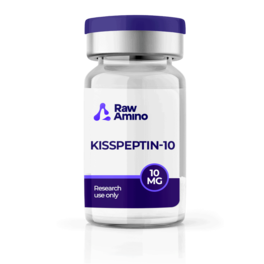
Kisspeptin-10 peptide, alternatively known as metastin, is one of the more broadly studied compounds in GnRH peptide research and reproductive hormone peptide science. It is an endogenous peptide originating from the KISS1 gene, composed of 54 amino acids, and is considered a naturally occurring neuropeptide with a research profile that extends well beyond its primary reproductive function in laboratory models.
The KISS1 gene was first identified in the mid-1990s when a cancer cell appeared to induce a suppression of metastasis development upon integration with chromosome 6 in laboratory settings. Later during the mid-2000s, independent investigations unveiled the potential roles of Kisspeptin-10 peptide as a ligand for the G-protein coupled receptor 54 (GPR54), opening up new avenues of GnRH peptide research. GPR54, also known as the KISS1 receptor, appears to play a critical role as a GnRH receptor in laboratory models and is considered essential for the onset of puberty in these settings. By binding to GPR54 receptors, Kisspeptin-10 may activate the reproductive axis by potentially inducing the release of GnRH and gonadotropin neurons in laboratory models, making it one of the more multifaceted reproductive hormone peptides currently under investigation.
GnRH Release Research
At the foundation of Kisspeptin-10 GnRH peptide research is its proposed ability to stimulate gonadotropin-releasing hormone release in laboratory models. GnRH is synthesized and secreted by specialized neurons located in the hypothalamus in laboratory research contexts, serving as the initial hormone released within the hypothalamic-pituitary-gonadal axis and exerting regulatory control over FSH and LH secretion in these settings.
A comprehensive literature review encompassing articles published between 1999 and 2016 indicated compelling evidence supporting the probable role of the Kisspeptin-10 system, including the KISS1 gene and GPR54 receptors, in the initiation of puberty and subsequent regulation of gonadotropin hormone release in laboratory models. Research by Rønnekleiv and Kelly further suggested that under the influence of Kisspeptin-10, specifically within the central nervous system, the peptide may stimulate over 85% of GnRH neurons in laboratory models, potentially resulting in the secretion of FSH and LH in these experimental settings.
Kisspeptin-10 Peptide and Testosterone Research
Building on its GnRH research profile, the peptide has also been studied for its proposed interactions with testosterone synthesis in laboratory models. Research suggested that Kisspeptin-10 peptide may influence testosterone levels through a possible modulation of circulating LH and FSH levels in laboratory settings, though researchers noted this interaction appears to be sex-specific in these models. In male laboratory models, peptide introduction appeared to cause an increase in testosterone levels, whereas in female models, no discernible effect on testosterone was observed in these experimental settings.
Research by George et al. suggested that Kisspeptin-10 may be a potent stimulator of LH in laboratory models, with researchers observing a rapid and concentration-dependent elevation in serum LH levels accompanied by a concurrent increase in testosterone levels in these settings. Researchers noted that at greater concentrations, Kisspeptin-10 appeared to induce such rapid LH pulsation that individual pulses become indistinguishable in laboratory models, resulting in continuous LH release. Researchers proposed that Kisspeptin-10 analogues may have potential as regulators of LH and testosterone secretion in laboratory research contexts.
Kisspeptin-10 Peptide and Cognitive Research
Beyond its reproductive hormone research profile, Kisspeptin-10 has also been explored for its potential interactions with cognitive function in laboratory models. Emerging data suggested that Kisspeptin-10 peptide may have interactions in brain regions associated with memory consolidation and spatial orientation in laboratory settings. Research by Gibula-Tarlowska and Kotlinska in murine models suggested that Kisspeptin-10 derivatives may potentially moderate learning and navigational impairments in laboratory models, with researchers proposing a possible role for the compound in neuronal information encoding in these experimental settings. These findings have been carefully framed by researchers as preliminary laboratory observations requiring further investigation.
Kisspeptin-10 Peptide and Mood Research
Closely related to its cognitive research profile, Kisspeptin-10 has also been studied for its potential interactions with mood and emotional processing in laboratory models. Research by Comninos et al. comparing the peptide to a placebo in a cohort of laboratory study subjects suggested that models receiving Kisspeptin-10 peptide appeared to exhibit heightened activity within limbic brain regions in these settings, which researchers proposed may indicate potential involvement in emotional processing. Researchers observed that subjects appeared to display increased tendencies for reward-seeking behavior and overall improvement in mood observations in these laboratory settings. Researchers noted that Kisspeptin-10 administration appeared to enhance limbic brain activity in response to specific stimuli in laboratory models, with researchers proposing these findings warrant further controlled investigation before broader conclusions can be drawn.
Kisspeptin-10 Peptide and Energy Balance Research
One of the more actively discussed areas of this reproductive hormone peptide’s research profile involves its proposed interactions with energy balance regulation in laboratory models. Research by Harter et al. suggested that Kisspeptin-10 neurons have long been recognized as responsive to the energy status of laboratory models, with perturbations in energy balance potentially attenuating the stimulatory effect of Kisspeptin-10 neurons on GnRH release in these settings.
Research in genetically manipulated laboratory mice lacking the Kisspeptin-10 receptor appeared to exhibit increased adiposity and reduced energy expenditure in these models, with researchers finding that the Kisspeptin-10 receptor was present in adipose tissue and brown adipose tissue in laboratory settings. Researchers proposed that Kisspeptin-10 may serve as a molecular link helping to elucidate the neurochemical control underlying energy-modulating behaviors in the context of reproduction research in laboratory environments.
Kisspeptin-10 Peptide and Food Intake Research
Building on its energy balance research profile, Kisspeptin-10 has also been studied for its potential interactions with food intake regulation in laboratory models. Research in adult male laboratory mice suggested that Kisspeptin-10 may have led to a concentration-dependent reduction in food intake during the initial hours following exposure in these settings. Researchers observed that the peptide appeared to decrease meal frequency and total meal duration while potentially increasing intervals between meals in laboratory models, though overall food intake appeared comparable to placebo-treated models over longer timeframes. These observations have positioned food intake regulation as an active area of this GnRH peptide research subject’s broader laboratory investigation.
Renal and Vascular Research
Kisspeptin-10 has also been explored for its potential interactions with renal and vascular biology in laboratory models. Research by Bhattacharya and Babwah suggested that Kisspeptin-10 and its receptors are distributed across various locations within the kidney in laboratory research contexts, with studies in laboratory mice lacking the Kiss1 receptor indicating a possible role in glomerular development during embryonic stages in these settings. Researchers also noted a possible link between Kisspeptin-10 and vascular development in laboratory models, with investigations in cardiovascular laboratory models suggesting that the peptide may play some role in specific vascular beds, possibly influencing vasoconstriction and cardiac output under certain experimental conditions.
Kisspeptin-10 Peptide and Cancer Cell Research
Rounding out this reproductive hormone peptide’s broad laboratory research profile, the peptide has also been explored in cancer cell biology research contexts. Research indicated that changes appear in Kisspeptin-10 levels across various metastatic cancer cell types in laboratory settings. Ongoing research aims to explore the potential of Kisspeptin-10 to moderate metastasis and possibly reduce disease burden in laboratory cancer cell models, with recent findings also suggesting a connection between Kisspeptin-10, melatonin, and tumor suppression in laboratory settings. Researchers have been careful to frame all cancer-related observations as preliminary laboratory findings requiring substantial further investigation before any broader conclusions can be drawn.
References
- National Center for Biotechnology Information. PubChem Compound Summary for CID 25240297, Kisspeptin-10. 2023.
- Messager S, et al. Kisspeptin-10 directly stimulates gonadotropin-releasing hormone release via G protein-coupled receptor 54. Proc Natl Acad Sci. 2005;102(5):1761–1766.
- Rønnekleiv OK, Kelly MJ. Kisspeptin-10 excitation of GnRH neurons. Adv Exp Med Biol. 2013;784:113–131.
- Tng EL. Kisspeptin-10 signalling and its roles in humans. Singapore Med J. 2015;56(12):649–656.
- Pasquier J, et al. Molecular evolution of GPCRS: Kisspeptin-10/Kisspeptin-10 receptors. J Mol Endocrinol. 2014;52(3):T101–T117.
- Zeydabadi Nejad S, et al. The Role of Kisspeptin in Female Reproduction. Int J Endocrinol Metab. 2017;15(3):e44337.
- Dhillo WS, et al. Kisspeptin-54 stimulates the hypothalamic-pituitary gonadal axis in human males. J Clin Endocrinol Metab. 2005;90(12):6609–6615.
- George JT, et al. Kisspeptin-10 is a potent stimulator of LH and increases pulse frequency in men. J Clin Endocrinol Metab. 2011;96(8):E1228–36.
- Gibula-Tarlowska E, Kotlinska JH. Kissorphin improves spatial memory and cognitive flexibility impairment induced by ethanol treatment. Behav Pharmacol. 2020;31(2&3):272–282.
- Comninos AN, et al. Kisspeptin modulates sexual and emotional brain processing in humans. J Clin Invest. 2017;127(2):709–719.
- Harter CJL, et al. The role of kisspeptin neurons in reproduction and metabolism. J Endocrinol. 2018;238(3):R173–R183.
- Bhattacharya M, Babwah AV. Kisspeptin: beyond the brain. Endocrinology. 2015;156(4):1218–27.
- Kisspeptin reduces food intake by increasing meal intervals in mice. Neuroreport. 2011;22(5):253–257.
Disclaimer: The information provided is intended solely for educational and scientific discussion. The compounds described are strictly intended for laboratory research and in-vitro studies only. They are not approved for human or animal consumption, medical use, or diagnostic purposes. Handling is prohibited unless performed by licensed researchers and qualified professionals in controlled laboratory environments.