Introduction
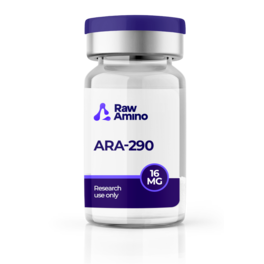
Apoptosis, sterile inflammation, and tissue stress collectively challenge cellular integrity in the central and peripheral nervous systems. Contemporary preclinical work suggests that damage-associated signals can be decoded by repair-biased receptor complexes to transiently suppress inflammatory tone, limit oxidative injury, and re-establish homeostatic barriers. Within this framework, short peptides engineered from erythropoietin (EPO) have been explored for their capacity to engage non-erythropoietic signaling while avoiding the hematopoietic liabilities intrinsic to native EPO. ARA 290 (also termed an EPO helix-B–derived peptide) has emerged as a research tool to probe these cytoprotective pathways in vitro and in vivo.
Conventional approaches that rely on erythropoiesis-linked EPO signaling can confound interpretation in experimental settings due to dose-dependent effects on hematocrit and viscosity. To address this, non-erythropoietic EPO fragments were designed to bias signaling through the so-called innate repair receptor (IRR)—a heteromer composed of the EPO receptor (EPOR) and the common β-chain (CD131)—while sparing the canonical homodimeric EPOR axis. This mechanistic separation provides a tractable way to study neuronal, glial, and immune modulation without altering red-cell mass, enabling controlled interrogation of downstream pathways such as anti-apoptotic signaling, redox buffering, and resolution-phase immunobiology in laboratory models.
Receptor Bias and Signaling Topology
Biophysical and genetic studies indicate that helix-B–mimetic EPO fragments preferentially engage the EPOR/β-common (CD131) complex, often referred to as the innate repair receptor. Activation of this heteromer appears to initiate pro-survival cascades (e.g., JAK2-dependent signals, PI3K–AKT, and ERK nodes) while minimizing transcriptional programs associated with erythropoiesis. In preclinical systems, this “biased agonism” correlates with reduced caspase activation, enhanced mitochondrial resilience, and modulation of inflammatory transcription factors. The working model posits that ARA 290 stabilizes a receptor conformation that is competent for cytoprotection and resolution but is insufficient to drive hematopoietic differentiation, thereby decoupling tissue-protective signaling from red-cell output.
Central Nervous System Access and Neurobiological Readouts
Experimental pharmacology suggests that small EPO-derived peptides can access the central compartment and interact with neural and glial targets. Laboratory studies have reported changes consistent with reduced apoptotic burden, dampened microglial activation, and preserved synaptic markers following excitotoxic or mechanical challenges. In disease-mimicking models (e.g., amyloidogenic stress or focal injury), ARA 290 has been observed to influence endpoints aligned with neuroprotection, such as neuronal survival, maintenance of dendritic architecture, and attenuation of oxidative markers, thereby providing a platform to dissect neuron–glia crosstalk during injury and recovery.
Neuroimmune Modulation and Resolution Biology
Beyond cell-intrinsic survival pathways, IRR-biased signaling appears to shape the inflammatory milieu. In vitro and in vivo experiments suggest that helix-B peptides can shift cytokine patterns toward pro-resolution profiles, potentially through interference with NF-κB activation, enhancement of anti-oxidant programs, and modulation of macrophage/microglial phenotypes. These effects are consistent with the broader literature on EPO derivatives that reports anti-apoptotic, anti-oxidant, and anti-inflammatory signatures in non-hematopoietic tissues. ARA 290 therefore serves as a tool compound to interrogate how transient receptor engagement recalibrates innate responses in neural and peripheral tissues.
Peripheral Nerve and Sensory Circuitry: Readouts in Neuropathy Models
In peripheral nerve injury or metabolic stress paradigms, investigators have used ARA 290 to probe axon integrity, small-fiber density, and sensory transduction. Preclinical observations include maintenance of intraepidermal nerve fiber metrics, changes in neuroimmune markers within dorsal root ganglia, and modulation of pain-associated behavioral readouts. These findings align with the hypothesis that IRR-coupled signaling promotes cytoprotection in small fibers and supports a local pro-resolution environment, offering a mechanistic lens on neuropathic hypersensitivity in experimental systems.
Systems Metabolism and Tissue Stress
EPO-derived peptides have also been evaluated in models where metabolic stress coexists with neural dysfunction. Work in experimental systems indicates that ARA 290 may influence lipid and glucose handling surrogates, potentially via crosstalk between IRR signaling and insulin-sensitive pathways or through indirect effects secondary to reduced inflammatory tone. Such observations, while preliminary, motivate pathway-resolved studies that integrate metabolomics with neurophysiological endpoints to clarify whether metabolic improvements are primary receptor effects or downstream consequences of reduced tissue stress.
Differentiation from Hematopoietic EPO Signaling
A key experimental advantage of helix-B–based constructs is the dissociation from classical hematopoietic responses. Native EPO, while neuroprotective in several models, can drive hematocrit-dependent confounds. By design, ARA 290 exhibits non-erythropoietic behavior, enabling dose ranges that prioritize tissue protection without altering red-cell parameters in animal studies. This separation is useful for mechanistic work that requires stable rheology and allows researchers to attribute observed neural or immune effects to IRR engagement rather than systemic hematologic shifts.
Affective and Cognitive Processing: Human Translational Tasks as Lab Readouts
Neuropsychological task batteries have been applied as sensitive probes of affective bias and attention in controlled experimental settings. Single-exposure designs with ARA 290 have reported selective alterations in emotional processing signatures (e.g., differential attention or categorization latencies), while mood scales often remain unchanged over short windows. Although directionality varies by task and timing, these data suggest that helix-B–biased signaling can acutely modulate perceptual–cognitive filters, providing tractable endpoints for future mechanism-linked studies in laboratory paradigms.
Scope, Constraints, and Open Questions
Despite encouraging preclinical signals, several questions remain under active investigation: (i) the precise structural determinants of IRR bias; (ii) the duration–response relationship for cytoprotection versus immune modulation; (iii) cell-type specificity across neurons, astrocytes, microglia, Schwann cells, and endothelium; and (iv) the extent to which metabolic changes are receptor-proximal. Comparative studies with full-length EPO, carbamylated EPO, and other helix-B mimetics will be essential to map conserved versus unique transcriptomic and phosphoproteomic footprints. Standardized assays—combining high-resolution imaging, electrophysiology, and single-cell omics—should help resolve these mechanistic uncertainties.
Conclusion
ARA 290, an EPO-derived, non-erythropoietic helix-B peptide, provides a receptor-biased approach to study tissue-protective signaling in neural and peripheral systems. By engaging the EPOR/β-common complex, it appears to activate anti-apoptotic and pro-resolution programs while minimizing hematopoietic outputs, enabling clearer mechanistic attribution in laboratory models. Convergent evidence across neuronal survival, neuroimmune modulation, sensory circuitry, and metabolic readouts supports continued preclinical exploration with pathway-resolved tools. Further work is needed to define structure–function relationships, exposure–response kinetics, and cell-type specific mechanisms in controlled experimental settings.
References
- Brines, M., Dunne, A.N., van Velzen, M. et al. ARA 290, a Nonerythropoietic Peptide Engineered from Erythropoietin, Improves Metabolic Control and Neuropathic Symptoms in Patients with Type 2 Diabetes. Mol Med 20, 658–666 (2014). https://doi.org/10.2119/molmed.2014.00215
- Hilâl Cerit, Ilya M. Veer, Albert Dahan, Marieke Niesters, Catherine J. Harmer, Kamilla W. Miskowiak, Serge A.R.B. Rombouts, Willem Van der Does, Testing the antidepressant properties of the peptide ARA290 in a human neuropsychological model of drug action, European Neuropsychopharmacology, 25(12), 2015, 2289–2299. https://doi.org/10.1016/j.euroneuro.2015.09.005
- Daniela C. Vittori, María E. Chamorro, Yender V. Hernández, Romina E. Maltaneri, Alcira B. Nesse. Erythropoietin and derivatives: Potential beneficial effects on the brain. Journal of Neurochemistry. 19 July 2021. https://doi.org/10.1111/jnc.15475.
- Marieke Niesters, Maarten Swartjes, Lara Heij, Michael Brines, Anthony Cerami, Ann Dunne, Elske Hoitsma & Albert Dahan. The erythropoietin analog ARA 290 for treatment of sarcoidosis-induced chronic neuropathic pain. Expert Opinion on Orphan Drugs. 1(1), 2013, 77–87. https://doi.org/10.1517/21678707.2013.719289
Disclaimer: The information provided is intended solely for educational and scientific discussion. The compounds described are strictly intended for laboratory research and in-vitro studies only. They are not approved for human or animal consumption, medical use, or diagnostic purposes. Handling is prohibited unless performed by licensed researchers and qualified professionals in controlled laboratory environments.