Introduction
Sleep appears to be orchestrated by interacting neural circuits, endocrine cues, and cellular homeostasis programs that together shape architecture across non-REM and REM stages. Disruptions in these processes have been associated with impaired cognition, altered metabolic control, and heightened stress reactivity in experimental and observational settings. Because sleep influences synaptic plasticity, immune signaling, and tissue repair, researchers continue to probe molecular messengers that might coordinate these multi-system effects.
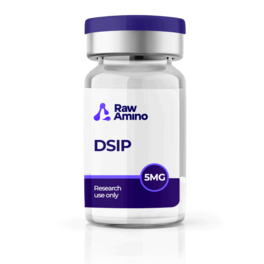
Among candidate messengers, delta sleep-inducing peptide (DSIP) has drawn attention as a small neuropeptide reported to modulate sleep depth and continuity in selected models. Early and subsequent studies suggest DSIP may influence slow-wave (deep, non-REM) features, while also intersecting with stress responses, mitochondrial function, and inflammatory tone. The sections below synthesize mechanistic proposals and laboratory observations, positioning DSIP strictly as a research probe while emphasizing uncertainties that warrant further investigation.
Neuropeptide Signaling and Sleep Architecture
DSIP is a nine-amino-acid neuropeptide originally characterized in the 1970s and later examined across multiple species for its apparent influence on sleep continuity and stage composition. In laboratory contexts, reports indicate DSIP exposure may be associated with increased slow-wave activity, a phase linked to memory consolidation, synaptic recalibration, and cellular restoration. These observations align with the broader concept that neuropeptides can adjust network excitability and thalamocortical rhythms, potentially shifting sleep intensity without necessarily altering overall time asleep. Importantly, effects appear to vary with experimental design, organism, and state of baseline arousal, suggesting that DSIP’s influence may depend on preexisting network dynamics and interacting neuromodulators.
Proposed Mechanisms: Receptor Targets and Neurochemical Modulation
Hypotheses regarding DSIP’s mode of action include interactions with GABAergic systems and opioid-family receptors (notably delta-type) that are implicated in sleep regulation and nociceptive gating. Additional proposals suggest DSIP may modulate monoaminergic tone—such as serotonin or dopamine—thereby adjusting arousal thresholds, affective state, and stress responsivity that indirectly shape sleep architecture. In parallel, DSIP has been linked to changes in inflammatory signaling and oxidative stress readouts in experimental models, indicating potential crosstalk with mitochondrial function and cellular redox balance. While these pathways offer a coherent framework, receptor specificity, upstream triggers, and downstream transcriptional effects remain incompletely mapped and are active areas of study.
Experimental Observations in Sleep-Focused Models
Across controlled settings, DSIP has been reported to influence metrics associated with sleep quality—particularly the proportion and continuity of deep non-REM stages. Some investigations describe improvements in slow-wave indices and stabilization of sleep episodes under conditions of stress or dysregulated sleep–wake patterns. These findings are complemented by observations that DSIP exposure can correlate with adjustments in autonomic and endocrine markers tied to the sleep–wake cycle, though causality and generalizability are not yet resolved. Notably, effect sizes and reproducibility vary, highlighting the importance of standardized paradigms, rigorous controls, and multi-modal readouts (e.g., polysomnography paired with molecular assays) in future work.
Mitochondrial and Stress-Response Interfaces
A body of work proposes that DSIP may interact with mitochondrial respiration and cellular stress adaptation. In models exposed to hypoxic challenge or metabolic strain, DSIP has been associated with changes in respiratory parameters and markers of stress resilience, findings that conceptually link sleep regulation to energy homeostasis. Because mitochondrial signaling influences synaptic function and reactive oxygen species management, any DSIP-related modulation of these processes could indirectly shape sleep stability and depth. These observations remain exploratory, and careful dissection of dose–response characteristics, temporal kinetics, and tissue specificity is needed to clarify mechanism.
Broader Physiological Pathways Under Investigation
Beyond sleep metrics, DSIP has been examined for potential effects on anxiety-like behaviors, immune tone, blood pressure regulation, and inflammatory mediators in preclinical contexts. Reports of altered cytokine profiles, antioxidative activity, or vascular responses suggest DSIP may engage systems that frequently co-vary with sleep health. However, these findings should be considered hypothesis-generating: pathway hierarchy, directionality of effects, and durability over time remain uncertain, and outcomes appear sensitive to species, experimental stressors, and baseline physiological state.
Conclusion
Current evidence suggests DSIP may influence sleep architecture—particularly slow-wave features—through a combination of receptor-level interactions and downstream modulation of neurotransmission, immune signaling, and cellular stress responses. At the same time, results across models are mixed, with variable effect sizes and incomplete mechanistic resolution. As a research tool, DSIP invites deeper, multi-level interrogation of how neuropeptides coordinate sleep with metabolic and inflammatory homeostasis. Future studies employing standardized protocols, precise receptor mapping, and integrated electrophysiological–molecular endpoints will be important to define the contexts in which DSIP’s signals meaningfully modulate sleep biology.
References
- Elena M. Khvatova, Victor N. Samartzev, Pavel P. Zagoskin, Igor A. Prudchenko, Inessa I. Mikhaleva, Delta sleep inducing peptide (DSIP): effect on respiration activity in rat brain mitochondria and stress protective potency under experimental hypoxia, Peptides, 24(2), 307–311 (2003). https://doi.org/10.1016/S0196-9781(03)00040-8
- Markus V. Graf, Abba J. Kastin, Delta-sleep-inducing peptide (DSIP): A review, Neuroscience & Biobehavioral Reviews, 8(1), 83–93 (1984). https://doi.org/10.1016/0149-7634(84)90022-8
- Markus V. Graf, Abba J. Kastin, Delta-sleep-inducing peptide (DSIP): An update, Peptides, 7(6), 1165–1187 (1986). https://doi.org/10.1016/0196-9781(86)90148-8
Disclaimer: The information provided is intended solely for educational and scientific discussion. The compounds described are strictly intended for laboratory research and in-vitro studies only. They are not approved for human or animal consumption, medical use, or diagnostic purposes. Handling is prohibited unless performed by licensed researchers and qualified professionals in controlled laboratory environments.”