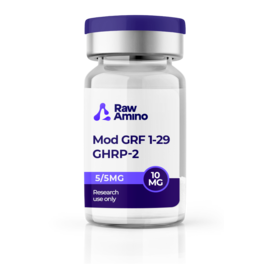

What Is the CJC-1295 and GHRP-2 Blend?
The CJC-1295 and GHRP-2 peptide blend consists of two synthetic peptides engineered to potentially stimulate growth hormone synthesis and regulation in laboratory settings — each mirroring some functions of naturally occurring peptides while offering distinct advantages as research tools. When studied in combination, these compounds have attracted considerable interest as a growth hormone regulation peptide blend — owing to the complementary pathways through which each is thought to operate.
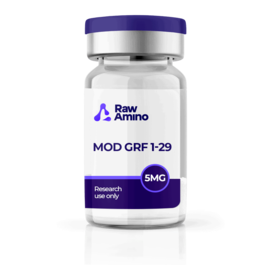
CJC-1295 — also referred to in research literature as Modified GRF 1-29 or CJC-1295 without DAC — is a modified analog of growth hormone-releasing hormone (GHRH), designed with four specific amino acid substitutions that appear to increase its resistance to enzymatic degradation. This structural modification is thought to allow for more impactful receptor engagement and extended activity in controlled research settings compared to endogenous GHRH.
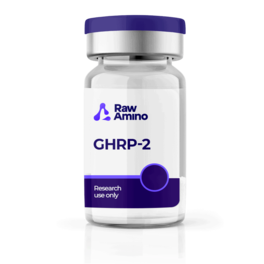
GHRP-2 — Growth Hormone Releasing Peptide-2 — is a ghrelin-mimetic peptide that is speculated to increase growth hormone secretion through pathways similar to those activated by endogenous ghrelin. Research by Roh et al. suggested that GHRP-2 may bind to ghrelin receptors and trigger growth hormone release through several pathways — including potential calcium channel modulation, cAMP pathway activation, and protein kinase C signaling. Together, these two compounds appear to target both the release and duration of growth hormone activity — potentially offering a more comprehensive research tool for studying growth hormone regulation peptide dynamics than either compound could provide independently.
Pituitary Receptor Interactions and Synergistic Potential
Both CJC-1295 and GHRP-2 appear to interact with receptors on the anterior pituitary gland — though through distinct molecular pathways that have made their combination a subject of particular research interest in growth hormone regulation peptide science.
CJC-1295 is hypothesized to bind to GHRH receptors on pituitary somatotroph cells — potentially inducing a conformational change that initiates intracellular signaling events including the activation of G-proteins, production of secondary messengers such as cAMP and IP3, and ultimately the fusion of growth hormone-containing vesicles with the plasma membrane and their release into the extracellular environment in laboratory models.
GHRP-2, by contrast, operates as a GHS-R ligand — binding to ghrelin receptors and engaging the phospholipase C pathway to produce IP3 and diacylglycerol (DAG). The resulting rise in intracellular calcium and PKC activation collectively supports growth hormone vesicle exocytosis in laboratory models through a mechanism distinct from CJC-1295’s GHRH receptor pathway.
These complementary mechanisms have led researchers to hypothesize that combining both compounds may yield synergistic effects on growth hormone secretion in laboratory settings. Data collected from studies examining similar GHRH analogs and GHS-R agonists suggested apparent increases in pulsatile growth hormone secretion of 20-fold and 47-fold above baseline respectively when each was used alone — while combining both agents appeared to produce a 54-fold increase in pulsatile growth hormone output in laboratory models. This finding has positioned the CJC-1295 GHRP-2 blend as one of the more actively investigated combinations in growth hormone regulation peptide research.
CJC-1295 and GHRP-2: Tissue Activity and Gastrointestinal Research
Preclinical studies have examined the broader pharmacodynamic profile of the CJC-1295 and GHRP-2 blend — exploring its potential systemic interactions beyond growth hormone release in animal models. In studies involving guinea pigs and rabbits, researchers observed that the peptides appeared to indicate no significant activity on the central nervous system, with the primary observable effects limited to the isolated gastrointestinal tract.
Specifically, studies reported an increase in the motility of the isolated ileum in rabbits and heightened muscular tissue contractions in the isolated ileum of guinea pigs following peptide exposure in laboratory settings. Importantly, these interactions appeared to be localized — with no measurable impact observed on renal function, respiratory rate, gastric secretions, or hemodynamic parameters in the models studied. These findings have contributed to a growing picture of this GHRP-2 peptide blend’s primary research profile as centered on growth hormone stimulation, without major observed effects on other organ systems under the studied laboratory conditions.
CJC-1295 and GHRP-2: Hunger Hormone Signaling in Laboratory Models
One of the more distinctive areas of CJC-1295 and GHRP-2 blend research involves its potential interactions with hunger hormone signaling — a dimension that reflects GHRP-2’s ghrelin-mimetic properties and adds complexity to the blend’s broader research profile.
A controlled laboratory study investigated the potential influence of GHRP-2 peptide on hunger hormone signaling and growth hormone secretion. Research models divided into experimental and control groups were monitored for changes in caloric intake over a set period — with the peptide-exposed group reportedly displaying a 35% increase in food consumption compared to the saline-exposed control group. The peptide-exposed models also appeared to display a significant rise in circulating growth hormone levels relative to controls. Researchers proposed that these findings may imply that the peptide blend could influence both appetite regulation and growth hormone release in laboratory settings — warranting further exploration into the underlying mechanisms and broader research implications of this interaction.
CJC-1295 and GHRP-2 Blend: Metabolic Modulation in Research Models
Recent laboratory research has explored the metabolic response profile of growth hormone secretagogues and growth hormone-releasing peptides — including compounds in the same class as the CJC-1295 and GHRP-2 blend — across a range of research model populations.
Researchers observed several notable findings in laboratory models. In non-mature populations, an increase in linear growth rates was reported — aligning with these peptides’ proposed role in supporting developmental growth pathways. Among mature models, peptides in this class appeared to correlate with an increase in lean muscular tissue mass, appetite regulation changes, and possible metabolic support favoring muscle cell anabolism. For models with higher BMI, the introduction of compounds in this class appeared to indicate promising reductions in bone turnover rates and more regulated sleep patterns — potentially indicating broader metabolic interactions beyond growth hormone modulation alone.
Researchers summarized that growth hormone secretagogues and releasing peptides in this class might increase lean mass, reduce fat mass, increase exercise tolerance and maximum oxygen uptake, support muscular tissue strength, and support linear growth in laboratory models — while noting that long-term studies offer conflicting results that continue to be investigated.
CJC-1295 and GHRP-2 Blend: Hypothalamic-Pituitary Interactions
Multiple laboratory studies have analyzed the potential of this class of growth hormone regulation peptide compounds in research models of growth hormone deficiency — with data suggesting that these peptides may exert their interactions through dual mechanisms: directly stimulating the anterior pituitary gland to secrete growth hormone, and potentially acting on the hypothalamus — specifically the arcuate nucleus — to regulate growth hormone release.
Research by Gondo et al. suggested that GHRP-2 may stimulate growth hormone secretion in growth hormone-deficient laboratory models through these dual pathways. A study by Mericq et al. further explored growth hormone-releasing peptides in juvenile models of growth hormone deficiency over eight months — finding a consistent, marked increase in growth hormone levels throughout the study duration, sustained in a manner suggesting peptide efficacy even shortly after the intervention period concluded in laboratory settings.
Researchers have also noted that GHRP-2 and similar peptides may influence additional physiological parameters — such as appetite regulation, cardiovascular tone, and circadian rhythms — potentially through interactions at specific receptors within the hypothalamic and pituitary regions in laboratory models. These findings continue to make the CJC-1295 GHRP-2 blend an active subject of neuroendocrine research.
CJC-1295 and GHRP-2 Blend: Age-Related Hormonal Interactions
One of the more nuanced areas of this growth hormone regulation peptide blend’s research profile involves its potential interactions with multiple hormonal pathways across different age groups in laboratory models — a finding that adds an important layer of complexity to the interpretation of results in this area.
A controlled laboratory study explored the interactions of GHRP-2 on growth hormone, cortisol, prolactin, and adrenocorticotropic hormone (ACTH) in male research models across two distinct age groups — a younger cohort and a mature cohort. Both groups appeared to display increased circulating growth hormone levels following peptide exposure — however, a statistically significant rise was observed in the younger group compared to the mature models, suggesting possible age-dependent variability in the peptide’s interactions with growth hormone release in laboratory settings.
The peptides also appeared to indirectly influence ACTH and cortisol levels in both age groups — with the elevation more pronounced in the younger models. A mild increase in prolactin levels was also reported — suggesting that the peptides may engage multiple hormonal pathways simultaneously in laboratory conditions. Researchers noted that while these findings underscore the potential of this GHRP-2 peptide blend to modulate multiple hormonal pathways, further research is required to clarify the precise mechanisms and age-related factors that influence these outcomes in controlled laboratory environments.
References
- Garcia JM, Merriam GR, Kargi AY. Growth Hormone in Aging. Endotext. 2019.
- Phung LT, et al. Effects of the administration of GHRP-2 on growth hormone release in swine. Domest Anim Endocrinol. 2001;20(1):9–19.
- National Center for Biotechnology Information. PubChem Compound Summary for CID 91976842, CJC1295 Without DAC. 2023.
- Roh SG, et al. Mechanisms of action of GHRP-2 in bovine pituitary cells. J Anim Sci. 1997;75(10):2744–8.
- Furuta S, et al. General pharmacology of KP-102 (GHRP-2). Arzneimittelforschung. 2004;54(12):868–80.
- Laferrère B, et al. Growth hormone releasing peptide-2 (GHRP-2), like ghrelin, increases food intake in healthy men. J Clin Endocrinol Metab. 2005;90(2):611–4.
- Sigalos JT, Pastuszak AW. The Safety and Efficacy of Growth Hormone Secretagogues. Sex Med Rev. 2018;6(1):45–53.
- Gondo RG, et al. Growth Hormone-Releasing Peptide-2 Stimulates GH Secretion in GH-Deficient Patients with Mutated GH-Releasing Hormone Receptor. J Clin Endocrinol Metab. 2001;86(7):3279–3283.
- Mericq V, et al. Effects of eight months treatment with graded doses of a GH-releasing peptide in GH-deficient children. J Clin Endocrinol Metab. 1998;83(7):2355–60.
- Arvat E, et al. Effects of GHRP-2 and Hexarelin on GH, Prolactin, ACTH and Cortisol Levels in Man. Peptides. 1997;18(6):885–891.
Disclaimer: The information provided is intended solely for educational and scientific discussion. The compounds described are strictly intended for laboratory research and in-vitro studies only. They are not approved for human or animal consumption, medical use, or diagnostic purposes. Handling is prohibited unless performed by licensed researchers and qualified professionals in controlled laboratory environments.