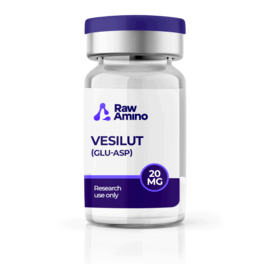
What Is Vesilut?
Vesilut peptide is one of the more intriguing early-stage compounds currently being explored in peptide bioregulator research circles. Also known as Vesilute, ED, Glutamyl-Aspartate, or Glutamyl-Tryptophan, it is an exceptionally short compound composed of just two amino acids, glutamic acid and aspartic acid, making it one of the smallest members of the Khavinson peptide family studied in laboratory settings.
As a classified gene modulator and member of the Khavinson bioregulator peptide family, Vesilut has been proposed to interact with specific DNA sequences in laboratory models. Research by Khavinson et al. suggested that the peptide may have a particular affinity for the ATTT sequence in DNA, a combination of one adenine and three thymine nucleotides, potentially influencing gene expression patterns at a fundamental level. Its primary proposed research focus involves interactions with gene expression in tissues and cells related to the urinary bladder, though the available data on its specific interactions remains limited and should be interpreted accordingly.
It is worth noting upfront that direct research on Vesilut peptide itself is scarce. Much of the current scientific understanding is derived from studies on closely related peptides containing the ED sequence, or from compounds with similar bioregulator properties. This article presents those findings with appropriate transparency about what has and has not been studied directly.
Vesilut Peptide and Gene Expression: Early Laboratory Observations
The most actively discussed area of Vesilut peptide research involves its proposed potential to influence gene expression through interactions with chromatin structures in laboratory cell models. Chromatin is the complex of DNA and proteins that packages genetic material into a compact form within the cell nucleus, and its structural state plays a central role in determining which genes are active or silenced in a given cell.
Research by Khavinson et al. on short peptides with similar ED sequences suggested that these compounds may interact with chromatin structures in the cellular nucleus and potentially activate genes that have been silenced over time. In particular, researchers proposed that short peptides in this class may activate heterochromatin, the tightly packed form of chromatin typically associated with gene silencing. By potentially promoting chromatin decondensation, these cellular aging peptides might reactivate genes that have been progressively deactivated during cellular aging, potentially supporting protein synthesis and moderating certain aging-related processes in laboratory cell models.
Research by Dzhokhadze et al. further suggested that small bioregulator peptides similar to Vesilut may increase the rate of sister chromatid exchanges (SCEs) in laboratory models. SCEs are naturally occurring processes during cell division where identical sister chromatids may exchange segments of genetic material. An increased frequency of these exchanges was proposed to indicate that such peptides might support chromosomal repair and maintenance mechanisms, potentially aiding genomic stability in the context of cellular aging.
Additionally, related bioregulatory peptides appeared to affect the activity of ribosomal RNA (rRNA) genes in laboratory models, as suggested by observed increases in silver-stained nucleolus organizer regions (Ag-NORs). These regions are specific chromosomal sites essential for ribosome formation, and an elevated number of Ag-positive NORs might imply greater capacity for protein synthesis in laboratory cells. Researchers have proposed this could be particularly relevant to cells experiencing age-related decline in protein synthesis activity.
It is important to emphasize that these observations are drawn from studies on related peptides rather than Vesilut directly, and their applicability to Vesilut specifically remains an area requiring dedicated laboratory investigation before firm conclusions can be drawn.
Vesilut Peptide and Urinary Bladder Cell Research: A Note on Related Compounds
The second area of Vesilut’s proposed research profile involves potential interactions with urinary bladder cells in laboratory models. However, it is important to be transparent here: the available data in this area comes primarily from research on Prostamax, a related bioregulatory peptide with a sequence similar to Vesilut, rather than from direct Vesilut studies.
Research by Borovskaya et al. explored Prostamax in experimental models of chronic aseptic inflammation, observing several proposed mechanisms of interest. Researchers hypothesized that Vesilut may operate similarly to Prostamax given their structural similarities, though this remains speculative without direct comparative evidence.
In the Prostamax laboratory models, one primary observation was a reduction of swelling in inflamed cell cultures from the urinary tract, potentially achieved through influences on fluid dynamics and cellular responses within the tissue. A second proposed mechanism involved the reduction of hyperemia, an excess of blood in vessels, potentially through the bioregulator’s influence on vascular endothelium and smooth muscle cells in laboratory models.
Researchers also noted that these related bioregulators appeared to modulate cellular infiltration, an indicator of immune response and inflammation, potentially helping to maintain a more balanced inflammatory response in laboratory settings. A further proposed interaction involved the potential inhibition of sclerotic processes, with researchers suggesting these peptides may intervene in pathways leading to fibrous tissue accumulation in laboratory models of chronic inflammation.
Given that these findings are drawn from a related but distinct compound, researchers have been careful to frame any extrapolation to Vesilut as preliminary and hypothetical. Dedicated laboratory research into Vesilut’s specific interactions with urinary bladder cells remains an important next step in understanding this cellular aging peptide’s potential research applications.
An Emerging Area of Peptide Bioregulator Research
As noted throughout this article, the direct research base on Vesilut peptide remains limited. The compound’s classification as a Khavinson bioregulator and its structural relationship to better-studied peptides in this family provide a useful scientific framework for generating hypotheses, but much of what is currently proposed about Vesilut is extrapolated from related compounds rather than derived from direct laboratory investigation.
What the available data does suggest is that Vesilut may represent a meaningful subject for future peptide bioregulator research, particularly in the areas of chromatin regulation, gene expression modulation during cellular aging, and urinary bladder cell biology. As the broader field of short bioregulator peptide research continues to develop, Vesilut is likely to attract increasing attention from researchers working at the intersection of gene regulation and cellular aging science in laboratory settings.
References
- Khavinson VK, Lin’kova NS, Tarnovskaya SI. Short peptides regulate gene expression. Bull Exp Biol Med. 2016;162(2):288–292.
- National Center for Biotechnology Information. PubChem Compound Summary for CID 6994996, Glutamyl-Aspartate. 2024.
- Khavinson VKh, Lezhava TA, Malinin VV. Effects of short peptides on lymphocyte chromatin in senile subjects. Bull Exp Biol Med. 2004;137(1):78–81.
- Dzhokhadze TA, et al. Deheterochromatinization of the chromatin in old age induced by oligopeptide bioregulator. Georgian Med News. 2012;(212):76–82.
- Borovskaya TG, et al. Experimental studying of the drug efficiency Prostamax in the therapy of chronic aseptic prostatitis and its complications. Modern Research in Inflammation. 2013.
Disclaimer: The information provided is intended solely for educational and scientific discussion. The compounds described are strictly intended for laboratory research and in-vitro studies only. They are not approved for human or animal consumption, medical use, or diagnostic purposes. Handling is prohibited unless performed by licensed researchers and qualified professionals in controlled laboratory environments.