Introduction
Intervertebral disc degeneration (IVDD) is characterized in experimental settings by extracellular matrix (ECM) erosion, increased catabolic enzyme activity, and persistent inflammatory signaling within the nucleus pulposus (NP). Alongside these biochemical changes, aberrant neurite ingrowth and neuropeptide exposure appear to reshape NP cell behavior and matrix turnover, suggesting that disc homeostasis is partially gated by neuroimmune crosstalk. This has motivated a series of preclinical studies probing how neurotransmitters and neuropeptides remodel NP cell fate under inflammatory or oxidative stress.
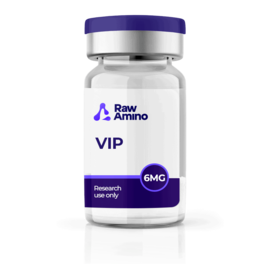
Among neuromodulators, vasoactive intestinal peptide (VIP) is of interest because it signals through class B GPCRs (VIPR1/VIPR2) to regulate cyclic nucleotide and kinase pathways that intersect with matrix anabolism, survival programs, and cytokine output. Recent in vitro and in vivo investigations indicate that VIP responsiveness diminishes with progressive disc degeneration, yet exogenous VIP can reprogram NP cell states under defined insults. Mechanistically, VIP appears to bias signaling toward PI3K–AKT via an intermediate fibroblast growth factor (FGF18)–fibroblast growth factor receptor 2 (FGFR2) node, with miRNA-dependent post-transcriptional control as a regulatory layer. These observations support a neuromodulatory framework for disc biology that is amenable to molecular dissection in laboratory models.
Neuropeptidergic Inputs and Disc Microenvironments
Evidence from histology and transcriptomics suggests that degenerating discs feature alterations in sympathetic and sensory innervation, accompanied by local neuropeptide gradients that condition NP cell phenotypes under inflammatory load. In controlled experiments, calcitonin gene–related peptide can potentiate catabolism and apoptosis, while other neuropeptides (including VIP) show context-dependent modulation of ECM gene programs. This neuromodulatory milieu likely integrates with cytokine networks (e.g., IL-1β, TNF) and oxidative cues (e.g., H₂O₂), creating state transitions in NP cells that either reinforce degeneration or promote compensatory matrix synthesis.
VIP Receptor Topography Declines with Degenerative Severity
Immunohistochemistry across graded NP specimens indicates that VIP receptor abundance (VIPR1, VIPR2) inversely correlates with degeneration severity, in parallel with reduced ACAN/COL2A1 and elevated MMP3/13 signatures. In vitro modeling using IL-1β or H₂O₂ reproduces this decrement in receptor expression, implying that inflammatory and oxidative stimuli downshift VIP signaling capacity. Such receptor-level changes may constrain GPCR-mediated pro-survival and pro-anabolic outputs precisely when NP cells encounter heightened catabolic stress.
VIPR2-Weighted Signaling Bias in NP Cells
Targeted knockdown experiments reveal a functional asymmetry: silencing VIPR2 (but not VIPR1) depresses chondrogenic matrix transcripts (ACAN, COL2A1) and augments MMP3/13 and inflammatory mediators. Bulk RNA-seq under IL-1β exposure shows that exogenous VIP partially normalizes transcriptional drift and is accompanied by relative VIPR2 upregulation. Together, these data suggest that VIP’s protective transcriptomic footprint in NP cells is preferentially routed through VIPR2, establishing receptor-specific bias that could reflect divergent G-protein coupling or scaffolding.
Anti-apoptotic and ECM-Stabilizing Effects Under Inflammatory Load
In flow cytometry and TUNEL assays, IL-1β increases NP cell apoptosis, whereas VIP attenuates this response, concomitant with reduced cleaved-caspase-3 immunoreactivity. At the matrix level, VIP counters IL-1β-induced disequilibrium by dampening NOS2/COX2/ASC transcripts and restoring aggrecan/type II collagen while limiting MMP upregulation. These findings position VIP as a context-dependent modulator that biases NP cells toward survival and ECM preservation in inflammatory settings, consistent with a shift in intracellular kinase activity and transcriptional control.
PI3K–AKT Engagement as a Central Effector Module
Transcriptome-wide pathway analyses (KEGG, GSEA) nominate PI3K–AKT as a key module associated with VIP’s protective state in IL-1β-challenged NP cells. Western blot and immunofluorescence show that VIP elevates p-AKT, an effect sensitive to PI3K inhibition (e.g., LY294002), which also negates VIP-associated increases in ACAN/COL2A1/BCL-2 and suppression of COX2. These data support a model in which VIP primes a pro-survival, pro-anabolic kinase program that offsets inflammatory catabolism in NP cells.
FGF18–FGFR2 Provides the Coupling Node to AKT
Candidate analyses identify FGFR2 as a differentially regulated component linking VIP exposure to PI3K–AKT activation. Loss-of-function experiments (si-FGFR2 or pharmacologic FGFR2 blockade) lower ACAN/COL2A1/BCL-2 and elevate MMP13/Bax/IL-1β, indicating that FGFR2 activity sustains NP cell homeostasis. VIP increases phosphorylation of the adaptor FRS2 and AKT; both effects are abrogated when FGFR2 is suppressed, placing FGFR2 upstream of PI3K–AKT in the VIP response. The ligand FGF18 shows parallel regulation and direct interaction with FGFR2, and recombinant FGF18 can phenocopy ECM-preserving effects in NP cells, aligning with prior chondrocyte observations.
miR-15a-5p as a Post-transcriptional Switch for FGF18 Induction
Bioinformatic triage (TargetScan, mirDIP, miRDB) and reporter assays converge on miR-15a-5p as a negative regulator of FGF18. Inflammatory challenge elevates miR-15a-5p, whereas VIP reduces its abundance; this anti-correlation maps to decreased repression of FGF18 mRNA and increased FGFR2 pathway activity. The conservation of the miR-15a-5p binding site within the FGF18 3′-UTR across species supports a structurally grounded mechanism by which VIP/VIPR2 can tune FGF18 levels and thereby gate FRS2–PI3K–AKT signaling in NP cells.
In Vivo Readouts in a Lumbar Instability Model
In a lumbar instability–induced IVDD mouse model, continuous VIP exposure is associated with lower MRI-based degeneration scores, partial preservation of NP architecture and glycosaminoglycans, higher aggrecan immunoreactivity, reduced MMP3 staining, and elevated phosphorylated FRS2 within IVD tissues. These in vivo signatures mirror the in vitro kinase and matrix findings, supporting a coherent mechanistic arc: VIP→VIPR2 elevates FGF18→FGFR2→FRS2→PI3K–AKT activity, which associates with reduced apoptosis, moderated inflammation, and ECM stabilization under degenerative stress.
Methodological and Conceptual Considerations
The VIP–VIPR2 bias, dependency on FGFR2, and miR-mediated FGF18 control were defined in human NP cell cultures under acute IL-1β or oxidative cues and in a specific murine destabilization paradigm. Receptor downregulation during degeneration suggests a dynamic ceiling on responsiveness, and the neuromodulatory context (source, timing, and concentration of neuropeptides) may shape outcomes. Future preclinical work that resolves compartmentalized signaling, receptor–scaffold interactions, and dose–time kinetics—alongside mapping of VIP effects on adjacent annulus and endplate tissues—will refine understanding of neuropeptide-matrix crosstalk in disc biology.
Conclusion
Collectively, experimental data indicate that VIP modulates NP cell fate and ECM homeostasis under inflammatory challenge by preferentially engaging VIPR2 and recruiting an FGF18–FGFR2–FRS2 conduit to activate PI3K–AKT signaling. This axis is associated with reduced apoptosis, tempered inflammatory gene expression, and partial restoration of chondrogenic matrix programs in vitro, with concordant histological and molecular signatures in a lumbar instability model. These mechanistic insights highlight neuromodulatory signaling as a tractable layer of disc regulation that warrants further laboratory investigation across models, time scales, and tissue compartments.
References
- Sun, Kaiqiang, et al. “Sympathetic Neurotransmitter, VIP, Delays Intervertebral Disc Degeneration via FGF18/FGFR2-Mediated Activation of Akt Signaling Pathway.” Advanced Biology, 8(3), e2300250 (2024). https://doi.org/10.1002/adbi.202300250
Disclaimer: The information provided is intended solely for educational and scientific discussion. The compounds described are strictly intended for laboratory research and in-vitro studies only. They are not approved for human or animal consumption, medical use, or diagnostic purposes. Handling is prohibited unless performed by licensed researchers and qualified professionals in controlled laboratory environments.