Introduction
Female Sexual Arousal Disorder (FSAD) and Erectile Dysfunction (ED) are often framed by complex interactions among neuroendocrine signaling, vascular responses, and psychosocial context. Prevalence estimates suggest these conditions may be common, yet their underlying biology remains only partially resolved. Contemporary laboratory research has turned to neuropeptide systems that appear to orchestrate motivation, reward, and autonomic outputs, with the goal of mapping how central cues interface with peripheral arousal physiology.
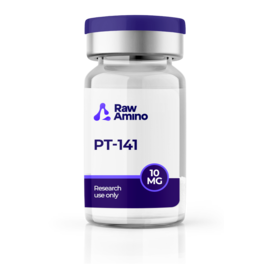
Within this space, PT-141 (bremelanotide)—a synthetic analog related to α-MSH—has emerged as a research tool to interrogate melanocortin receptor networks, particularly MC4R, in the central nervous system. Preclinical and translational studies suggest PT-141 may modulate circuits that influence sexual desire, attention to erotic cues, and hemodynamic readiness, while also intersecting with dopaminergic and other neuromodulatory pathways. The summaries below adopt cautious language and focus strictly on mechanisms and models; mentions of dosing, routes, or human-directed use are intentionally excluded.
Central MC4R Signaling and Network Integration
PT-141 is frequently used to probe melanocortin 4 receptor (MC4R)–linked circuitry that appears to coordinate autonomic outflow, motivational salience, and arousal-related behavioral states. Activation of MC4R in discrete hypothalamic and limbic regions may alter downstream second-messenger cascades and reshape the gain of arousal-relevant networks. In model systems, this has been associated with shifts in central processing of erotic stimuli and with patterns that resemble increased arousal signaling, although the precise locus of action likely varies by species, context, and experimental paradigm. These observations support the view that melanocortin pathways could represent a nodal point coupling internal state to arousal readiness.
Vasoactive Hypotheses and Genital Hemodynamics
Experimental work suggests PT-141 may influence genital blood flow via centrally mediated autonomic mechanisms that secondarily affect local vascular tone. Conceptually, enhanced parasympathetic drive and/or modulation of nitric-oxide–related signaling could contribute to regional vasodilation, with downstream effects on erectile or engorgement physiology. While vascular readouts are of interest in both male and female models, these effects are typically interpreted as a consequence of upstream neural modulation rather than a primary peripheral action. The degree to which such hemodynamic changes translate across preparations appears to depend on study design and baseline vascular status.
Dopamine and Related Neuromodulators in Arousal States
PT-141 may alter the balance of neurotransmitters implicated in desire and reward, including dopamine, and potentially intersects with serotonergic and noradrenergic systems. In several experimental settings, melanocortin activation has coincided with patterns consistent with heightened motivational salience and approach behavior. Because these neuromodulators also regulate mood, stress reactivity, and attentional control, disentangling direct arousal effects from broader state changes remains an active area of investigation. Nevertheless, converging data suggest a plausible route by which melanocortin input could tune the reward architecture relevant to libido.
Libidinal Drive, Salience, and Cognitive Appraisal
Beyond immediate autonomic effects, arousal involves appraisal of stimuli, context, and internal state. Studies using PT-141 as a probe indicate that melanocortin signaling may adjust thresholds for sexual motivation and the perceived salience of sexual cues. Such effects could manifest as alterations in exploratory behavior, attentional biases, or subjective arousal correlates in research settings. Because these processes are distributed across cortical–subcortical loops, the apparent impact of PT-141 likely reflects network-level integration rather than a single-site mechanism.
Research Context and Comparative Models
Work comparing melanocortin agonism with other arousal-related pathways (e.g., nitric oxide–centric approaches) suggests different mechanistic entry points into overlapping physiological endpoints. Whereas vasodilator strategies emphasize peripheral smooth muscle tone, melanocortin-centric approaches appear to begin centrally and propagate outward through autonomic and endocrine intermediates. This distinction may explain reports that PT-141 can modulate arousal even when peripheral contexts vary, though results remain model-dependent and should be interpreted with attention to species, experimental timing, and baseline hormonal state.
Conclusion
PT-141 (bremelanotide) is frequently employed as a mechanistic probe of melanocortin signaling in sexual arousal research. Available evidence suggests it may influence central motivation circuits, autonomic outputs, and secondary vascular responses, while interacting with dopaminergic and related neuromodulatory systems. Findings remain contingent on model and context, and the precise mapping from receptor activation to integrated arousal phenotypes is still under active study. Continued, controlled investigations may clarify how melanocortin pathways interface with vascular and cognitive components of arousal in both female and male frameworks.
References
- Diamond, L., Earle, D., Rosen, R. et al. Double-blind, placebo-controlled evaluation of the safety, pharmacokinetic properties and pharmacodynamic effects of intranasal PT-141, a melanocortin receptor agonist, in healthy males and patients with mild-to-moderate erectile dysfunction. Int J Impot Res 16, 51–59 (2004). https://doi.org/10.1038/sj.ijir.3901139
- L.E. Diamond, D.C. Earle, W.D. Garcia, C. Spana, Co-administration of low doses of intranasal PT-141, a melanocortin receptor agonist, and sildenafil to men with erectile dysfunction results in an enhanced erectile response, Urology, Volume 65, Issue 4, 2005, Pages 755-759, ISSN 0090-4295, https://doi.org/10.1016/j.urology.2004.10.060.
- Hedlund P. PT-141 Palatin. Current Opinion in Investigational Drugs (London, England : 2000). 2004 Apr;5(4):456-462. PMID: 15134289.
Disclaimer: The information provided is intended solely for educational and scientific discussion. The compounds described are strictly intended for laboratory research and in-vitro studies only. They are not approved for human or animal consumption, medical use, or diagnostic purposes. Handling is prohibited unless performed by licensed researchers and qualified professionals in controlled laboratory environments.”