Introduction
Energy balance in vertebrates emerges from coordinated endocrine pulses, nutrient sensing, and neural circuits that jointly regulate food seeking, substrate selection, and tissue remodeling. Among these regulators, growth hormone (GH) pulses and ghrelin-family signals influence the partitioning of nutrients between adipose depots and lean tissues, while also interfacing with glucose–insulin dynamics and mesolimbic reward circuitry. Disentangling these layers requires molecular tools that selectively engage defined receptors with minimal off-target activity, enabling precise interrogation of cause–effect relationships in laboratory systems.
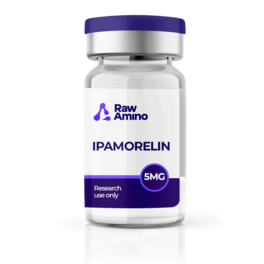
Ipamorelin—a synthetic agonist at the growth hormone secretagogue receptor (GHS-R)—is frequently leveraged in preclinical investigations to probe how exogenous drive on the ghrelin/GHS-R axis modulates GH pulsatility, downstream lipid/carbohydrate flux, and central appetite signaling. Across experimental models, ipamorelin has been used to examine the extent to which GH-linked partitioning can favor accretion of lean tissues while restraining fat mass, how GHS-R activation interfaces with pancreatic islet function, and how orexigenic cues interact with reward pathways. This article synthesizes these mechanistic dimensions while maintaining a neutral, research-first framing.
Endocrine Partitioning: GH Pulsatility and Body-Composition Signals
Ipamorelin engages GHS-R to amplify pituitary GH release, yielding transient spikes that propagate through canonical GH/IGF-1 signaling cascades. In laboratory models, such pulses are associated with increased lipolysis, enhanced fatty-acid mobilization, and protein-synthetic programs in myocytes and osteoblasts, suggesting a shift in substrate allocation toward lean tissue accretion and away from adipose storage. Importantly, ipamorelin’s selective profile allows experiments to isolate GH-coupled effects with reduced confounding from cortisol or thyroid-axis perturbations, clarifying how GH itself—not broader stress-hormone activation—steers macronutrient fate and nitrogen balance.
Receptor Selectivity and Off-Target Endocrine Interactions
A salient feature of ipamorelin is its relative sparing of ACTH/cortisol and thyroidal outputs in controlled settings. From a design standpoint, this pharmacologic selectivity provides a cleaner window into GHS-R biology, because glucocorticoid elevation can independently favor adipogenesis and proteolysis—masking GH’s partitioning signature. Studies that compare ipamorelin with less selective secretagogues highlight why minimizing off-target endocrine drift is critical when attributing phenotype (e.g., lean mass gain, adipose reduction) to GHS-R engagement rather than to secondary stress responses.
Pancreatic Islet Crosstalk: Insulin Secretion and Nutrient Handling
Beyond pituitary action, GHS-R signaling intersects with pancreatic islets. Preclinical data indicate that ipamorelin can potentiate insulin release through pathways involving calcium-channel modulation and adrenergic inputs in β-cells. When synchronized with GH pulses, this dual action creates an informative paradigm for nutrient routing: insulin facilitates glucose disposal and amino-acid uptake, while GH promotes lipolysis and supports protein synthesis. Time-resolved studies (e.g., glucose and amino-acid tracers, euglycemic clamps) can deconvolve whether co-occurring insulin and GH signals bias incoming nutrients toward myofibrillar incorporation while limiting de novo lipogenesis.
Orexigenic Signaling: Appetite Circuits and Reward Encoding
As a ghrelin mimetic, ipamorelin can engage central networks that govern hunger and reinforcement. GHS-R activation modulates orexinergic and dopaminergic nodes, including the ventral tegmental area–nucleus accumbens axis implicated in cue salience and food-seeking behavior. Notably, ipamorelin exhibits comparatively modest orexigenic drive among secretagogues, enabling experiments that separate GH-mediated nutrient partitioning from robust appetite stimulation. Laboratory paradigms combining ipamorelin with controlled diets can therefore probe how reward-linked “hunger pang” signals, cholinergic–opioidergic opponency, and conditioned food preference interact with endocrine partitioning to shape energy intake and substrate selection.
Temporal Coordination: GH Pulses, Feeding Windows, and Nutrient Flux
GH secretory bursts are brief, and their metabolic impact depends on timing relative to nutrient appearance in the circulation. In experimental designs, aligning ipamorelin-evoked GH peaks with controlled feeding windows enables hypothesis tests about “metabolic gating”—the idea that synchronized GH–insulin signals re-route incoming substrates toward muscle glycogen/protein accretion while suppressing adipose storage. Such designs benefit from high-frequency sampling of GH/insulin, indirect calorimetry for substrate oxidation, and postprandial tracer kinetics to quantify real-time partitioning.
Age-Dependent Endocrine Context
Somatotropic tone declines with age across species, altering responsiveness to secretagogue inputs. Older laboratory animals often display a larger relative shift in body composition upon GHS-R stimulation compared with younger counterparts, likely reflecting both lower baseline GH pulsatility and age-related insulin sensitivity changes. This age context allows experiments to examine whether ipamorelin primarily restores youthful pulse amplitude/frequency, improves peripheral GH sensitivity, or both, and how these changes translate into measurable alterations in lean mass, bone metrics, and adiposity under standardized housing and diet.
Minimizing Confounds: Corticosteroid Interactions and Catabolic Stress
Catabolic states (e.g., exogenous glucocorticoid exposure) provide stress-test conditions for partitioning hypotheses. Because glucocorticoids favor protein breakdown and central adiposity, models that combine corticosteroid exposure with GHS-R agonism can parse whether ipamorelin’s selective endocrine profile buffers catabolic signaling in bone and muscle or mainly offsets appetite/energy-expenditure effects. Endpoint panels that include nitrogen balance, collagen markers, bone formation/resorption indices, and myofibrillar protein synthesis help to delineate mechanism versus correlation.
Systems Integration: From Molecular Readouts to Whole-Body Phenotypes
Mechanistic clarity benefits from multi-scale readouts: receptor-proximal signaling (e.g., cAMP/Ca²⁺ in β-cells), circulating hormones (GH, insulin, IGF-1), tissue-level transcriptional programs (lipolytic/lipogenic and myogenic genes), and whole-organism outcomes (body composition by DXA or MRI, respiratory exchange ratio, spontaneous activity). Incorporating neural endpoints—such as c-Fos mapping in appetite circuits or dopamine turnover in mesolimbic regions—can reveal how central motivation signals align (or conflict) with peripheral endocrine cues to determine net energy intake and partitioning.
Conclusion
In experimental settings, ipamorelin offers a selective lever on the GHS-R axis to investigate how GH pulses couple to nutrient handling, body-composition trajectories, and appetite-linked neural states. Its relative endocrine specificity enables dissection of GH-centric mechanisms without dominant confounding from cortisol or thyroid drift, while observed effects on β-cell output and mesolimbic circuitry situate GHS-R as a nexus between metabolism and motivation. Progress will hinge on synchronized, time-resolved designs that integrate central and peripheral readouts, thereby converting phenomenology into causally anchored maps of energy balance. Continued preclinical work is warranted to refine pathway attribution and quantify necessity/sufficiency across tissues.
References
- N. K. Aagaard et al., “Growth hormone and growth hormone secretagogue effects on nitrogen balance and urea synthesis in steroid treated rats,” Growth Horm. IGF Res., vol. 19, no. 5, Oct. 2009. doi:10.1016/j.ghir.2009.01.001.
- J. V. Gobburu, H. Agersø, W. J. Jusko, and L. Ynddal, “Pharmacokinetic-pharmacodynamic modeling of ipamorelin, a growth hormone releasing peptide, in human volunteers,” Pharm. Res., vol. 16, no. 9, Sep. 1999. doi:10.1023/a:1018955126402.
- E. Adeghate and A. S. Ponery, “Mechanism of ipamorelin-evoked insulin release from the pancreas of normal and diabetic rats,” Neuro Endocrinol. Lett., vol. 25, no. 6, pp. 403–406, Dec. 2004.
- A. M. Wren et al., “The novel hypothalamic peptide ghrelin stimulates food intake and growth hormone secretion,” Endocrinology, vol. 141, no. 11, pp. 4325–4328, Nov. 2000. doi:10.1210/endo.141.11.7873.
- R. G. Smith and M. O. Thorner, Human Growth Hormone: Research and Clinical Practice. Springer Science & Business Media, 2000.
- K. Raun et al., “Ipamorelin, the first selective growth hormone secretagogue,” Eur. J. Endocrinol., vol. 139, no. 5, Nov. 1998. doi:10.1530/eje.0.1390552.
- P. B. Johansen, Y. Segev, D. Landau, M. Phillip, and A. Flyvbjerg, “Growth hormone (GH) hypersecretion and GH receptor resistance in streptozotocin diabetic mice in response to a GH secretagogue,” Exp. Diabesity Res., vol. 4, no. 2, pp. 73–81, Jun. 2003. doi:10.1155/EDR.2003.73.
- N. B. Andersen, K. Malmlöf, P. B. Johansen, T. T. Andreassen, G. Ørtoft, and H. Oxlund, “The growth hormone secretagogue ipamorelin counteracts glucocorticoid-induced decrease in bone formation of adult rats,” Growth Horm. IGF Res., vol. 11, no. 5, Oct. 2001. doi:10.1054/ghir.2001.0239.
- S. Lall, L. Y. Tung, C. Ohlsson, J. O. Jansson, and S. L. Dickson, “Growth hormone (GH)-independent stimulation of adiposity by GH secretagogues,” Biochem. Biophys. Res. Commun., vol. 280, no. 1, pp. 132–138, Jan. 2001. doi:10.1006/bbrc.2000.4065.
- A. M. Naleid, M. K. Grace, D. E. Cummings, and A. S. Levine, “Ghrelin induces feeding in the mesolimbic reward pathway between the ventral tegmental area and the nucleus accumbens,” Peptides, vol. 26, no. 11, pp. 2274–2279, Nov. 2005. doi:10.1016/j.peptides.2005.04.025.
Disclaimer: The information provided is intended solely for educational and scientific discussion. The compounds described are strictly intended for laboratory research and in-vitro studies only. They are not approved for human or animal consumption, medical use, or diagnostic purposes. Handling is prohibited unless performed by licensed researchers and qualified professionals in controlled laboratory environments.