Introduction
Sexual motivation and arousal emerge from distributed neural computations that integrate homeostatic state, reward valuation, and sensory input. A long-standing question in basic neuroendocrinology is how peptidergic signals couple these computations to discrete downstream effectors such as autonomic outflow and vascular tone. The melanocortin system, derived from the proopiomelanocortin (POMC) precursor, offers a tractable framework for dissecting this coupling because its receptors are topographically organized and functionally diverse across the central nervous system (CNS) and peripheral tissues in laboratory models.
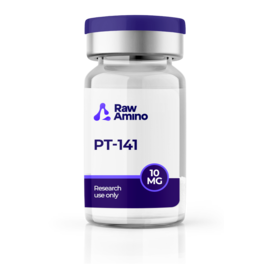
PT-141 (bremelanotide) is a heavily modified α-melanocyte–stimulating hormone (α-MSH) derivative that engages multiple melanocortin receptors (MCRs) with preference for MC3R and MC4R. In preclinical investigations, PT-141 has been used as a mechanistic probe to test how selective activation of central melanocortin pathways alters motivational drive, autonomic outputs, and endocrine pulse architecture without relying on peripheral hemodynamic mechanisms. The sections below summarize receptor pharmacology, circuit-level hypotheses, and sex-dependent observations from experimental preparations, with emphasis on molecular pathways rather than applied outcomes.
Receptor Pharmacology and Signal Transduction
PT-141 binds melanocortin receptors with negligible activity at MC2R and comparatively higher affinity for MC3R/MC4R. MC4R coupling to Gs/Gq initiates cAMP and phospholipase-C signaling, elevates intracellular Ca²⁺, and recruits ERK/MAPK cascades in neuronal systems. Such cascades can modulate ion channel gating (e.g., HCN, GIRK) to depolarize target neurons and increase firing probability. MC3R, often described as an “energy rheostat,” also couples to cAMP/PKA pathways but displays context-dependent signaling bias that may shape excitability and transcriptional responses in distinct nuclei. The PT-141 scaffold preserves the RF-amide C-terminus critical for receptor engagement while altering pharmacokinetic behavior and β-arrestin recruitment, potentially tuning receptor residence time and downstream pathway weighting in vitro.
Systems Integration Within Hypothalamic Networks
In arcuate nucleus microcircuits, neurons coexpressing kisspeptin, neurokinin-B, and dynorphin (KNDy) interact with melanocortin pathways to influence episodic gonadotropin-releasing hormone (GnRH) output in animal models. MC4R-expressing neurons in paraventricular and medial preoptic regions project to autonomic and endocrine relays that govern vascular and glandular effector functions. PT-141 exposure in controlled laboratory paradigms can shift pulse frequency and secretory burst mass readouts downstream (e.g., luteinizing-hormone proxies), consistent with enhanced GnRH drive; at high, sustained signaling, basal output may rise and obscure pulsatility, indicating network gain changes rather than simple on/off gating.
Mesolimbic Modulation and Motivational Drive
Preclinical work indicates that MC3R participates in mesolimbic dopamine regulation with sex-dependent features. MC3R activity in ventral tegmental area–nucleus accumbens loops modulates phasic dopamine signaling implicated in approach behaviors and reward valuation. PT-141, through combined MC3R/MC4R activation, appears to increase the probability of motivational states that bias exploratory and goal-directed behaviors in experimental settings. This aligns with observations that selective MC4R activation can “prime” autonomic and endocrine readiness, while concurrent MC3R engagement enhances the drive component required for spontaneous approach behavior.
Autonomic Outflow and Peripheral Effectors
Melanocortin activation in brainstem and hypothalamic autonomic centers can influence sympathetic and parasympathetic balance. In vascular beds associated with sexual arousal in animal models, MC4R-linked pathways are hypothesized to modulate nitric oxide synthase activity and downstream smooth-muscle tone via CNS-originating autonomic signals rather than direct peripheral receptor activation. PT-141 thereby serves as a central modulator that increases the likelihood of arousal-related vascular changes when appropriate sensory or contextual input is present, consistent with state-dependent gating observed in endocrine systems.
Receptor Topography and Selectivity Across the MCR Family
The five MCRs distribute nonuniformly: MC1R (pigmentation and certain immune cells), MC2R (adrenocortical axis, limited in this context), MC3R (CNS energy and motivational nodes), MC4R (widely expressed in CNS with roles in feeding, reward, and arousal), and MC5R (exocrine/immune interfaces). PT-141’s functional profile arises from its pattern of engagement across these receptors, with minimal MC2R involvement and actionable signaling at MC3R/MC4R. Because receptor density, splice variants, and effector coupling differ by region and species, experimental outcomes depend on the anatomical locus of action, receptor reserve, and network state at the time of stimulation.
Sex-Dependent Circuit Features in Experimental Models
Comparative studies in male and female laboratory animals suggest partially divergent reliance on MC3R vs. MC4R for initiating spontaneous vs. stimulus-evoked arousal phenotypes. Selective MC4R engagement often requires concurrent sensory stimulation to produce downstream vascular responses, whereas additional MC3R activity appears necessary to elicit spontaneous approach in some preparations. These findings motivate a two-module schema: MC4R as a readiness/effector gate and MC3R as a motivational/drive amplifier, with their relative weights modulated by gonadal steroids, metabolic status, and prior experience.
Cross-Talk With Metabolic and Stress Axes
MC3R/MC4R neurons interface with leptin, insulin, ghrelin, and corticotropin-releasing hormone networks, providing routes by which energy balance and stress reshape arousal circuitry. In negative energy states, altered melanocortin tone may down-rank readiness and drive, while energy abundance or certain stressor profiles can shift set points in the opposite direction. PT-141 experiments in such manipulated states help parse causal directions—whether melanocortin signaling drives motivational shifts or reflects compensatory adjustments to upstream metabolic cues.
Methodological Considerations for Laboratory Use
Interpreting PT-141’s actions requires careful control of preparation type (acute slices vs. in vivo), stimulus context (presence/absence of relevant sensory cues), temporal patterning (bolus vs. prolonged exposure), and readout selection (electrophysiology, immediate-early genes, endocrine pulses, or behavioral scoring). Desensitization kinetics, β-arrestin–mediated pathway switching, and region-specific receptor expression can confound simple dose-response expectations. Cross-species comparisons demand normalization for receptor pharmacology and peptide handling characteristics.
Conceptual Synthesis
Taken together, evidence supports a model in which PT-141, by preferentially activating MC3R/MC4R, coordinates three layers of the arousal construct in experimental systems: (i) motivational drive via mesolimbic modulation (MC3R-weighted), (ii) readiness and autonomic gating via hypothalamic/brainstem circuits (MC4R-weighted), and (iii) endocrine pulse shaping through hypothalamic network plasticity. Context dependence—sensory input, metabolic state, and steroid milieu—determines how these layers combine to yield observable outputs.
Conclusion
PT-141 functions as a central melanocortin probe that illuminates how MC3R and MC4R cooperate to synchronize motivational, autonomic, and endocrine components of arousal in laboratory models. Mechanistically, its actions span cAMP/PKA and PLC/Ca²⁺ signaling, network-level modulation of GnRH pulsatility, and mesolimbic dopamine tuning with sex-dependent features. These insights support a distributed-control framework rather than a single-node trigger. Further work using receptor-selective tools, circuit-specific manipulations, and time-resolved readouts is warranted to refine pathway attribution and elucidate long-term plasticity induced by melanocortin signaling.
References
- Wessells, H., Blevins, J. E., & Vanderah, T. W. (2005). Melanocortinergic control of penile erection. Peptides, 26(10), 1972–1977. https://doi.org/10.1016/j.peptides.2004.11.035
- Lippert, R. N., Ellacott, K. L. J., & Cone, R. D. (2014). Gender-Specific Roles for the Melanocortin-3 Receptor in the Regulation of the Mesolimbic Dopamine System in Mice. Endocrinology, 155(5), 1718–1727. https://doi.org/10.1210/en.2013-2049
Disclaimer: The information provided is intended solely for educational and scientific discussion. The compounds described are strictly intended for laboratory research and in-vitro studies only. They are not approved for human or animal consumption, medical use, or diagnostic purposes. Handling is prohibited unless performed by licensed researchers and qualified professionals in controlled laboratory environments.