Introduction
The gastrointestinal system serves as one of the body’s most intricate immune environments, containing a vast network of lymphoid tissues and symbiotic microorganisms that together orchestrate immune balance. Approximately 70% of immune-related cells reside within the gut, where they interact continuously with microbial communities composed of bacteria, fungi, and viruses. These microorganisms collectively shape immune recognition and tolerance, influencing inflammatory pathways and metabolic equilibrium across organ systems. Disruptions to this complex ecosystem have been associated, in experimental models, with heightened inflammatory signaling, loss of barrier integrity, and increased susceptibility to immune dysregulation.
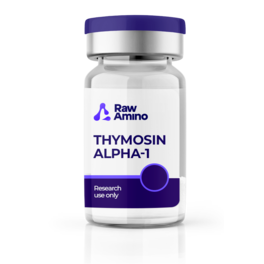
Scientific investigation over the past decade has increasingly focused on how molecular mediators such as thymic peptides influence gut–immune communication. Among these, Thymosin Alpha-1 (Tα1) has gained prominence as a regulatory peptide of thymic origin that appears to influence immune maturation, cytokine signaling, and microbial equilibrium in laboratory settings. In preclinical and in-vitro contexts, Tα1 has been observed to enhance antigen presentation, modulate T-cell differentiation, and adjust innate immune receptor activity. These findings position Tα1 as an important research molecule for understanding immune–microbiota cross-talk and the broader molecular mechanisms governing immune balance.
The Gut–Immune Network and Its Molecular Integration
The intestinal microbiome functions as both an educator and regulator of the immune system. Through interactions with epithelial cells and immune mediators, microbial metabolites such as short-chain fatty acids help direct T-cell lineage commitment and influence cytokine secretion. Within controlled laboratory conditions, disruptions to microbial diversity—referred to as dysbiosis—have been associated with altered expression of pattern recognition receptors and heightened release of proinflammatory molecules such as IL-6 and TNF-α. Conversely, restoration of microbial equilibrium has been shown to normalize immune signaling, supporting the maintenance of epithelial integrity. These dynamic interactions provide a framework for examining how peptides such as Tα1 may further influence immune regulation through molecular modulation of signaling cascades.
Immunomodulatory Function of Thymosin Alpha-1
Thymosin Alpha-1 is a 28-amino-acid peptide originally isolated from thymic extracts, where it plays a central role in thymocyte maturation. Laboratory studies demonstrate that Tα1 enhances the expression of major histocompatibility complex (MHC) class I molecules and Toll-like receptors on immune cells, suggesting a role in antigen processing and innate recognition. Tα1 also appears to regulate the secretion of cytokines such as interferon-γ and interleukin-2, promoting activation of both helper and cytotoxic T-cell populations in vitro. Moreover, it has been shown to influence dendritic cell differentiation, thereby bridging innate and adaptive responses. These mechanistic insights suggest that Tα1 operates as a multi-pathway immune coordinator under experimental conditions, providing a foundation for continued exploration of peptide-based immunoregulation.
Molecular Adaptations and Structural Engineering
To address stability and half-life challenges typical of peptide molecules, research has explored engineered variants of Thymosin Alpha-1. One such example is Tα1-Fc, a fusion peptide incorporating an Fc domain to extend systemic retention. In controlled preclinical experiments, this modified peptide displayed a substantially prolonged half-life and enhanced activity in restoring immune responsiveness. The Fc conjugation allows for improved receptor engagement and sustained signaling, offering insight into how structural modifications may influence bioavailability and functional duration in experimental systems. Such molecular engineering efforts reflect a growing field dedicated to improving peptide stability for use in complex in-vitro and in-vivo models.
Gut–Immune Cross-Talk and Peptide Signaling Pathways
Within experimental models, the gut epithelium serves as a dynamic interface for immune recognition. Peptides such as Tα1 may play an indirect role in modulating this interaction by promoting T-cell maturation and regulating cytokine feedback loops. Studies examining the connection between gut flora and immune gene expression suggest that thymic peptides could enhance mucosal immune readiness while maintaining tolerance toward commensal organisms. By adjusting the balance between proinflammatory and regulatory pathways, Tα1 may contribute to restoring immune homeostasis during laboratory investigations of intestinal barrier disruption or immune overactivation. These findings underscore its potential importance in mechanistic research exploring how systemic peptides communicate with localized immune networks.
Findings from Experimental Investigations
Several studies have examined Tα1’s molecular actions under diverse research conditions:
- Serum Profiling Studies: Experimental analysis of autoimmune models demonstrated lower circulating levels of Tα1 compared to healthy controls, implying that peptide regulation is integral to immune equilibrium.
- Engineered Peptide Constructs: Fusion-protein studies such as those involving Tα1-Fc have shown enhanced expression of immune-stimulatory markers and increased lymphocyte infiltration in tumor models, suggesting robust modulation of immune microenvironments.
- Comprehensive Reviews: Broader literature assessments have identified recurring evidence of Tα1’s antibacterial, antiviral, and immune-stabilizing properties, reinforcing its role as a model molecule for peptide-based immune regulation research.
Together, these findings highlight Tα1 as a relevant experimental tool for exploring immune activation, cytokine orchestration, and peptide–receptor dynamics under controlled conditions.
Conclusion
The integration of gut microbial signaling with immune regulation represents one of the most intricate frontiers of biological research. Thymosin Alpha-1 serves as a model peptide for investigating how endogenous molecules influence immune maturation, cytokine balance, and epithelial integrity. Through its multifaceted roles in thymocyte differentiation and innate signaling, Tα1 provides insight into how molecular interactions shape the immune landscape. Continued preclinical and biochemical studies are necessary to further elucidate its pathways, optimize molecular derivatives, and expand the understanding of immune–peptide regulation across laboratory systems.
References
- Wang, F., Yu, T., Zheng, H. et al. Thymosin Alpha1-Fc Modulates the Immune System and Down-regulates the Progression of Melanoma and Breast Cancer with a Prolonged Half-life. Scientific Reports, 8, 12351 (2018). https://doi.org/10.1038/s41598-018-30956-y
- Zheng, D., Liwinski, T., & Elinav, E. Interaction between microbiota and immunity in health and disease. Cell Research, 30, 492–506 (2020).
- Pica, F., Chimenti, M. S., Gaziano, R., et al. Serum thymosin α1 levels in patients with chronic inflammatory autoimmune diseases. Clinical and Experimental Immunology, 186(1): 39–45 (2016).
- Wu, H. J., Wu, E. The role of gut microbiota in immune homeostasis and autoimmunity. Gut Microbes, 3(1): 4–14 (2012).
- Dominari, A., Hathaway III D., Pandav K., et al. Thymosin alpha 1: A comprehensive review of the literature. World Journal of Virology, 9(5): 67–78 (2020).
Disclaimer: The information provided is intended solely for educational and scientific discussion. The compounds described are strictly intended for laboratory research and in-vitro studies only. They are not approved for human or animal consumption, medical use, or diagnostic purposes. Handling is prohibited unless performed by licensed researchers and qualified professionals in controlled laboratory environments.