Introduction
In experimental biochemistry, the reproducibility and accuracy of peptide-based investigations depend heavily on compound purity. Even minor impurities can introduce confounding effects in biochemical assays, distort binding data, or alter downstream molecular interactions. As peptide synthesis technologies have advanced, the scientific community has increasingly emphasized the role of high-fidelity manufacturing and purification standards in ensuring reliable outcomes. Peptides are complex molecules—subject to conformational variability, degradation, and side-product formation—that require rigorous chemical control throughout synthesis, isolation, and quality validation.
The concept of “premium peptides” has emerged not as a marketing designation but as a scientific classification based on measurable criteria of composition and analytical traceability. In controlled laboratory research, high-purity peptides minimize experimental noise and maximize the interpretability of data derived from kinetic, structural, or receptor-binding studies. Achieving this level of precision requires stringent manufacturing standards, including validated raw material sourcing, accurate coupling chemistry, multi-step purification (often via high-performance liquid chromatography), and comprehensive verification through analytical methods such as mass spectrometry and NMR. This article explores the molecular and procedural parameters that distinguish premium-grade peptide preparations from lower-purity analogues in the context of laboratory research and preclinical testing.
Chemical Purity and Structural Verification
From a scientific standpoint, a premium peptide refers to a compound that exhibits a purity profile exceeding 99%, verified through independent analytical techniques. In peptide synthesis, achieving this level of purity is a nonlinear challenge. Each incremental improvement beyond 90–95% requires exponentially greater time, resources, and analytical rigor. In experimental settings such as crystallographic studies or protein-interaction assays, even trace contaminants can interfere with folding dynamics or obscure spectroscopic readings. Therefore, the emphasis on 99%+ purity reflects an operational threshold beyond which variability in molecular conformation or binding kinetics is minimized.
Achieving such precision involves a combination of optimized synthesis chemistry and post-synthetic refinement. Solid-phase peptide synthesis (SPPS) is most commonly used, coupling amino acids sequentially via carbodiimide-mediated reactions. However, incomplete coupling, side-chain protection failures, and racemization can introduce byproducts. These must be removed through multi-phase purification processes, such as reverse-phase HPLC using gradient elution systems. Quality control validation then employs electrospray ionization mass spectrometry (ESI-MS) or matrix-assisted laser desorption ionization (MALDI-MS) to confirm sequence integrity and the absence of truncated intermediates. The standardization of such processes distinguishes true premium-grade materials from general research-grade peptides, ensuring experimental reproducibility across laboratories.
Raw Material Integrity and Post-Synthetic Modifications
The foundational quality of any peptide originates from the purity and stability of its amino acid monomers. While the base amino acids are generally standardized, differences arise in post-synthetic modifications and peptide handling conditions. Incomplete deprotection steps, solvent carryover, and chemical stabilizers can introduce unwanted moieties that alter peptide charge, solubility, or folding behavior. Furthermore, certain manufacturers employ excipients—such as mannitol or trehalose—to bulk, stabilize, or visually enhance products. While such additives are sometimes considered inert, they can alter the peptide’s hydrophilicity, disrupt chromatographic consistency, or interfere with assay readouts in vitro.
From an analytical perspective, filler compounds introduce experimental uncertainty by modifying matrix composition and potentially interacting with target proteins or cofactors under investigation. In mass spectrometric profiling, these additives can also mask the peptide’s spectral signature, complicating verification and quantitation. High-quality manufacturing protocols thus exclude fillers or binders entirely, focusing instead on purification methods that remove residual solvents, side-chain protecting groups, and mobile-phase additives like trifluoroacetic acid (TFA). Advanced purification workflows employ low-pH neutralization, ion exchange chromatography, and multi-solvent washing to reduce contaminants below detectable limits. This level of precision forms the foundation of reproducible biochemical experimentation.
Manufacturing Protocols and Analytical Rigor
The distinction between standard and premium peptide preparations is most apparent at the manufacturing and analytical validation stages. Many laboratories rely on cost-effective purification techniques that leave residual byproducts, whereas premium manufacturers utilize sequential chromatographic steps—reverse-phase, ion-exchange, and size-exclusion—to ensure compositional uniformity. In particular, the use of TFA as a mobile-phase additive during HPLC purification has been widely debated. While effective for pH modulation and peptide separation, trace residues of TFA can persist in final products, potentially affecting peptide folding or cell-culture compatibility in research applications. For this reason, modern high-purity facilities often employ alternative agents such as formic or acetic acid, followed by additional filtration stages to remove any acidic residues.
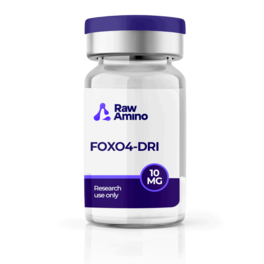
A further marker of manufacturing sophistication lies in the handling of chiral isomers. Many peptides, including regulatory sequences like FOXO4-DRI, exist as D- and L- optical forms. Functional specificity often depends on a single stereochemical configuration, and contamination with the opposite isomer can significantly alter experimental outcomes. Chiral HPLC or capillary electrophoresis is used to separate enantiomers, resulting in enantiopure or chiral-specific peptide preparations. Such processes dramatically improve data clarity in molecular docking or receptor-binding studies. Although these techniques are resource-intensive, they are indispensable for laboratories requiring precise control over molecular stereochemistry and activity. The adoption of ISO 9001-certified production standards further ensures that all steps—from synthesis through lyophilization—follow validated, documented quality systems.
Analytical Benchmarking for Research Reliability
In preclinical research environments, peptide purity correlates directly with the reliability of biochemical data. Peptides containing residual solvents or racemic mixtures can exhibit inconsistent binding kinetics or altered degradation rates, undermining reproducibility across replicates. For this reason, premium peptides are evaluated through orthogonal analytical methods to confirm structural fidelity and purity. High-resolution mass spectrometry verifies molecular weight; HPLC assesses elution uniformity; and Fourier-transform infrared spectroscopy (FTIR) confirms secondary structure integrity. In addition, nuclear magnetic resonance (NMR) spectroscopy provides atomic-level confirmation of conformational consistency.
These analyses serve dual purposes: they ensure that the peptide under investigation truly represents the intended sequence, and they verify that experimental outcomes can be attributed to the peptide itself, not to contaminants or stabilizers. By minimizing uncertainty, premium peptide standards allow researchers to draw more confident mechanistic conclusions about peptide folding, receptor interaction, and enzymatic activity. The resulting precision accelerates hypothesis testing while reducing the variability that often plagues molecular and structural biology.
Conclusion
Premium peptides are distinguished not by branding or marketing claims but by quantifiable metrics of molecular fidelity, purity, and analytical verification. Laboratory-grade peptide preparations that exceed 99% verified purity, lack fillers or excipients, and are validated through orthogonal analytical methods provide the highest standard for preclinical research. These materials eliminate confounding experimental variables, ensuring that observed molecular behavior reflects inherent peptide properties rather than artifact.
As research into peptide structure–function relationships deepens, maintaining rigorous standards for synthesis, purification, and validation remains essential. ISO-certified manufacturing, chiral-specific purification, and comprehensive mass spectrometric verification all contribute to the reproducibility of laboratory findings. Continued adherence to these principles ensures that peptide science advances through precision, not chance—an outcome made possible only through unwavering commitment to purity and process integrity.
References
- Lee, A. C.-L., Harris, J. L., Khanna, K. K., & Hong, J.-H. (2019). A Comprehensive Review on Current Advances in Peptide Drug Development and Design. International Journal of Molecular Sciences, 20(10), 2383. https://doi.org/10.3390/ijms20102383
- Mashreghi, M., et al. (2023). An In Vivo Investigation on the Wound-Healing Activity of Specific Ligand for the Innate Repair Receptor, ARA290. Europe PMC. https://europepmc.org/article/ppr/ppr610510
- Walker, R. F. (2006). Sermorelin: A Better Approach to Management of Adult-Onset Growth Hormone Insufficiency? Clinical Interventions in Aging, 1(4), 307. https://doi.org/10.2147/ciia.2006.1.4.307
Disclaimer: The information provided is intended solely for educational and scientific discussion. The compounds described are strictly intended for laboratory research and in-vitro studies only. They are not approved for human or animal consumption, medical use, or diagnostic purposes. Handling is prohibited unless performed by licensed researchers and qualified professionals in controlled laboratory environments.