Introduction
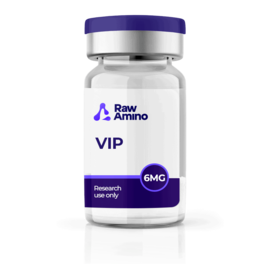
Barrier integrity and nutrient handling in the gastrointestinal tract emerge from tightly coordinated conversations between epithelia, immune cells, and the enteric nervous system. Among enteric neuropeptides, vasoactive intestinal peptide (VIP) is of particular mechanistic interest because it signals through VPAC1/VPAC2 receptors broadly expressed along the mucosa, regulating epithelial proliferation–migration dynamics, mucus-layer biology, ion transport, and vascular tone in experimental systems. Disruption of these circuits can shift permeability, alter luminal buffering, and modify the physicochemical conditions that govern digestion and absorption.
Conventional descriptions of barrier failure often focus on immune–epithelial crosstalk, yet accumulating preclinical evidence indicates that VIP-producing neurons and immune cells act as upstream modulators of epithelial homeostasis. Work in genetically modified models and ex vivo preparations suggests that VIP shapes goblet-cell programs, bicarbonate-rich secretions, and ductular bile flow, thereby influencing the mucus scaffold, pH microenvironments, and lipid processing. These insights motivate continued laboratory investigations into VIP’s receptor pharmacology, downstream effectors (e.g., cAMP/PKA and CFTR-linked pathways), and tissue-level consequences under basal and inflammatory conditions.
Neuroepithelial Control of the Barrier: Proliferation, Migration, and Goblet-Cell Programs
Loss-of-function studies in VIP-deficient mice reveal a multi-parameter epithelial phenotype at baseline: distorted crypt architecture, reduced proliferative/migratory indices, increased apoptosis, and heightened permeability, accompanied by fewer goblet cells and decreased expression of Muc2 and Tff3. These changes coincide with lower levels of the transcription factor Cdx2, a master regulator of intestinal differentiation, suggesting that VIP supports a gene program that maintains crypt–villus dynamics and secretory-lineage maturation. In experimental colitis (DNBS, DSS), VIP deficiency exacerbates injury, whereas VIP exposure in these models appears to preserve epithelial organization and restore barrier features, consistent with a homeostatic role in laboratory settings. Mechanistically, VPAC signaling may integrate with cAMP–PKA and ion-channel modules to stabilize tight junctions and the mucus interface, indirectly shaping nutrient gradients at the mucosal surface. (10)
Mucus-Layer Biology and Antigen Handling: VIP–Goblet-Cell Intersections
Goblet cells generate and deploy the gel-forming mucins that define the inner mucus layer, a critical determinant of diffusion barriers and luminal shear. Beyond secretion, goblet cells contribute bicarbonate to promote mucin unfolding and have been implicated in antigen sampling that tunes innate responses. Pharmacological interrogation of VIP receptors in mouse ileum indicates that VPAC blockade reduces crypt goblet-cell proliferation (EdU colocalization) and lowers goblet-cell counts in crypts and villi, whereas neuronal activity manipulations similarly shift secretory-lineage abundance. Together with observations in VIP-deficient mice, these data suggest that VIP is an upstream cue for goblet-cell production and function, thereby influencing mucus viscoelasticity and the physicochemical context for nutrient absorption in experimental models. (1, 2, 10)
VIP–Bicarbonate Secretion Axis in Cholangiocytes and Ductular Flow
In isolated perfused livers and primary cholangiocyte preparations, VIP provokes bicarbonate-rich fluid secretion via VPAC-dependent mechanisms, with potency that can exceed other secretagogues in these assays. Responses include increases in bile pH, bicarbonate concentration, and total bicarbonate output; in bile duct–ligated preparations, VIP-driven flow changes are especially evident, consistent with a ductular site of action. Human studies with complete external biliary drainage similarly observed bicarbonate-rich choleresis and increased ductular flow during VIP infusion, without modifying canalicular clearance markers—again aligning with a ductular locus. These observations provide a mechanistic framework in which VIP modulates ductular alkalinization and flow, processes that are integral to lipid emulsification and luminal buffering in experimental and ex vivo contexts. (3, 4, 7, 8, 9)
Secretin, Somatostatin, and Additivity: Mapping Parallel Ductular Pathways
Comparative infusion paradigms indicate that VIP and secretin can produce additive increases in bile volume and bicarbonate output, implying partially distinct or parallel signaling routes converging on ductular secretion. Somatostatin, while reducing bile flow through effects consistent with canalicular/bile acid–dependent mechanisms, does not attenuate VIP-induced ductular choleresis in these human experimental settings, supporting pathway independence. Such designs help deconvolve canalicular versus ductular contributions and clarify how multiple peptide hormones can be layered to tune biliary composition and flow in model systems. (7, 8, 9)
Enteric Neural Networks, Vascular Tone, and Gallbladder Motility
VIP-positive fibers form dense networks throughout the lamina propria and are present in gallbladder walls across species. In vivo and ex vivo experiments show that VIP relaxes gallbladder smooth muscle and shifts net ion/water transport toward secretion, while neurohumoral schemes place VIP alongside nitric oxide in coordinating sphincter of Oddi relaxation (with cholecystokinin driving contraction via cholinergic pathways). VIP also exerts vasodilatory actions in pancreatic and splanchnic beds, potentially adjusting perfusion to match secretory demand; importantly, low-dose hemodynamic changes can occur independently of overt secretory shifts, underscoring discrete vascular and epithelial targets. These features position VIP as an integrator of motility, secretion, and microcirculatory flux in experimental preparations. (11, 12, 13, 14)
Barrier Protection in Inflammatory Challenge: Experimental Colitis
In chemically induced colitis, VIP-deficient mice exhibit heightened disease severity and barrier disruption, whereas VIP administration in these models restores indices toward wild-type readouts. The data are consistent with a scenario in which VIP tempers inflammatory amplification while supporting epithelial restitution—potentially through combined effects on goblet-cell output, tight-junction regulation, and epithelial turnover. Because VPAC1/VPAC2 expression profiles vary across epithelial and immune compartments, differential receptor engagement may partition anti-inflammatory and pro-repair signaling, a subject of active investigation in preclinical settings. (10)
Systems View: From Ion Transport to Nutrient Handling
By promoting bicarbonate secretion (ductular bile and intestinal), enhancing mucus deployment and unfolding, and supporting epithelial renewal, VIP shapes the microenvironment that governs macromolecule digestion, micelle formation, and trans-epithelial nutrient gradients. In this integrated view, permeability and “leakiness” are emergent properties of coordinated VIP-regulated processes—mucus integrity, junctional protein dynamics, and epithelial restitution—rather than a single structural failure. Mapping these interdependencies with spatial transcriptomics, ion-flux imaging, and receptor-biased agonists may help resolve how VIP tunes absorptive efficiency and barrier selectivity under physiological stressors in laboratory models.
Conclusion
Across cellular, ex vivo, and animal systems, VIP emerges as a multifaceted regulator of epithelial homeostasis and biliary physiology. Mechanistically, VIP signaling supports crypt dynamics and goblet-cell programs, drives bicarbonate-rich ductular secretion, modulates gallbladder tone, and buffers inflammatory perturbations during chemically induced colitis. These convergent actions shape the mucus scaffold, luminal pH, and ionic milieu that collectively influence permeability and nutrient handling in experimental settings. Further laboratory work dissecting receptor bias, downstream effectors, and tissue-specific expression will refine our understanding of how VIP coordinates barrier integrity with digestive function.
References
- Nyberg, B. Bile Secretion in Man. The Effects of Somatostatin, Vasoactive Intestinal Peptide and Secretin. Acta Chirurgica Scandinavica Supplementum 557, 1990.
- Wu, X. et al. Vasoactive Intestinal Polypeptide Promotes Intestinal Barrier Homeostasis and Protection against Colitis in Mice. PLoS ONE 10(5), 2015.
- Cho, W.K., Boyer, J.L. Vasoactive Intestinal Polypeptide Is a Potent Regulator of Bile Secretion from Rat Cholangiocytes. Gastroenterology 117(2), 1999.
- Sundler, F. et al. VIP Innervation of the Gallbladder. Gastroenterology 72(6), 1977.
- Nyberg, B. et al. Vasoactive Intestinal Peptide and Secretin: Effects of Combined and Separate Intravenous Infusions on Bile Secretion in Man. Scand. J. Gastroenterol. 26(1), 1991.
- Dao, D.-P.D., Le, P.H. Histology, Goblet Cells. StatPearls, 2020.
- Schwerdtfeger, L.A., Tobet, S.A. Vasoactive Intestinal Peptide Regulates Ileal Goblet Cell Production in Mice. Physiol. Rep. 8(3), 2020.
- Jansson, R. et al. Effects of Intravenous VIP on Gallbladder Function in the Cat. Gastroenterology 75(1), 1978.
- Blitz, W. et al. Cholinergic and Pancreatic Actions of Porcine and Synthetic VIP. Arch. Int. Pharmacodyn. Ther. 277(1), 1985.
- Nyberg, B. et al. Somatostatin Does Not Block the Effect of VIP on Bile Secretion in Man. Eur. J. Clin. Invest. 22(1), 1992.
- Physiologic Anatomy of Biliary Secretion. BrainKart.
- Bile secretion and enterohepatic circulation. Osmosis.
- Transport & Metabolic Functions of the Liver. Ganong’s Review of Medical Physiology, Doctorlib.
- Nyberg, B. et al. Evidence That VIP Induces Ductular Secretion of Bile in Humans. Gastroenterology 96(2), 1989.
Disclaimer: The information provided is intended solely for educational and scientific discussion. The compounds described are strictly intended for laboratory research and in-vitro studies only. They are not approved for human or animal consumption, medical use, or diagnostic purposes. Handling is prohibited unless performed by licensed researchers and qualified professionals in controlled laboratory environments.