Introduction
Energy balance emerges from a network of nutrient sensors, neuroendocrine circuits, and tissue-specific metabolic programs that partition substrates between storage and oxidation. Conventional approaches to studying body-mass regulation have often amplified whole-system metabolic rate without discriminating among lipid, muscle, or bone compartments, making it difficult to map cause-and-effect between molecular signals and compartment-specific outcomes. Methodologically, this limits the precision with which investigators can probe adipose lipolysis, lean-mass preservation, or the timing dynamics that govern fuel selection.
Peptides and peptide-inspired small molecules offer modular tools to interrogate these questions under controlled laboratory conditions. By engaging defined receptors or intracellular pathways, they enable hypothesis-driven experiments on lipolysis, satiety signaling, mitochondrial substrate choice, and methylation-linked energy dissipation—often with tunable selectivity and predictable pharmacodynamic motifs. Below, we survey several research probes frequently used to model fat-mass reduction with concurrent maintenance of lean tissues, emphasizing molecular mechanisms, pathway cross-talk, and readouts in preclinical or in-vitro settings rather than applied outcomes.
Mitochondrial–Nuclear Crosstalk and AMPK Biasing (MOTS-c)
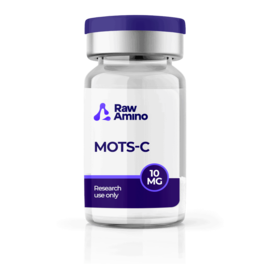
MOTS-c is a short mitochondrial-derived peptide that translocates to the cytosol and nucleus under metabolic stress. In cellular systems, MOTS-c elevates AMP-activated protein kinase (AMPK) activity, shifting flux toward fatty-acid β-oxidation and glucose oxidation while constraining de novo lipogenesis. Nuclear localization appears to adjust stress-response and metabolic gene programs—reported targets include antioxidant pathways and factors coordinating lipid catabolism—suggesting a dual role as both a rapid metabolic switch and a transcriptional tuner. In rodent studies, MOTS-c has been associated with improved metabolic flexibility, making it a useful probe for experiments that decouple substrate availability from oxidation rates and examine how AMPK-centric signaling remodels adipocyte and myocyte phenotype. (See mechanistic overviews and nucleus-targeting evidence.) [5][6]
GH-Derived Lipolytic Fragments and Adipocyte Selectivity (AOD9604; Fragment 176-191)
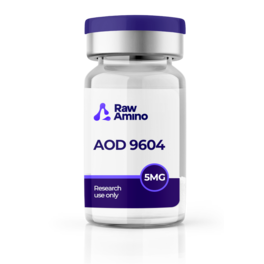
Fragments derived from the C-terminus of somatotropin (e.g., 176-191) preserve lipolysis-linked motifs while minimizing canonical growth pathways, enabling adipose-focused readouts. These fragments can sensitize β3-adrenergic signaling in white adipocytes, increasing hormone-sensitive lipase/ATGL activity and facilitating fatty-acid mobilization. AOD9604, an engineered analogue, has been used to test whether sustained lipolytic bias alters adipocyte number vs. size, with some reports suggesting apoptosis-permissive states in hypertrophic adipocytes under catecholamine drive. Notably, fragment activity in certain models appears contingent on baseline adiposity, allowing designs that compare obese vs. lean phenotypes to isolate adipose-selective mechanisms without confounding lean tissue turnover. [1][2]
Incretin-Axis Modulation of Satiety and Gastric Timing (GLP-1 Pathway Probes)
Agonism of the glucagon-like peptide-1 (GLP-1) receptor offers a two-pronged platform to study energy intake: (i) peripheral modulation of gastric emptying and intestinal transit, and (ii) central actions within hypothalamic and brainstem circuits that integrate satiety and reward. In vitro and animal models show reduced meal size, altered inter-meal intervals, and changes in neuronal activity within arcuate and nucleus tractus solitarius networks. Longitudinal work in experimental systems also reports improvements in glycemic surrogates and lipid panels, allowing investigators to link satiety dynamics with cardiometabolic biomarkers over time. Comparative studies between different GLP-1–based probes can dissect how receptor residence time and brain penetrance shape appetite suppression versus glycemic control under standardized feeding paradigms. [3][4][8][9]
Catecholaminergic Tone and Hedonic Feeding Circuits (Tesofensine)
Tesofensine is a triple monoamine (dopamine/serotonin/noradrenaline) reuptake inhibitor used experimentally to modulate mesolimbic and hypothalamic pathways implicated in appetitive drive and effort valuation of food seeking. In diet-induced obesity models, tesofensine normalizes depressed extracellular dopamine within nucleus accumbens and prefrontal cortex, with concurrent shifts in dopamine D2 receptor expression and transporter binding. These data support a framework in which restoring catecholaminergic tone reduces hedonic overeating while secondarily affecting activity-related energy expenditure and lipid oxidation kinetics. Such profiles are well-suited for studies that partition homeostatic vs. hedonic components of intake using operant tasks, microdialysis, and indirect calorimetry. [10][11]
Methylation Economy, Futile Cycling, and NNMT Inhibition (5-Amino-1MQ)
The cytosolic enzyme nicotinamide N-methyltransferase (NNMT) consumes S-adenosyl-L-methionine (SAM) to methylate nicotinamide, influencing both methyl-donor balance and NAD+ salvage. In adipocytes, elevated NNMT activity correlates with suppressed futile cycles and reduced oxidative flux. 5-Amino-1-methylquinolinium (5-Amino-1MQ) is a membrane-permeable NNMT inhibitor used to probe how methylation pressure intersects with energy dissipation. Preclinical work indicates that NNMT blockade increases intracellular NAD+ and SAM pools, augments adipocyte oxidative metabolism, and decreases lipogenic gene expression—yielding rapid changes in fat mass and circulating lipids in rodent models. Because NNMT sits at the nexus of redox and one-carbon metabolism, 5-Amino-1MQ is valuable for isotope-tracer experiments that quantify pathway rerouting under constrained methylation capacity. [7][2][4]
Somatotropic Axis Tuning via Receptor-Selective Secretagogues
Secretagogue platforms enable orthogonal control of pituitary GH output. GHRH-receptor agonists (e.g., sermorelin analogues, long-acting constructs such as CJC-1295) elevate pulsatile cAMP/PKA signaling, whereas ghrelin-receptor agonists (GHSR; e.g., ipamorelin, GHRP-2/6, hexarelin) recruit Gq/PLC and β-arrestin components and integrate with appetite and stress circuitry. In combination, these tools can “shape” GH pulse amplitude and width, providing a controlled way to test how hepatic STAT5 programs, adipose lipolysis, skeletal muscle protein turnover, and bone remodeling respond to different temporal patterns of GH exposure. Ghrelin-mimetic probes also interact with neuropeptide Y systems and have been used to examine visceral nociception and sleep architecture—important covariates when interpreting endocrine rhythms. [1][3][4]
Conclusion
Peptide-based and peptide-inspired research probes provide granular control over nodes that govern adiposity: mitochondrial fuel selection (MOTS-c), adipocyte adrenergic sensitivity (GH fragments), central satiety circuits (GLP-1 pathway), catecholamine-mediated reward (tesofensine), methylation/redox coupling (5-Amino-1MQ), and somatotropic pulse geometry (secretagogues). Deployed within rigorously timed, multi-tissue experimental designs—combining indirect calorimetry, tracer flux, single-cell transcriptomics, and neurocircuit readouts—these tools can disentangle intake from expenditure and storage from oxidation. Continued laboratory investigations that prioritize mechanism, temporality, and tissue specificity are warranted to refine causal models of energy balance.
References
- A. Astrup, D. H. Meier, B. O. Mikkelsen, J. S. Villumsen, and T. M. Larsen, “Weight loss produced by tesofensine in patients with Parkinson’s or Alzheimer’s disease,” Obesity (Silver Spring), 16(6), 2008. doi:10.1038/oby.2008.56.
- M. Heffernan et al., “The effects of human GH and its lipolytic fragment (AOD9604) on lipid metabolism following chronic treatment in obese mice and beta(3)-AR knock-out mice,” Endocrinology, 142(12), 2001. doi:10.1210/endo.142.12.8522.
- M. Tang-Christensen, P. J. Larsen, J. Thulesen, J. Rømer, and N. Vrang, “Glucagon-like peptide-2 is a neurotransmitter involved in the regulation of food intake,” Nat. Med., 6(7), 2000.
- L. Blonde et al., “Interim analysis of the effects of exenatide… over 82 weeks,” Diabetes Obes. Metab., 8(4), 2006.
- C. Lee, K. H. Kim, and P. Cohen, “MOTS-c: A novel mitochondrial-derived peptide regulating muscle and fat metabolism,” Free Radic. Biol. Med., 100, 2016.
- K. H. Kim, J. M. Son, B. A. Benayoun, and C. Lee, “The mitochondrial-encoded peptide MOTS-c translocates to the nucleus…,” Cell Metab., 28(3), 2018.
- H. Neelakantan et al., “Selective and membrane-permeable small molecule inhibitors of NNMT reverse high fat diet-induced obesity in mice,” Biochem. Pharmacol., 147, 2018.
- D. H. Ryan, “Drugs for Treating Obesity,” Handb. Exp. Pharmacol., 2021.
- B. G. Tchang et al., “Weight Loss Outcomes With Telemedicine During COVID-19,” Front. Endocrinol., 13, 2022.
- R. Zieba, “[Obesity: a review of currently used antiobesity drugs and new compounds in clinical development],” Postepy Hig. Med. Doswiadczalnej, 61, 2007.
- A. M. D. Axel, J. D. Mikkelsen, and H. H. Hansen, “Tesofensine… induces appetite suppression… in the diet-induced obese rat,” Neuropsychopharmacology, 35(7), 2010.
Disclaimer: The information provided is intended solely for educational and scientific discussion. The compounds described are strictly intended for laboratory research and in-vitro studies only. They are not approved for human or animal consumption, medical use, or diagnostic purposes. Handling is prohibited unless performed by licensed researchers and qualified professionals in controlled laboratory environments.