Introduction
Coordinated regulation of growth hormone (GH) relies on convergent inputs from hypothalamic growth hormone–releasing hormone (GHRH) and peripheral ghrelin-family signals acting through distinct receptors on pituitary somatotrophs. In laboratory models, pairing a ghrelin receptor (GHSR) agonist with a GHRH-receptor (GHRHR) agonist provides a controlled strategy to probe how amplitude (peak height) and temporal structure (pulse width and trough) of GH secretion shape downstream pathways in adipose tissue, bone, liver, muscle, and neural circuits. Because the two receptor systems mobilize partially non-overlapping second messengers, their combined engagement enables interrogation of synergistic and ceiling effects on GH dynamics and related metabolic endpoints.
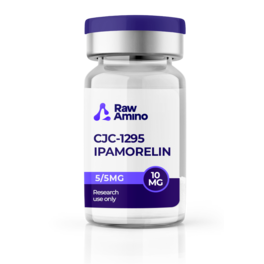
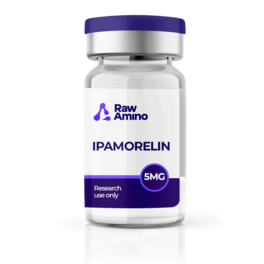
Ipamorelin and CJC-1295 are frequently used as mechanistic tools in this context. Ipamorelin selectively activates GHSR with minimal off-target engagement, whereas CJC-1295 is an engineered GHRH analogue that supports prolonged GHRHR stimulation while preserving pulsatility. Together they allow researchers to test hypotheses about receptor selectivity, intracellular crosstalk (Gs/cAMP–PKA vs. Gq/PLC and β-arrestin axes), and tissue-specific responses that are difficult to elicit with either pathway alone. The sections below summarize preclinical observations emphasizing molecular mechanisms, signal timing, and experimental readouts rather than applied outcomes.
Coordinated Control of GH Pulses: Amplitude–Width Interactions
Evidence indicates that sustained GHRHR drive can raise baseline somatotroph excitability while GHSR bursts bias secretory spikes toward higher amplitude and wider duration. In controlled settings, long-acting GHRH analogues have been observed to maintain pulsatile GH release rather than collapsing secretion into a tonic profile, enabling analysis of pulse-dependent transcription (e.g., hepatic STAT5 target genes) under quasi-physiological timing. Superimposing GHSR activation on this background appears to “stack” cAMP–PKA signals with ghrelin-coupled pathways, yielding higher peaks and elevated troughs in some models, a useful paradigm for testing gene programs that respond to peak height versus cumulative exposure. These designs help disentangle how somatotropic rhythms map onto lipid handling, protein turnover, and extracellular-matrix remodeling in target tissues. [1]
Receptor Pharmacology and Selectivity: Minimizing Confounds
Ipamorelin is widely characterized as a selective GHSR agonist with limited activity at other endocrine receptors, a property that reduces confounding readouts from non-somatotropic pathways in comparative studies. CJC-1295, an engineered GHRH analogue, binds GHRHR and extends effective receptor engagement windows, facilitating pulse-structure experiments without constant supraphysiologic drive. When paired, these agents allow receptor-dissection studies that contrast GHSR-biased versus GHRHR-biased signaling and quantify additivity or synergy on GH kinetics, IGF-1 induction, and downstream kinase cascades (JAK2–STAT5, PI3K–AKT, ERK). Such selectivity is advantageous when attributing tissue outcomes to a defined receptor axis rather than off-target effects.
Bone Remodeling: Matrix Turnover Under GHSR Drive
In rodent models, GHSR agonism has been reported to counteract glucocorticoid-associated suppression of bone formation, with increases in osteoblast activity and mineral accrual. The working model posits GH/IGF-1–mediated enhancement of osteoblastogenesis and matrix deposition, potentially complemented by local ghrelin-receptor signaling within bone microenvironments. Parallel readouts include serum osteocalcin, dynamic histomorphometry (mineral apposition rate), and cortical/trabecular microarchitecture. Because CJC-1295 modulates GH pulse characteristics that influence IGF-1 bioavailability, combining it with a GHSR agonist enables exploration of how pulse amplitude and duration modulate osteoblast lineage commitment and resorption/formation coupling. [2][3]
Metabolic Signaling: Appetite, Insulin, and Nutrient Partitioning
GHSR agonism in experimental systems engages hypothalamic circuitry governing ingestive behavior, while peripheral islet studies suggest ipamorelin can potentiate stimulus-dependent insulin release. This combination provides a framework to test nutrient-partitioning hypotheses: enhanced intake cues paired with GH/IGF-1 signaling may bias substrates toward skeletal muscle protein synthesis and fatty-acid oxidation rather than lipid storage, contingent on pulse timing and energy status. Investigators often track respiratory exchange ratio, intramyocellular lipid, hepatic VLDL output, and adipocyte size distributions to quantify partitioning outcomes when GHSR and GHRHR signals are co-activated. [5]
Nociception Interfaces: Neuropeptide Y and Visceral Sensory Modulation
Preclinical work with ghrelin mimetics implicates the neuropeptide Y (NPY) system in attenuating nociceptive signaling, particularly within visceral and neuropathic paradigms. Because nociception and stress-axis activity can impact endocrine rhythms, the observed reductions in nociceptive readouts under GHSR agonism present an opportunity to examine feedback between sensory processing, limbic-state modulation, and GH pulsatility. Endpoints include spinal and supraspinal c-Fos mapping, JAK/STAT cytokine panels, and NPY receptor expression in relevant nuclei. [6]
Endocrine Timing and Sleep Architecture
GH pulses are tightly coupled to sleep stages in many species, with slow-wave sleep often aligning with the largest nocturnal surge. Experimental observations with ghrelin-related compounds suggest potential improvements in sleep continuity and architecture, providing a tool to probe bidirectional coupling between sleep microstructure and pituitary output. With CJC-1295 preserving pulsatility, researchers can evaluate how stabilized nocturnal GH rhythms influence synaptic plasticity markers, glymphatic clearance surrogates, and central metabolites (e.g., GABA, myo-inositol) using MRS and polysomnography-like proxies in animal models. [7]
Methodological Notes for Combined GHSR/GHRHR Studies
When designing dual-agonist studies, key variables include baseline somatotropic status, nutrient context, circadian phase, and stress load—each can reshape GH pulse geometry and downstream transcriptional programs. It is also useful to incorporate multi-compartment sampling (pituitary–hepatic–adipose–muscle) with time-aligned omics and functional assays (e.g., lipoprotein kinetics, bone histomorphometry, nociceptive thresholds). Such integrative designs help resolve whether observed tissue effects arise from peak-dependent signaling, trough elevation, or cumulative GH/IGF-1 exposure, and how receptor-selective inputs contribute.
Conclusion
Ipamorelin and CJC-1295 offer complementary handles on the somatotropic axis: selective GHSR engagement to bias spike initiation and a stabilized GHRHR drive to sustain pulsatility. In combination, they provide a versatile experimental platform to dissect how GH pulse geometry programs metabolic flux, bone remodeling, nociception interfaces, and sleep-linked endocrine timing. Current evidence from preclinical systems supports synergy at the level of GH kinetics and downstream signaling, warranting further laboratory investigation with rigorous temporal control and multi-tissue readouts.
References
- E. Adeghate and A. S. Ponery, “Mechanism of ipamorelin-evoked insulin release from the pancreas of normal and diabetic rats,” Neuro Endocrinol. Lett., 25(6):403–406, 2004.
- J. Svensson et al., “The GH secretagogues ipamorelin and GH-releasing peptide-6 increase bone mineral content in adult female rats,” J. Endocrinol., 165:569–577, 2000.
- M. Ionescu and L. A. Frohman, “Pulsatile secretion of growth hormone persists during continuous stimulation by CJC-1295,” J. Clin. Endocrinol. Metab., 91(12), 2006. doi:10.1210/jc.2006-1702
- V. A., C. G., B. A., G. G., A. Pg., and G. Ar., “Clinical use of growth hormone-releasing factor for induction of superovulation,” Hum. Reprod., 6(9), 1991.
- E. N. Mohammadi, T. Louwies, C. Pietra, S. R. Northrup, and B. Greenwood-Van Meerveld, “Attenuation of Visceral and Somatic Nociception by Ghrelin Mimetics,” J. Exp. Pharmacol., 12:267–274, 2020.
- N. B. Andersen, K. Malmlöf, P. B. Johansen, T. T. Andreassen, G. Ørtoft, and H. Oxlund, “Ipamorelin counteracts glucocorticoid-induced decrease in bone formation of adult rats,” Growth Horm. IGF Res., 11(5), 2001.
- A. Shimatsu, “[Ghrelin-related drugs: clinical perspectives],” Nihon Rinsho, 62(Suppl 9):435–438, 2004.
Disclaimer: The information provided is intended solely for educational and scientific discussion. The compounds described are strictly intended for laboratory research and in-vitro studies only. They are not approved for human or animal consumption, medical use, or diagnostic purposes. Handling is prohibited unless performed by licensed researchers and qualified professionals in controlled laboratory environments.