Introduction
The growth hormone secretagogue receptor (GHSR1a), also known as the ghrelin receptor, integrates metabolic cues with hypothalamic–pituitary signaling to modulate pulsatile growth hormone (GH) release and downstream insulin-like growth factor-1 (IGF-1) biology. In laboratory models, selective agonists of this receptor are used to interrogate questions spanning somatotropic axis dynamics, skeletal remodeling, sleep architecture, and nutrient-handling cross-talk. Despite extensive use of ghrelin mimetics and non-peptidic secretagogues as research probes, a detailed side-by-side mechanistic comparison remains valuable for mapping how molecular scaffold and signaling bias translate into tissue-level readouts.
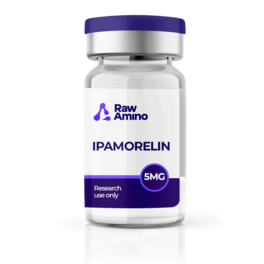
Ibutamoren (MK-677) is a non-peptidic, orally active ghrelin-receptor agonist, whereas ipamorelin is a short peptide analogue designed for high receptor selectivity. Both agents elevate GH/IGF-1 in experimental settings, yet they differ in size, chemistry, and ancillary signaling, offering a natural contrast to explore receptor coupling, temporal control of GH pulses, bone turnover markers, islet calcium signaling, and neurophysiologic endpoints. The discussion below maintains a preclinical, mechanistic frame—emphasizing pathways, biomarkers, and hypotheses generated in vitro and in animal models—rather than applications beyond the laboratory.
Receptor Pharmacology and Signal Transduction Profiles
GHSR1a canonically couples to Gq/11–phospholipase C signaling with intracellular Ca²⁺ mobilization, while also recruiting β-arrestin and engaging ERK/AKT nodes in a context-dependent fashion. Both ibutamoren and ipamorelin have been observed to promote GH release while preserving pulsatility—consistent with upstream hypothalamic feedback and somatotroph refractory periods—suggesting that neither agent chronically overrides the pulse generator under typical experimental conditions. Ipamorelin exhibits high selectivity in receptor panels, with minimal perturbation of ACTH, prolactin, FSH, LH, TSH, and corticosteroid readouts in preclinical models, indicating limited off-target pituitary drive relative to legacy secretagogues. Ibutamoren, despite a distinct non-peptidic scaffold, similarly elevates GH/IGF-1 without overt activation of adrenal endpoints, implying convergent efficacy with potentially divergent micro-signaling bias. These observations support the use of both probes to dissect GH dynamics while minimizing confounds from non-somatotropic pituitary axes.
Molecular Architecture and Stability Considerations
Ipamorelin (Aib-His-D-2Nal-D-Phe-Lys; C₃₈H₄₉N₉O₅, 711.868 g/mol) is a peptide analogue derived from ghrelin’s pharmacophore, tuned for receptor selectivity and reduced interaction with non-target endocrine pathways. Ibutamoren (C₂₇H₃₆N₄O₅S, 528.7 g/mol) is a small-molecule propenamide derivative that lacks structural homology to ghrelin yet retains high-affinity agonism at GHSR1a. These chemical differences plausibly influence distribution, membrane permeability, and intracellular residence, which in turn may shape receptor microenvironment engagement (e.g., lipid raft partitioning), β-arrestin recruitment kinetics, and desensitization patterns. The extended pharmacokinetic profile commonly reported for ibutamoren in experimental settings enables interrogation of circadian-scale interactions with the somatotropic axis, while ipamorelin’s peptide nature allows investigators to probe rapid on/off receptor engagement and short-horizon pulse shaping.
Somatotropic Axis Dynamics and IGF-1 Coupling
Across models, both compounds elevate hepatic IGF-1 in parallel with GH pulses, enabling exploration of STAT5-target gene programs, amino-acid transport, and substrate partitioning between adipose and lean tissues. Notably, studies with ibutamoren report robust IGF-1 responses that sometimes exceed predictions from GH alone, prompting hypotheses about differential hypothalamic modulation, peripheral receptor reserve, or ancillary signaling that potentiates somatotropic output. In neurobiology assays, sustained IGF-1 elevations are linked to enhanced clearance pathways for aggregation-prone peptides, and preclinical work with ibutamoren has examined amyloid-related readouts in transgenic mouse models, where reductions in neuropathology markers have been observed alongside somatotropic activation. These findings motivate experiments that decouple GH-driven hepatic IGF-1 from brain-intrinsic signaling to parse central vs. peripheral contributions.
Skeletal Remodeling Readouts
Bone is a sensitive downstream reporter of somatotropic tone. Ibutamoren exposure increases serum and urinary biomarkers of formation (e.g., osteocalcin) and resorption, indicating an overall rise in remodeling flux consistent with GH/IGF-1–driven coupling; this state can be leveraged to study mechanostat responses and the time course of mineral accrual under controlled loading paradigms. In parallel, ipamorelin shows pronounced effects on bone histomorphometry in rodent models, including increased mineral content and reversal of glucocorticoid-induced suppression of bone formation. Together, these datasets support a framework in which both probes are useful for dissecting osteoblast–osteoclast cross-talk, anabolic window kinetics, and the interplay between GH pulses and local IGF-1 autocrine/paracrine signaling within bone marrow niches.
Metabolic Crosstalk: Pancreatic Islet Signaling and Fuel Handling
Beyond pituitary actions, ghrelin-receptor agonism interfaces with islet physiology. Ipamorelin has been shown in isolated rat pancreas preparations to potentiate insulin release via Ca²⁺-channel–dependent mechanisms, suggesting a direct or indirect facilitation of β-cell exocytosis under defined glucose conditions. By contrast, ibutamoren appears to exert limited direct effects on acute insulin secretion in comparable models, implying scaffold-specific differences in islet engagement or receptor distribution. These distinctions enable experimental designs that parse how somatotropic stimulation interacts with pancreatic output and peripheral insulin action, including tracer studies of glucose uptake in skeletal muscle versus adipose compartments under matched GH/IGF-1 exposure.
Neurophysiology and Sleep Architecture
Neurophysiologic endpoints provide an additional comparative axis. In controlled sleep recordings, ibutamoren has been associated with pronounced increases in slow-wave (stage 4) and rapid eye movement (REM) sleep and reduced REM latency in experimental settings. Given that slow-wave sleep correlates with endogenous GH surges, these data suggest bidirectional coupling between somatotropic pulses and sleep network dynamics. Ipamorelin is also linked to improvements in sleep quality indices, though the magnitude appears smaller in head-to-head comparisons reported in the literature. These profiles support using ibutamoren as a probe for studying how sustained GHSR1a activation modulates thalamocortical oscillations, synaptic homeostasis, and memory-consolidation correlates in laboratory models.
Convergence and Divergence: Systems-Level Perspectives
At the systems level, both ghrelin-receptor agonists converge on pulsatile GH release, IGF-1 elevation, skeletal remodeling, and metabolic re-partitioning, while diverging in scaffold-driven nuances: ipamorelin demonstrates marked pituitary selectivity and islet Ca²⁺-linked insulin potentiation; ibutamoren offers extended pharmacokinetics, pronounced sleep-stage modulation, and strong IGF-1 coupling. These complementary features make the pair well-suited for factorial designs that manipulate pulse geometry (amplitude/width), receptor residence, and tissue-specific endpoints to map causality across endocrine, skeletal, metabolic, and neurophysiologic domains. Whether combined paradigms yield additive or synergistic pathway engagement remains an open question best addressed in carefully staged preclinical investigations.
Conclusion
Ibutamoren and ipamorelin provide mechanistically informative, partially overlapping platforms to interrogate GHSR1a biology. Their shared capacity to preserve GH pulsatility while elevating IGF-1 enables precise probing of somatotropic downstream programs, whereas scaffold-specific differences invite targeted assays of bone turnover, islet signaling, and sleep-network modulation. The evidence to date supports continued laboratory work that integrates temporal control, multi-omic readouts, and tissue-specific phenotyping to clarify how ghrelin-receptor signaling shapes organismal energy balance and structural remodeling. Further experimental investigation is warranted to resolve signaling bias, receptor trafficking, and long-horizon adaptations under repeated exposure.
References
- G. Copinschi et al. Prolonged oral treatment with MK-677, a novel growth hormone secretagogue, improves sleep quality in man. Neuroendocrinology, 66(4), 278–286, 1997. doi:10.1159/000127249.
- J. Svensson et al. The GH secretagogues ipamorelin and GH-releasing peptide-6 increase bone mineral content in adult female rats. J. Endocrinol., 165, 569–77, 2000.
- A. Adunsky et al. MK-0677 (ibutamoren mesylate) for the treatment of patients recovering from hip fracture: a multicenter, randomized, placebo-controlled phase IIb study. Arch. Gerontol. Geriatr., 53(2), 2011. doi:10.1016/j.archger.2010.10.004.
- M. G. Murphy et al. Oral administration of the growth hormone secretagogue MK-677 increases markers of bone turnover in healthy and functionally impaired elderly adults. J. Bone Miner. Res., 14(7), 1182, 1999. doi:10.1359/jbmr.1999.14.7.1182.
- E. Adeghate and A. S. Ponery. Mechanism of ipamorelin-evoked insulin release from the pancreas of normal and diabetic rats. Neuro Endocrinol. Lett., 25(6), 403–406, 2004.
- J. Svensson et al. Treatment with the oral growth hormone secretagogue MK-677 increases markers of bone formation and bone resorption in obese young males. J. Bone Miner. Res., 13(7), 1158, 1998. doi:10.1359/jbmr.1998.13.7.1158.
- Y.-O. Jeong et al. MK-0677, a Ghrelin Agonist, Alleviates Amyloid Beta-Related Pathology in 5XFAD Mice, an Animal Model of Alzheimer’s Disease. Int. J. Mol. Sci., 19(6), 1800, 2018. doi:10.3390/ijms19061800.]
- “CAS Common Chemistry.” Ibutamoren entry. Accessed Apr. 15, 2021.
- N. B. Andersen et al. The growth hormone secretagogue ipamorelin counteracts glucocorticoid-induced decrease in bone formation of adult rats. Growth Horm. IGF Res., 11(5), 2001. doi:10.1054/ghir.2001.0239.
Disclaimer: The information provided is intended solely for educational and scientific discussion. The compounds described are strictly intended for laboratory research and in-vitro studies only. They are not approved for human or animal consumption, medical use, or diagnostic purposes. Handling is prohibited unless performed by licensed researchers and qualified professionals in controlled laboratory environments.