

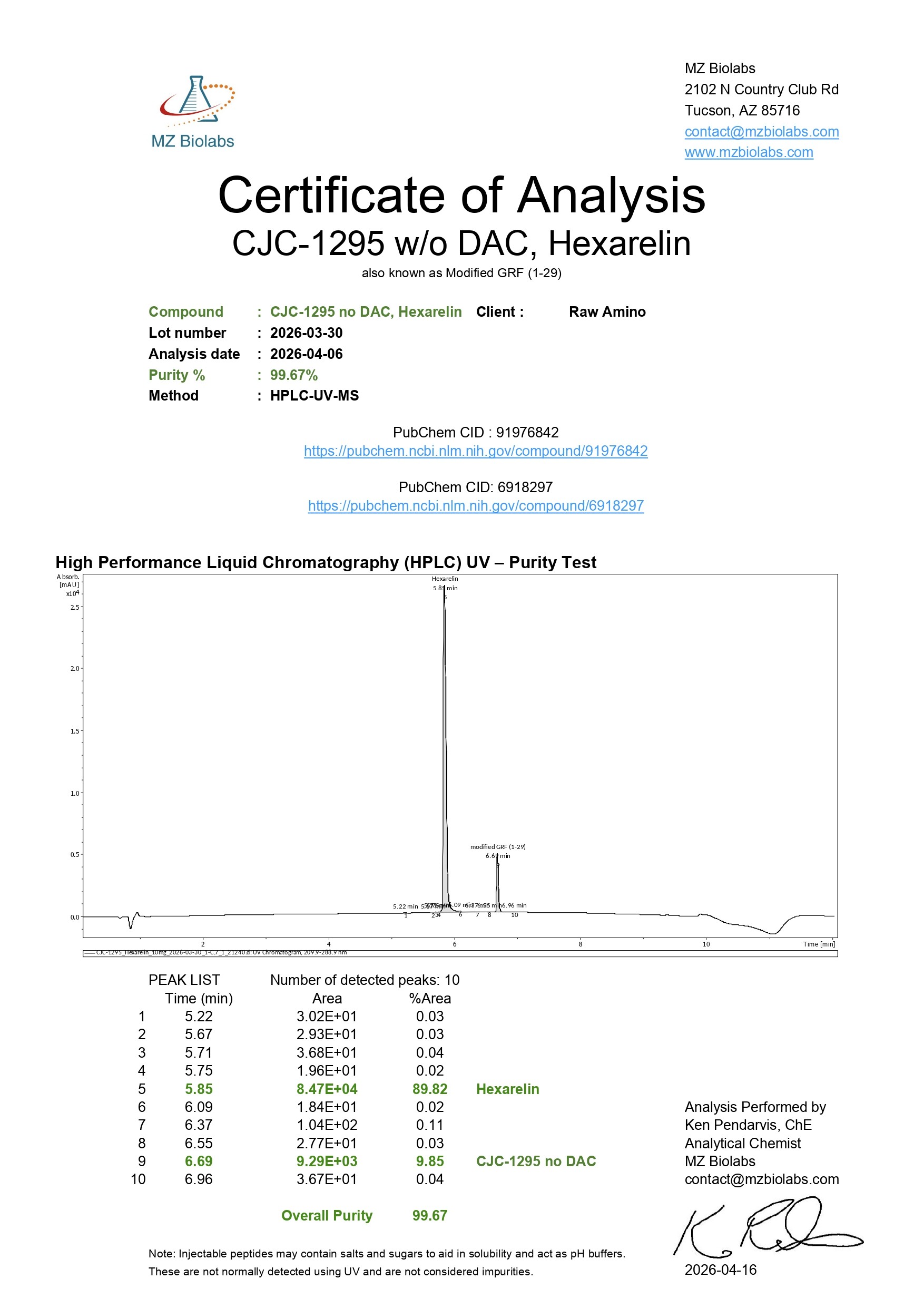
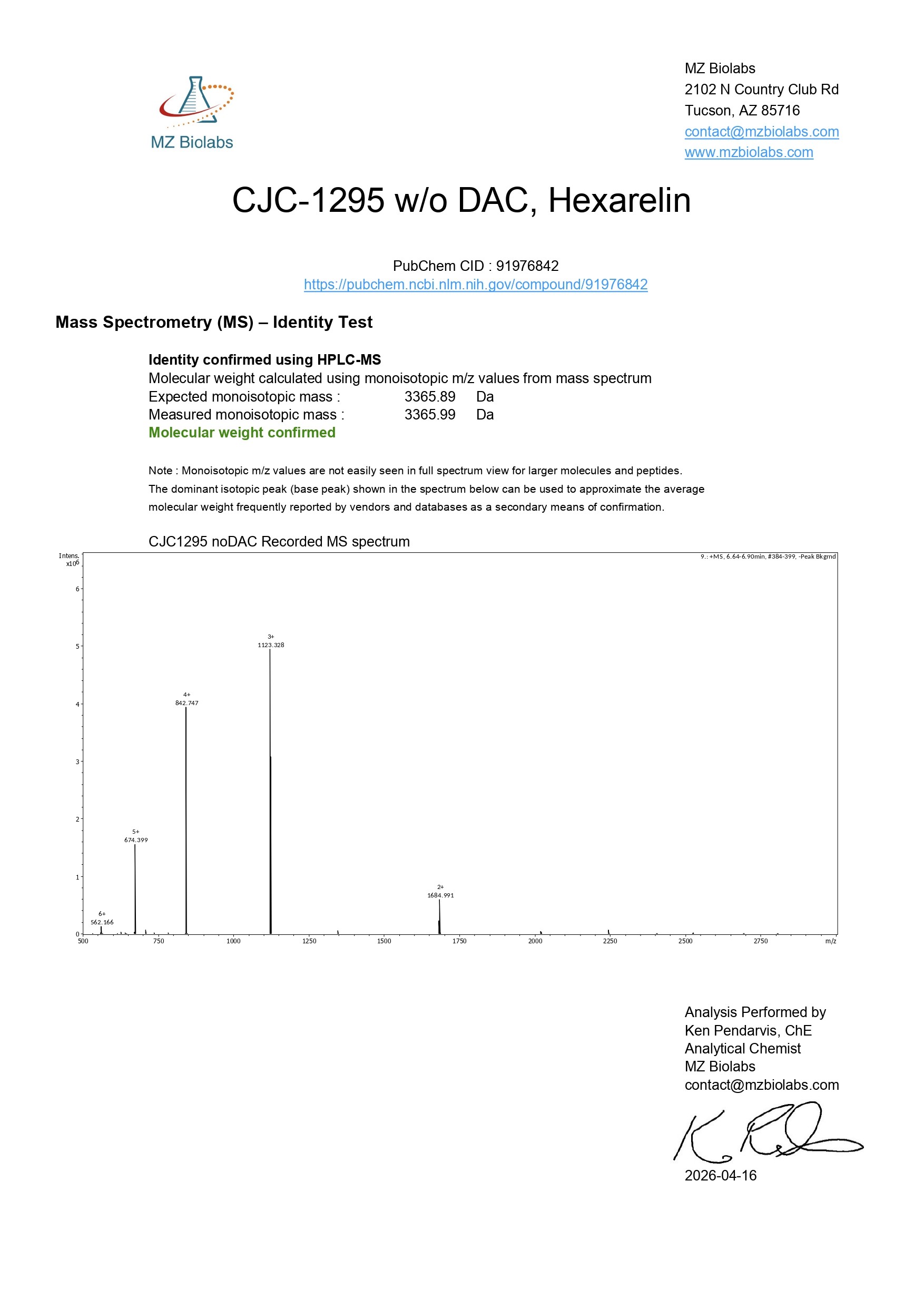
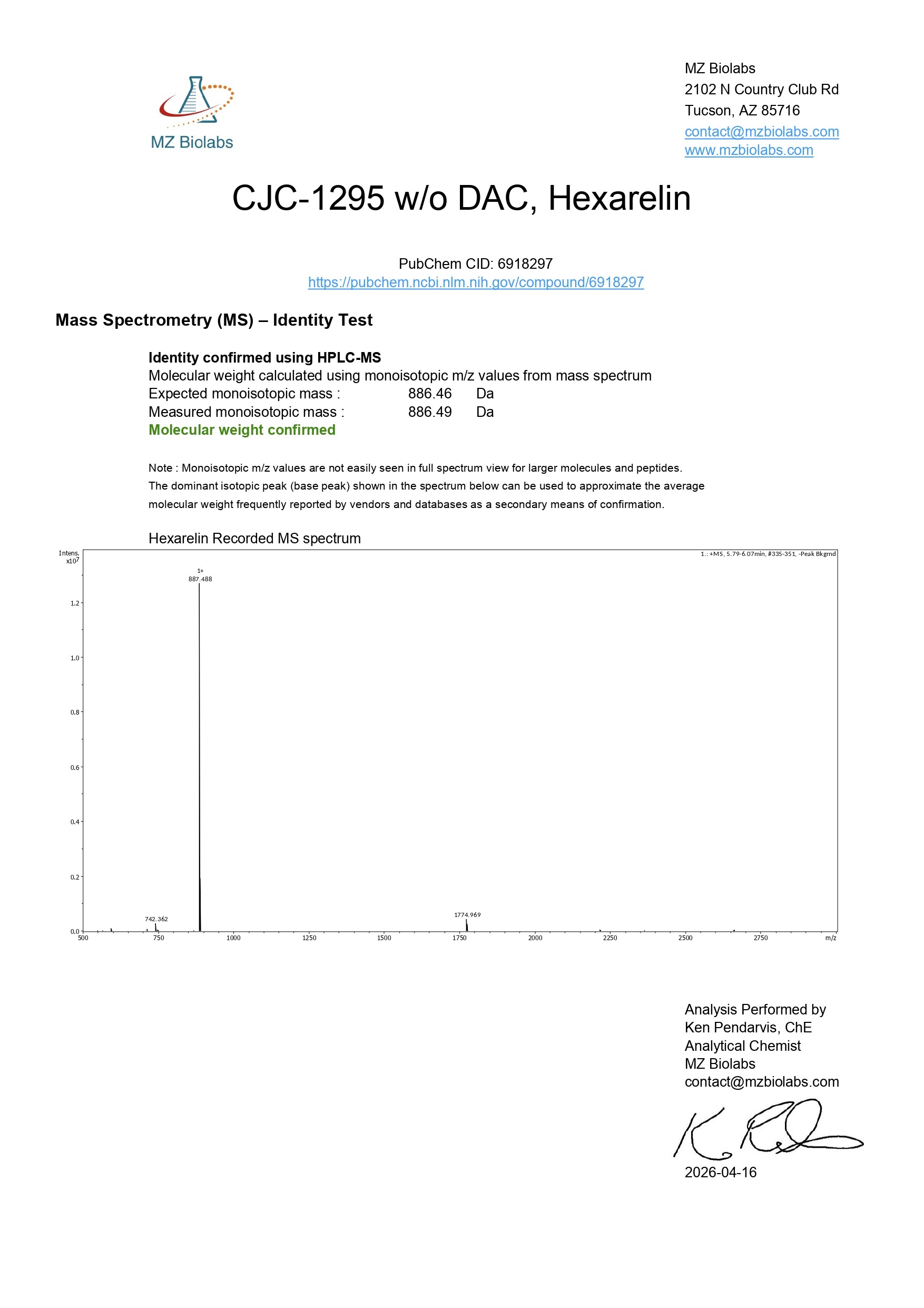
CJC-1295 (no DAC) & Hexarelin – 10MG
$93.00
Discount per Quantity
| Quantity | 5 - 8 | 9 + |
|---|---|---|
| Discount | 5% | 10% |
| Price | $88.35 | $83.70 |
Scientific Overview of CJC-1295 & Hexarelin Peptide Blend
The CJC-1295 & Hexarelin blend is a research-oriented combination of two synthetic peptides that have been examined for their potential influence on pituitary-related signaling pathways and downstream cellular processes. CJC-1295 is categorized as a growth hormone secretagogue analog designed to interact with receptors involved in neuroendocrine communication. Hexarelin, meanwhile, is a synthetic hexapeptide positioned within the class of growth hormone–releasing peptides (GHRPs), appearing to engage intracellular cascades linked to peptide-regulated endocrine axes. When paired, the two are studied for their potential to modulate overlapping receptor systems, offering a model for examining cooperative or intersecting laboratory pathways.
Research suggests that this combined peptide model may provide a framework for investigating hypothalamic, pituitary, and peripheral mechanistic signaling under controlled experimental conditions. Early literature points toward possible interactions with G-protein–coupled receptors, calcium-dependent intracellular signaling, and cyclic nucleotide regulation. Although the exact molecular coordination between the two peptides remains under investigation, combined exploration appears to offer a versatile tool for studying neuroendocrine networks, peptide-responsive tissues, and broader cellular regulatory mechanisms.
Alternative Names: CJC-1295, Modified GRF analog; Hexarelin; Examorelin
Studies and Research Data
Neuroendocrine Signaling Frameworks
Experimental models investigating CJC-1295 have proposed that it may interact with receptor systems associated with hypothalamic-pituitary axis communication. Studies examining peptide analogs in this category suggest potential modulation of downstream second-messenger pathways, including cyclic AMP and phospholipid-linked cascades. Hexarelin, in parallel, appears to engage ghrelin-family receptors, initiating intracellular events that may include phosphorylation of signaling proteins and calcium flux changes. In combination, these peptides are used to explore potential co-activation or sequential activation patterns in neuroendocrine research designs.
Receptor-Based Investigational Models
Hexarelin has been evaluated extensively in receptor binding analysis in vitro, where it appears to interact with growth hormone secretagogue receptors. CJC-1295 analogs, meanwhile, have been studied for stability and receptor-binding longevity in controlled laboratory settings. When paired, researchers may examine whether the blend suggests a pattern of prolonged or layered receptor engagement across different cellular models. Findings appear to indicate that the two may present complementary research characteristics that assist in mapping complex receptor–ligand interactions.
Cellular and Molecular Pathway Exploration
Laboratory models exploring peptide combinations often assess potential cross-talk between signaling pathways. In studies using peptides similar to CJC-1295 and Hexarelin, researchers have observed shifts in expression of immediate early genes, alterations in pathway markers such as ERK1/2, and changes in intracellular calcium handling. These observations suggest that peptide blends may contribute to a deeper understanding of how peptide stimuli influence downstream molecular activity, gene transcription patterns, and experimental models related to tissue remodeling or energy signaling.
Peptide Synergy in Experimental Systems
Several independent investigations into GHRP-class peptides and GRF-analog peptides suggest that combined exposure may have distinct effects relative to isolated single-peptide conditions. Some models report enhanced signaling amplitude, while others note prolonged activity windows or altered receptor sensitivity profiles. Although mechanisms remain under investigation, researchers propose that such blends may help clarify how multiple peptide inputs shape the responsiveness of neuroendocrine and peripheral tissues.
Conclusion
The CJC-1295 & Hexarelin blend is frequently utilized in laboratory settings for its potential to model neuroendocrine signaling, receptor-binding dynamics, and intracellular pathway modulation. Current research emphasizes the blend’s relevance as a dual-peptide investigative tool rather than providing definitive conclusions about outcomes. Findings remain context-dependent, and ongoing studies continue to refine understanding of its mechanistic implications across diverse research environments.
References
- Dickson, Stuart L., et al. “Growth Hormone Secretagogue Receptor Function in Neuroendocrine Systems: Mechanistic Insights from Peptide Analogs.” Endocrinology, vol. 141, no. 9, 2000, pp. 3351–3357.
- Nass, Richard, et al. “Peptidergic Modulation of Hypothalamic–Pituitary Communication in Controlled Experimental Models.” Journal of Clinical Endocrinology & Metabolism, vol. 95, no. 7, 2010, pp. 3271–3279.
- Smith, Richard G., et al. “Pharmacological Characterization of Synthetic Peptides Acting on Growth-Related Receptors.” Molecular Endocrinology, vol. 11, no. 4, 1997, pp. 437–445.
- Walker, Robert F., et al. “Investigating Combined Peptide Exposure in Cell-Signaling Frameworks.” Peptides, vol. 26, no. 6, 2005, pp. 1079–1087.
Disclaimer:
The products mentioned are intended solely for laboratory research and in-vitro experimentation. They are not approved for human or animal use of any kind. All details provided are for educational purposes only. By purchasing from this site, you agree to comply with our Terms and Conditions.
Only logged in customers may leave a review.
Reviews
There are no reviews yet.